
US President Donald Trump has claimed that the war in Iran will come to an end in two or three weeks but for now, the cost of fuel looks set to keep rising.
In response, some countries have cut the working week, school and shop opening hours and speed limits.
There are no plans for the Government to alter its advice around remote working or travel for the time being, despite calls for the State to encourage employers to be flexible around remote working for employees burdened with commuting costs.
With the commute to work remaining mandatory for many people, the rising cost of fuelling the journey is having an impact on many workers.
One commuter filling up in Balbriggan, north county Dublin, described the impact of rising fuel costs on him and his family.
"Myself and my wife both drive and we're trying to juggle things, deciding which car we'll put petrol into, come the end of the week. It's very hard to manage things, and it has a knock-on effect on everything else in the house. You know, when you've four kids, it's very hard to manage things and we don't seem to be getting much leeway at all with the government."
When asked whether the Government should encourage employers to allow more flexibility for staff to work remotely, he said he believes there is already a precent for such a move.
"It worked during the Covid pandemic. I don't see why it can work now. It's not possible for me, because I do shift work, but it would be great for my daughter. She can work from home, but they've (her employer) started to bring them back into the office now, which of course brings a massive increase in cost for her, because it means she has to travel from Balbriggan to Sandyford.
"With the tolls and fuel prices, it adds a massive amount of expense. She's 27 and she doesn't see any hope of having a house for herself in the next five or six years because the way the economy is, it's ridiculous," he said.
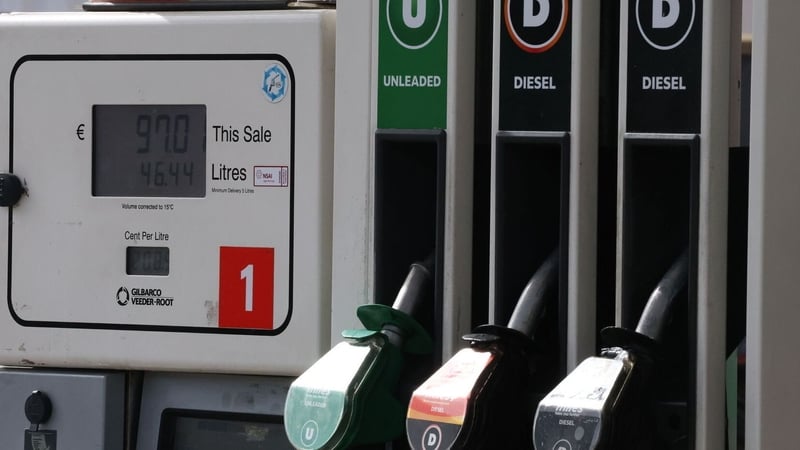
Another man fuelling up in Balbriggan, has a 100km round trip to work every day, and is very much feeling the pinch on the pocket:
"I work in Leixlip, so my place of work is 50km from here, and I’ve seen a significant increase in my commuting costs, considering the price of fuel. It's €20 extra a week now (to travel to work), it was €2.07 last week for diesel, and now it's €2.12."
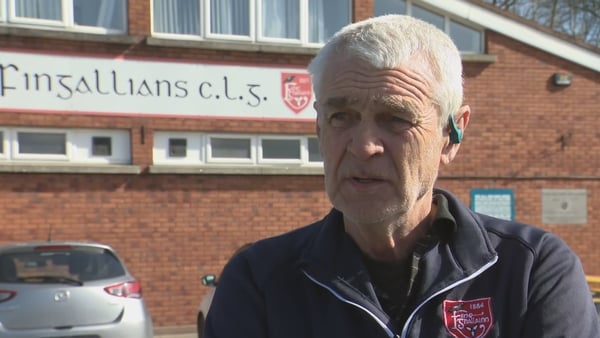
Since the start of the conflict in Iran, no European Union country has mandated that employees should be allowed to work from home, and according to Tánaiste Simon Harris, the Government currently has no plans to change the remote working model here, but is keeping the situation under review.

However, Niall Shanahan, Media Relations Director of the Fórsa Trade Union, says that preliminary data from a survey of almost 20,000 Fórsa workers suggests that time, and cost of travel, are core reasons many want to work remotely.
"About one third of our respondents reported commuting more than an hour a day, and about one in ten say they commute more than two hours per day. The recent spike in fuel prices is obviously going to have, and is having already, a huge impact on anybody who has to commute in a private car."
To ease the pressure of oil prices on consumers, the International Energy Agency recommended that governments enable employees to work from home where possible.
However, Executive Director of Employer Relations at IBEC Maeve McElwee says there's more to consider for employers than just commuting costs for their staff.
"You’re trying to make sure that you're managing your client or customer needs, or your service user needs, and you're also having to consider how you do your long-term planning and financial planning around that. If you're planning training, or if you're planning events, obviously you need to have some level of understanding as to how people are going to be able to get in and out of work."
At the Balbriggan Enterprise and Training Centre, Sergey, a software engineer, says refusal to allow employees flexibility to work remotely, may result in businesses losing staff.
"When I had to go to office, I’d have to catch the train, the train would be full, I’d come to work already drained, and then going back home was same commute again. I’d get home so tired, not even from work, but from the commute.
"Outside of the city centre, you have to drive a lot, and it really adds a lot of stress and cost, because the company doesn't pay you back for the fuel, it's not subsidised. You have to pay for it out of your pocket, but fuel prices are rising faster than your salary and that adds a lot of stress.
"I think a lot of people who can’t switch to remote working, will start to consider switching employer. I would," he said.