
The EU's Sanctions Envoy David O'Sullivan has said it is "very worrying" that a product produced in Ireland could be indirectly assisting "the Russian war machine" and its sale may have to be banned.
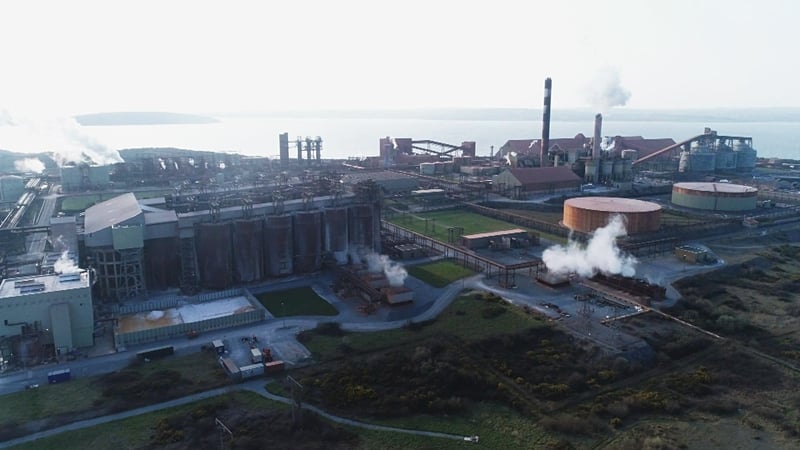
The comment follows an Irish Times report which revealed links between Irish-made alumina - a white crystal compound used to make aluminium - and Russia's war effort against Ukraine.
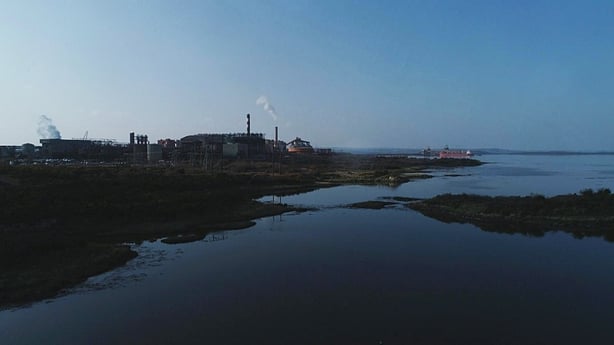
Leaked financial documents disclosed that the Aughinish Alumina plant in Co Limerick is shipping vast amounts of alumina to smelters in Russia, but the aluminium made from the product is then being sold to dozens of Russian arms manufacturers.
While the company said in a statement that it operates in strict compliance with all EU laws - including those relating to sanctions, export control and trade regulations - the Government initiated two reviews into the issue last week.
"We particularly underline the fact that both alumina and aluminium are an internationally recognised basic commodity, the very nature of which means they serve broad general purpose societal needs and vital for countless civilian industries," the company said.
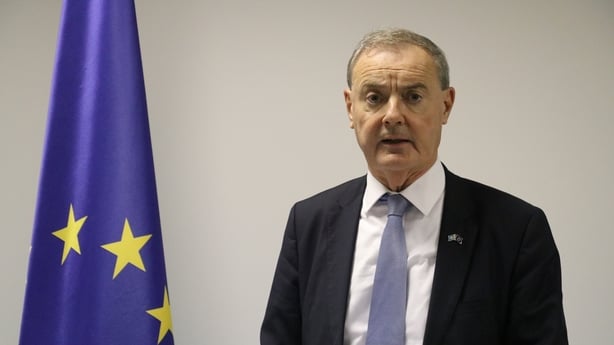
Speaking on RTÉ's 'This Week' programme, Mr O'Sullivan said he was "surprised" and "concerned" by the report and the European Commission was examining the issue closely.
He said if the report was confirmed: "I think either the company will have to find a way of guaranteeing that will no longer be the case, because they won't sell on to people involved in this, or we may indeed have to take another look at whether the product should not be sanctioned."
Mr O'Sullivan said he accepted the company's statement, adding: "I don't think anyone is accusing the company, and still less the workers, of deliberately circumventing sanctions. The product, alumina, is not sanctioned."
However, Mr O'Sullivan said "the assumption" had been that the product "was going into civilian purposes."
He added "we have a problem" now that there is what he termed "a high risk" that the product might be used for weapons.
The EU sanctions envoy continued: "I think the company should undertake a review. It is the responsibility of all companies to do due diligence and to make sure that their products are not finding their way into the Russian military machine."
Mr O'Sullivan suggested that Aughinish Alumina may have to diversify its business away from Moscow: "I mean, this is true of many companies elsewhere in the EU who had substantial exports to Russia, which were banned by sanction."
He said: "I understand and have sympathy with the economic significance of this particular factory and particularly in the region. But on the other hand, for the moment, the priority is making sure that we do not further fuel the Russian military machine."
EU Sanctions on Russia
Referencing EU sanctions on Russia due to its illegal invasion of Ukraine, Mr O'Sullivan said the "massive hike in oil prices" triggered by the US and Israeli war on Iran is "a gift to the Russian economy and to Mr Putin."
He said: "The sudden spike in oil prices, which were heading south of $60 a barrel before this happened, now heading well north of $100, and it means more revenue for the Russian economy."
"And this is not what we need at this point, where we are putting really strong pressure on Russia economically to hinder its ability to continue this war."
Mr O'Sullivan said the EU was trying to reach agreement on a 20th package of sanctions on Russia but "unfortunately" this was being held up by "Hungary's objections."
"We are always trying to see if there's a way forward, but I fear there is a risk that this will have to await the Hungarian elections (next month) before we see a final resolution."
Irish navy
Mr O'Sullivan said he stands-by a statement he made last Summer that the Irish Naval Service was not equipped to deal with the Russian shadow fleet, which was illegally moving sanctioned oil.
"We know the lamentable state of our defense forces, and in particular, the naval service, both in terms of vessels, but also in terms of manpower."
"So this is a problem which has deep roots going back many years, and it's not going to be solved immediately."
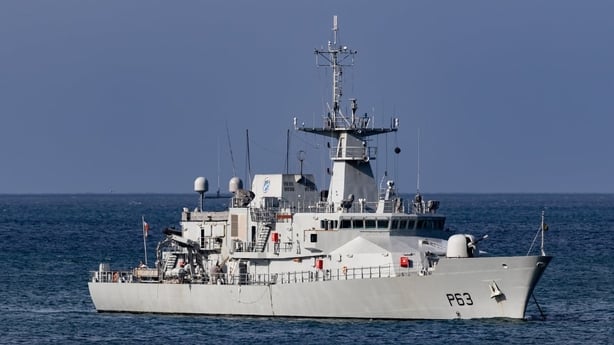
He noted that the Government "is making efforts" by ordering new vessels and has tried to increase recruitment.
However, referencing Ireland's upcoming six-month presidency of the Council of Europe in July, Mr O'Sullivan observed: "We're going to have to ask, in particular the French, to assist us because we just don't have the Irish capabilities to do that kind of work as things stand."
Latest stories on the Russian invasion of Ukraine