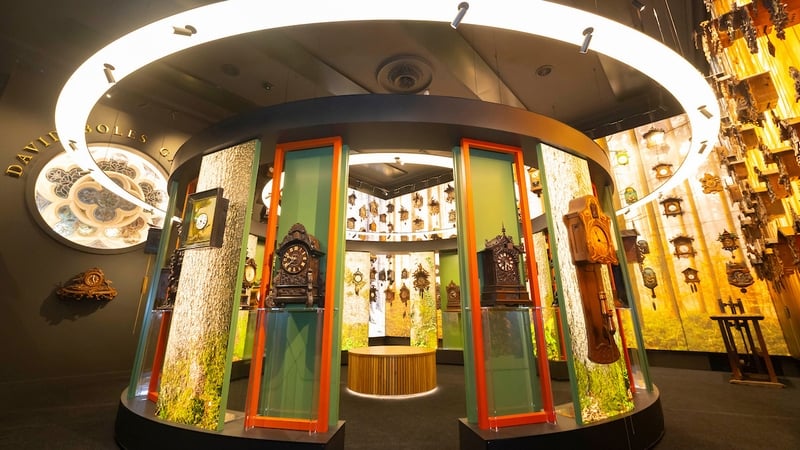

With the clocks set to go forward in the early hours of tomorrow morning, it is perfect timing for a new exhibition of more than 400 cuckoo clocks to go on public display in Waterford City.
The exhibition at the Irish Museum of Time is said to be the largest of its kind in the world, with the timepieces originating from Germany's Black Forest and many dating back to the 19th century.
The museum’s benefactor, David Boles, acquired the collection from two Polish brothers, Maz and Roman Piekarski, who closed their private cuckoo clock museum near Manchester in the UK after collecting the timepieces for over 50 years.
Mr Boles and Colman Curran, co-founders of the Irish Museum of Time, together with project manager Eamonn McEneaney have spent the last two-and-a-half years bringing the clocks to Waterford and preparing them for exhibition.
The exhibition is now on permanent display in a new wing of the museum located in a restored 19th-century building known as Central Hall.
The new wing of the museum has been specially designed to depict the valleys of the Black Forest in southwest Germany, where cuckoo clockmaking began in the 18th century.
It was there where farming families turned to clockmaking during long winters and developed a unique style of artistry and engineering that incorporated intricate carvings and the familiar call of the cuckoo bird.
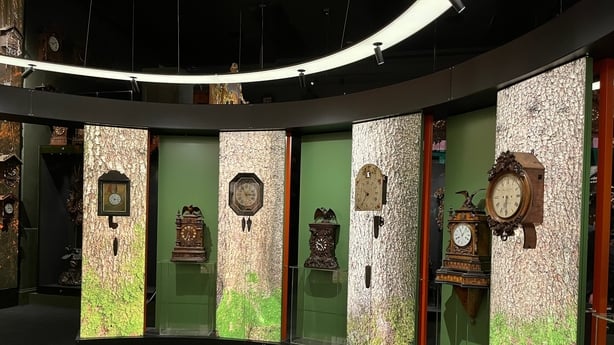
The new exhibition includes one, two and eight-day clocks as well as wall and table clocks, automaton pieces, quarter-striking clocks, showpieces and miniatures.
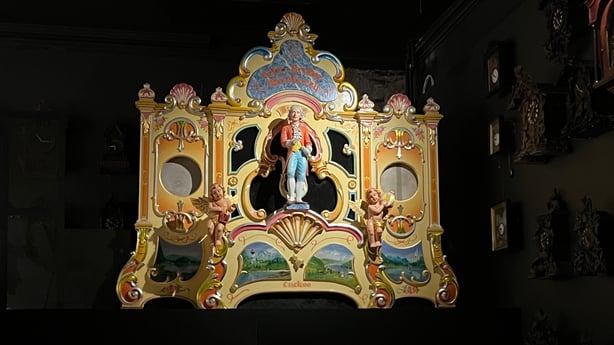
Many of the clocks have been cleaned and treated by expert conservators while among the curiosities is a century-old fairground organ that has also been restored.
Mr Boles said he believes such a collection does not exist anywhere else in the world.
"You can buy cuckoo clocks, they turn up, ordinary ones, no problem at all. But the earlier ones are very special. They don’t survive well because they are prone to woodworm, rot and so on.
"Any of the earlier ones that survive are, by definition, rare and some of them were made for very wealthy people in their day.
"Some were cheap, but most were very expensive. It is just amazing that they have survived as well as they have," he said.
Those behind the new exhibition hope that it will transport visitors back in time to when cuckoo clocks were first made.
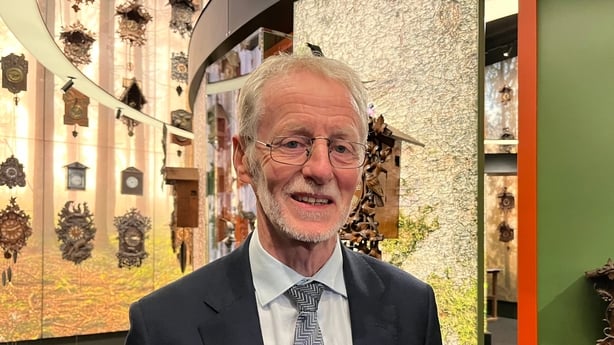
"All of these clocks were made in the Black Forest in Germany. There is a fallacy that cuckoo clocks come from Switzerland. They don’t. They are all made in the Black Forest," Mr McEneaney said.
"We’re trying to invite you into the Black Forest, to the sights and the sounds of the Black Forest.
"All of the walls here are all back-lit. We got an Italian company to do that and my colleague, architect Rupert Maddock, was very much part of the design of that.
"When you come in here, unlike the present museum, which is a more formal and traditional museum, this is just a sensory experience, and that was deliberate, that we are inviting you in," he added.
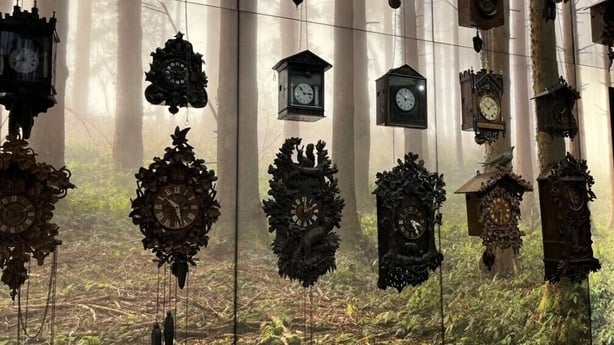
"When you walk in here, you will hear the rustle of leaves, and you will hear the odd sound of a cuckoo, and then you go around and obviously, not all 400 clocks can be working because it would literally drive you cuckoo if they were!
"On the hour, you will get the sound of the cuckoo. Some clocks on the quarter-hour, you will get the sound of a quail. Some of them have got both a cuckoo and a quail sound in them. So, they are really rare and unusual clocks."
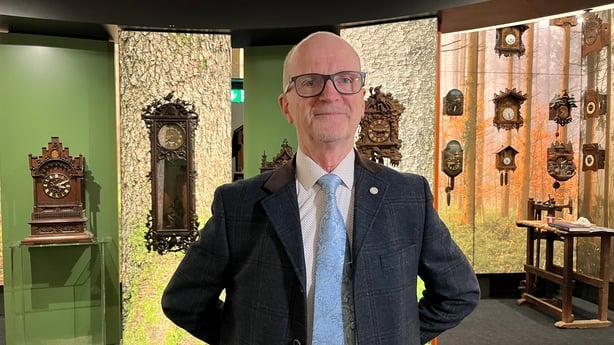
The Irish Museum of Time, in Waterford’s Viking Triangle, first opened in June 2021 as part of the Waterford Treasures suite of museums.
A sensory experience
Mr Curran, who has been a collector for 45 years, has said that they wanted to try something different when it came to the new exhibition.
"We wanted to change the mood. When you come in here, there is a sensory element that isn’t in the main museum.
"You have different lighting, you have different types of sounds. We have a wonderful fairground organ. So, it's a sensory thing, and it is also a good, family-friendly space.
"We are very proud of the museum. It is very much an Irish national museum of Irish clocks and watches, and that includes the six counties of the North.
"Now that we have added this extra gallery on with the help of David Boles, we are really proud of what has been achieved.
"This will hold its own with any museum in Europe," Mr Curran said.
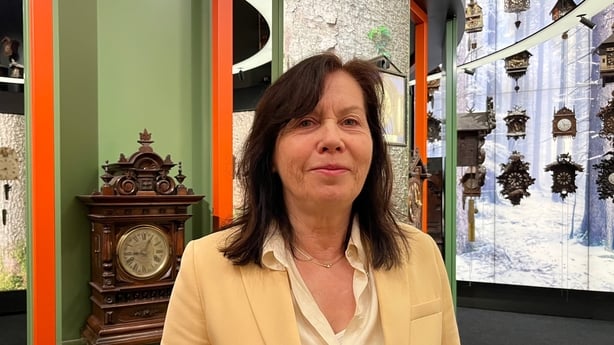
Meanwhile, Elizabeth Clooney, who along with her husband Mr Curran, first proposed the idea of the museum, said two plus years of very detailed work went into the new exhibition.
"From the incredible preparation of the clocks in England, storing them, then unwrapping them, the itinerary, every detail. An awful lot of work went into it," she said.
"But it is worth it, absolutely worth it, to see how spectacular the new wing of the museum is."
The new cuckoo clock exhibition was officially opened yesterday by Minister of State and local TD John Cummins.
Mr Cummins said the opening of the new exhibition is a "remarkable celebration of craftsmanship, heritage and imagination".
"This extraordinary exhibition not only showcases the ingenuity of Black Forest clockmakers but also highlights the power of cultural investment and philanthropy in bringing world-class collections to Irish audiences," he said.
"Waterford has long been a city shaped by artistry and innovation, and this new addition further strengthens its position as a leading cultural destination, offering visitors from Ireland and abroad a truly unique and memorable experience," Mr Cummins added.