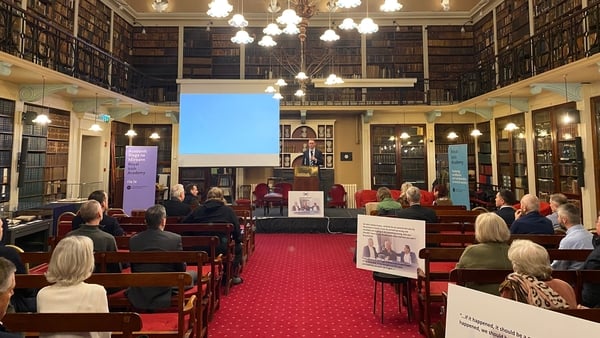

Poverty, inequality, and disadvantage increase the risk of people entering the criminal justice system, according to a report from the Irish Penal Reform Trust (IPRT).
The IPRT has recommended that the Government redirects investment into diversion and non-custodial alternatives, rather than putting further funds into expanding the prison estate.
The report states that pathways into criminalisation include childhood poverty, trauma, housing instability, unmet mental health, substance use, and criminalisation of poverty-survival behaviour.
In an effort to capture lived experiences, 37 interviews, five focus groups, and two public engagement days were conducted as part of the research.
Most participants came from backgrounds marked by material hardship, economic insecurity, or area-based deprivation.
Cost-of-living pressures and housing insecurity were described as "daily stressors" that eroded "coping capacity" and deepened deprivation.
Participants spoke about constantly worrying about bills, fuel and food. They outlined the impact this had in their homes such as anxiety, irritability and conflict.
Housing instability, including overcrowded households and rising family homelessness, was singled out as the single biggest factor leading to stress, insecurity and pressure.
"Without a stable home, families cannot provide a safe environment for children, and individuals cannot meaningfully engage with treatment or training."
Criminalisation has been "shaped" by how poverty intersects with gender, race, ethnicity and place according to the report.
It found that many women were forced to engage in "survival crime" to make ends meet while men were often pushed into "the violent role that society appears to have assigned to them".
Selling drugs offered young men "money, status and belonging", whereas "legitimate work" was viewed as stigmatising, with low earning prospects.
Sector workers noted "a recurring pattern" in society - where the harms of grooming children into crime were recognised - yet there was little empathy for the children once they reached adulthood.
Participants challenged narratives demonising people engaged in the drug trade and emphasised that the drug economy functioned as an alternative labour market when mainstream opportunities were closed off.
Across the interviews, "survival" was described as a chain of pressures in which women were trying to keep households going under scarcity while managing the risk of debt, homelessness, violence, and losing their children.
One woman engaged in sex work described poverty as "the core" driver, arguing that public debate often misattributed causality to men's demand rather than women’s economic desperation - most of whom she said were single mothers.
The IPRT has made a number of recommendations including an investment in people and communities.
Almost 200,000 people live in areas classed as very or extremely disadvantaged according to Pobal’s most recent Social Deprivation Index.
The IPRT has said an investment in youth work would provide "prevention infrastructure" in areas of concentrated deprivation.
The service added that the criminalisation of children could be prevented through coordinated responses between gardaí, Tusla, education and health services for children.
Rather than spending €100,000 to imprison an individual for a year, it has recommended spending resources on exploring "the reasons why that person ended up in a prison cell in the first place".
The IPRT has called for a redirection of justice investment to provide secure homes, better access to healthcare, an adequate income, alternative education supports and youth work opportunities.