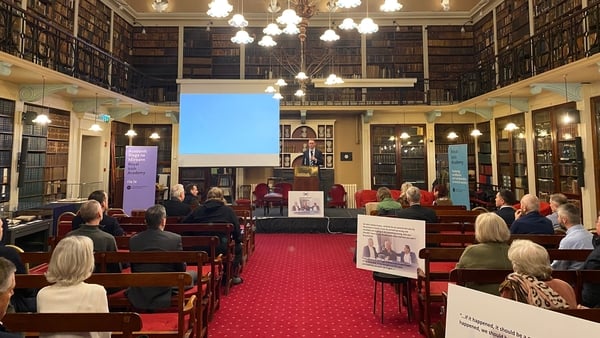

The State's childcare system is failing to protect some of its most vulnerable, according to a report published by the Ombudsman for Children's Office (OCO).
The report titled 'Let's get it right' states that the system is not currently operating in the best interests of all children.
Last year, 19% of all complaints to the OCO related to Tusla which led the Ombudsman for Children to examine the care system.
The OCO looked at all aspects of care from family-based placements to high-support and after-care services.
It has stated that there is an opportunity to make "a once in a generational change to the system".
Traditionally, Ireland has had a very high rate of foster-based care when compared to other European countries.
While levels remain high (above 80%), there has been a seven-percentage point decrease in the proportion of children in foster care in the past ten years.
Much of this is due to lack of financial support from the State, according to the OCO.
There is significant concern regarding kinship carers - where a child who cannot live with their parents is looked after by relatives or close family friends instead of going into foster or residential care.
Children in informal kinship care face "significant disadvantages" compared to those in State-supported care, according to the report.
Kinship carers frequently struggle with legal insecurity, as they may not have guardianship rights, making it difficult to make medical or educational decisions for the child.
Financial hardship is another major concern, as informal kinship families receive far less financial support than foster carers, increasing the risk of poverty.
While the OCO has welcomed a commitment in the Programme for Government to develop a policy to help address the legal and financial gaps for kinship carers in Ireland, the Ombudsman wants to see this progressed as soon as possible.
As a result of a decline in the number of foster care placements in recent years, the number of children in residential care run by private providers has increased.
A shortage of foster care places also means that younger children are increasingly being placed in residential care, which the OCO has said "is totally inappropriate for their needs".
It has pointed out that children can be placed at further risk in private settings due to high staff turnover which could lead to a lack of proper oversight and inappropriate supports and services.
Tusla aimed "to incrementally reverse" its "disproportionate dependency on private residential care" from 60% to 50% in its 2022-2025 residential care strategic plan, however 69% of residential care is now privately provided, according to the OCO report.
The experiences of children in the report show that in several cases, young people were placed in unsafe environments or denied basic supports.
Others struggled to maintain family connections or were left in inappropriate placements for years due to a lack of suitable alternatives.
The OCO has said that children in State care must be treated as "a national priority" or the system will continue to fall short of its obligation to protect and uphold the rights of those it is meant to serve.
It says investment in early intervention and prevention services is required as well as increasing supports for foster carers and recognising kinship carers.
It suggests banning unregulated placements, strengthening aftercare supports up to age 26, improving services for children with disabilities and unaccompanied minors, and ensuring children's voices are heard in decisions affecting their lives.