


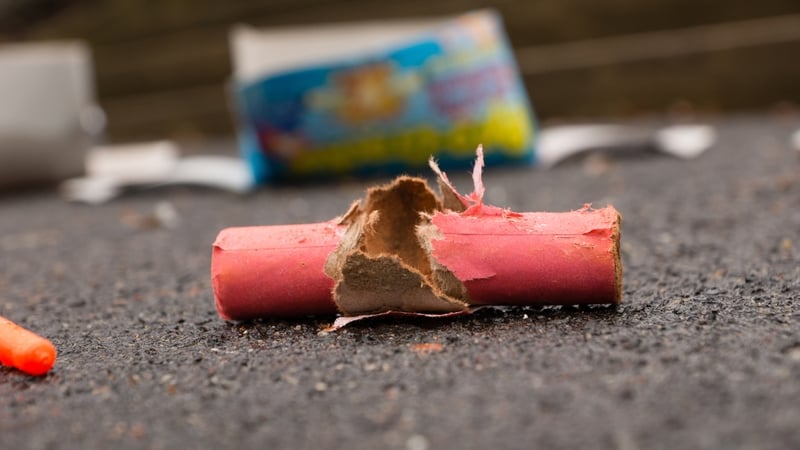
Nine children were treated for firework-related injuries at the national paediatric burns unit in a single week at Halloween, with one boy ending up in hospital twice during the period.
One patient suffered permanent vision loss in one eye as a result of a firework shrapnel injury, while another lost part of their index finger, and two required surgery for hand fractures.
The most common location of burns was the hands, which were affected seven times, while there were three burn injuries affecting faces, and two affecting the chest or abdomen.
All of the children were male, and the average age of those who attended the burns unit at Children's Health Ireland (CHI) at Crumlin during the week of Halloween in 2024 was 12.
The details were revealed in a study by doctors at the hospital’s Department of Plastic Surgery, which was published in the latest issue of the Irish Medical Journal (IMJ).
The authors said healthcare professionals had a responsibility to raise public awareness of the potential for "devastating injuries" associated with fireworks, while also being prepared to manage a "surge" in such cases at Halloween.
They said the introduction of legislation intended to improve safety and regulate the sale of dangerous pyrotechnics appeared to have had no impact on the prevalence of firework injuries in children.
The doctors noted that public service announcements regarding the dangers of fireworks in the lead-up to Halloween had proven effective in other jurisdictions, and similar campaigns here may reduce paediatric injuries.
The authors reviewed data from the week of Halloween in 2024 at the national paediatric burns unit to create a "snapshot" of their experience with firework-related injuries.
A total of 10 referrals were made to the service for the management of these injuries over a seven-day period. One of the patients attended the unit twice for separate firework injuries that week.
Three of the patients required admission, while two required surgery for hand fractures under general anaesthetic. Another required exploratory surgery on his hand under local anaesthetic.
One of the patients required debridement of burns to his hands, face, chest and abdomen under general anaesthetic. Another suffered the partial amputation of his non-dominant index finger.
The eye injury was the result of firework shrapnel, which ruptured the outer wall of the eyeball. The patient suffered permanent vision loss in the affected eye.
The study found that the most common date of injury was Halloween night itself, while the prevalence of young males was in line with demographic data in previous research papers, the authors noted.
They recommended the introduction of mandatory reporting of firework-related injuries in Ireland to capture the impact of these items in the healthcare settings.
