


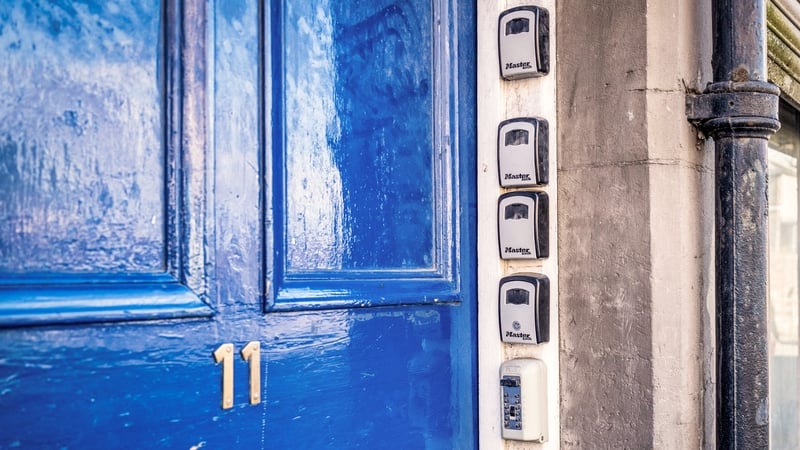
Properties advertised for short-term lets outnumber homes advertised for long-term rent in the private market by four to one, according to analysis by housing charity Threshold.
The research, based on figures from the website Inside Airbnb, show there are now over 8,600 second homes advertised for short-term let across Ireland, compared to 2,100 homes available nationwide in the private rental market.
Threshold said that the short-term let figures represented a conservative estimate as it excluded hosts with one listing "on the assumption that the listing could be the host's own home".
The charity said the figures show that housing supply is "not only about building new homes but also about protecting existing homes for long-term use".
National Advocacy Manager with Threshold Anne-Marie O'Reilly said that releasing short-term lets back into the rental market is "part of the solution" to the housing and homelessness crisis in Ireland.
She said there has been an increase in entire homes, such as three-bed semi-detached homes and two-bed apartments, being made available as short-term lets.
Speaking on RTÉ’s Morning Ireland, Ms O’Reilly said these properties are no longer available to people who want to put down roots and be part of a community.
A new short-term let register is set to come into place on 20 May, requiring all short-term lets to be registered with Fáilte Ireland to comply with EU regulations.
Speaking about the register, Ms O’Reilly said that Threshold wants it to include towns of a population of 10,000 people and over, as opposed to the proposed number of 20,000 and over.
She said that there are towns within the 10,000 to 20,000 mark that have a housing need, such as Castlebar in Co Mayo; Mallow, Cobh and Midleton in Co Cork; and towns in the catchment area of Dublin.
Ms O’Reilly said that planning changes being made alongside the register will be crucial in managing and regulating the sector and making the best use of homes Ireland has.
We need your consent to load this rte-player contentWe use rte-player to manage extra content that can set cookies on your device and collect data about your activity. Please review their details and accept them to load the content.Manage Preferences
She added that local authorities will still have the flexibility to assess the needs in the area, and that the new rules can be reviewed in a few years’ time if needs be.
"Rural Ireland isn't just made up of boreens and back roads. There's plenty of substantial towns and communities and the balance needs to be struck there," she said.
Ms O’Reilly said that the change of use legislation requirement to bring a residential home into tourism is being ignored, pointing out that there were only 426 such applications between 2019 and 2025 when the data from the charity shows more movement in the sector.
"There certainly seems to be an ignoring of those rules," she said, pointing out that local authorities do not know how homes are being used around the country and that impacts their ability to plan and deliver housing.
The Threshold analysis of short-term lets showed that Kerry has the highest ratio of short-term lets to homes available for private rent, at over 30 to one.
There were 1,009 short-term lets available in Kerry compared to 33 homes for private rent, the charity said.
In Co Clare, there were 532 short-term lets and 19 rental listings, representing a ratio of 28 to one.
'Shocking and shameful' that families are facing destitution
Speaking in response to a letter sent by Director of Dublin Region Homeless Executive Mary Hayes to the Department of Housing, Ms O'Reilly said that it was very worrying but not surprising that children could be sleeping on the streets due to the lack of emergency accommodation.
In the letter, which was reported on today by The Irish Times, Ms Hayes said authorities face "an acute emergency accommodation crisis".
Ms O’Reilly said that hotels and B&Bs are being relied on so heavily to provide emergency accommodation.
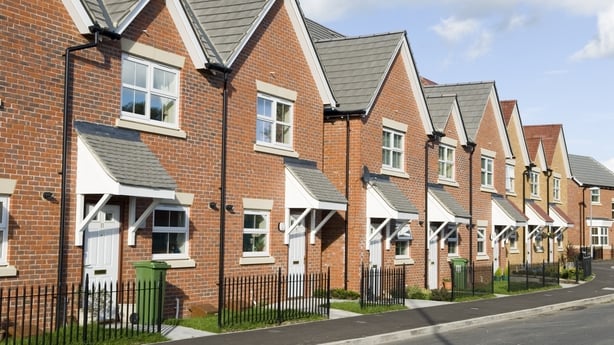
She said if homes being used for tourists could be family homes, and hotels and B&Bs could be used by tourists, this might have a rebalancing effect.
Executive Director of the Simon Communities of Ireland Ber Grogan said that there has to be a line that is not crossed in relation to homelessness in Ireland.
She said that it was "shocking and shameful" that there are homeless families in destitution, adding that more and more people are "so close to the edge" due to market rents not being affordable.
Ms Grogan said that it is easy for people to be pushed from deprivation into destitution when it comes to rising costs.
"People cannot afford the basic things that they need to live in a country that is rich.
"We are leaving a cohort of people behind," she said.
She added that it's not just a Dublin issue and that it is happening across all of Ireland.
"These are manageable, controllable issues that we cannot ignore.
"Simon Communities have been saying this for a long time in terms of poverty being such a huge issue, and the unaffordability of rents and the inaccessibility of private rental sector."
She said that Simon has been hearing from people told to present to a local garda station instead of sleeping on the street.
She added that there is an invisibility around this, with people sleeping in cars, sleeping on a couch or a floor in other homes with their children.
Ms Grogan said that a lot of these people are those who have received notices to quit from private rented accommodation.
"It cannot be ignored anymore," she said.
'Government needs to stop dragging its feet,' says Ó Broin
Sinn Féin's spokesperson on housing, Eoin Ó Broin has said the Government needs to stop dragging its feet when it comes to the housing crisis.
He said that despite regulations for short-term letting being put in place six years ago, the situation for renters has gotten worse.
"It's now six years since regulations for short-term letting were put in place, but with absolutely no enforcement mechanism, and during that period of time, more and more rental properties have left the market, and more and more people are left without a home, including families and children in emergency accommodation.
"The Government needs to stop dragging its feet. It needs to put in place the proper planning regulations and ensure properties that were given planning permission for long-term rental occupation are used for that purpose and that purpose only," he said.
Asked about a warning by the Dublin Region Homeless Executive that children could be sleeping on the streets due to the lack of emergency accommodation, Mr O'Broin said: "This is utterly unacceptable."
He said the "Minister for Housing needs to take urgent heed of what the director of the Dublin regional homes executive is saying."
"It is not acceptable at a time when we have thousands of vacant homes across the state and huge surpluses that anybody should be sleeping rough, and therefore we need the Minister for Housing to get a grip on this crisis, reinstate funding for vital homeless prevention schemes like Tenant in Situ, and work with the Minister of Justice to ensure that no family has been made homeless because of the inaction of Government," Mr Ó Broin added.
