
As the war in the Middle East continues to disrupt global fuel and fertiliser supply chains, farmers across Ireland are feeling the ripple effects.
The conflict has slowed tanker traffic through the Strait of Hormuz - a critical route for oil and nitrogen‑based fertilisers - driving up input costs at a time when beef prices are already weakening.
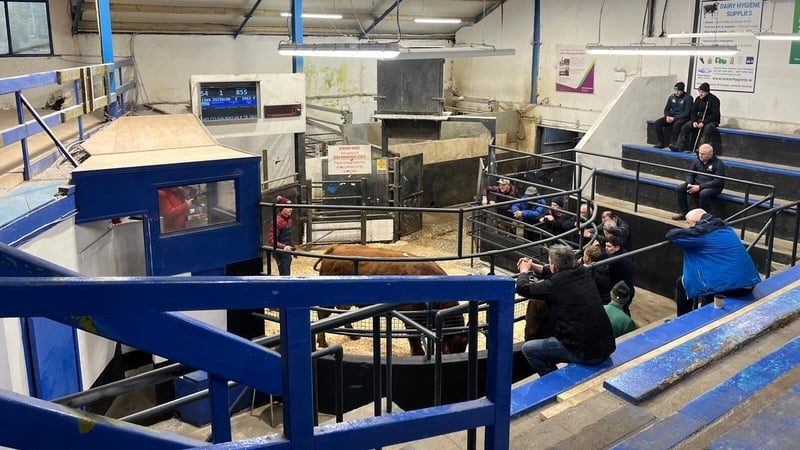
At Athenry Mart in Co Galway, where farmers gather for the weekly cattle sales, fuel costs are weighing on the minds of many.
"It's just gone up every day, going up every day," one says, explaining that it costs an additional €100 to fill his tractor with green diesel.
Another farmer has been tracking the surge closely.
"I was actually talking to a diesel man a while ago delivering diesel and I just asked him, I got diesel myself about two or three weeks ago, and 95c for tractor diesel, and I just asked him and he said 135, 140."
For young farmers, the uncertainty is unsettling.
"The price of diesel going up like every day of the week and the price of feed going up as well ... hard to know what could happen yet with this war."
For livestock hauliers, transporting animals to and from marts across the country, the impact is immediate and unavoidable.
"Diesel has gone out of all proportion ... even yesterday morning filling up the trucks, like it's costing nearly €400 more to fill the lorry in a week, like, and nothing extra for it."
For those selling cattle, market prices have been moving in the wrong direction.
"Cattle have come back an awful lot in the last three weeks," one seller says.
"You know, they're back from a high of €8 a kilo back to €6.90 yesterday I got. That's a big thing on a 400kg animal. It's not going to be a good year for beef. The profit won't be there like last year."
Dry Stock Advisor with Teagasc in Athenry, Keith Fahy, says the drop is significant.
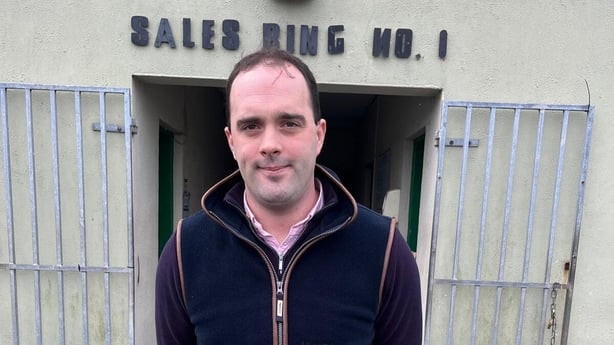
"We're seeing 70c of a drop there at the minute beef prices in around the €7. It was €7.70 in October or November time.
"So you're looking there at, you know, a 400kg carcass dead animal, that's a drop of €280 an animal."
He says the combination of falling prices and rising inputs is creating "a lot of frustration".
"I suppose we look at any farming enterprise there, the three Fs are the main inputs of anything - fuel, fertiliser and feed - and we're going to see the three of those increase massively, especially the fuel and the fertiliser.
"We're seeing massive increases and prices have gone up, maybe €100, €120 a tonne in the last couple of weeks."
At ArraTipp Co‑operative in Athenry, the impact of the conflict on fertiliser supply is evident.
"There’s a big uptake in calls in relation to fertiliser availability and prices," says staff member Tommy Devane.
"90% of our phone calls at the moment are fertiliser related. So, you know, there is a little bit of panic setting into farmers, I think, at the moment."

Urea and protected urea are among the products in shortest supply, with calcium ammonium nitrate (CAN) being offered as an alternative while retailers wait on delayed deliveries.
"We have eight or ten trucks supposed to come to us in the next day or two. But the problem is we don't know what's on that truck. We ordered certain stuff, but we may not get it. So that is the problem."
He says the worry among farmers is palpable.
"You can see it in their face, you can hear it in their voice on the phone call. And this is another worry that they didn't need to have this time of the year.
"At the same time, you know, you've got to explain to them, it's not our fault. This is a worldwide problem, not just an ArraTipp problem here in Athenry."
In the village of Ahascragh, Kevin Greene, of Greene’s Topline Hardware, has received word of how the global situation is about to impact local farmers even further.
"I've got a letter this morning from one of the major companies and vessels can't get through the Strait of Hormuz.
"There's a problem with an Indian tender as regards urea. Egyptian urea is not being made because of Israel not producing natural gas, which is a byproduct. So the whole thing has just slowed down."
Prices are already rising as a result.

"We have most of our contracts sold and we went back on this morning to buy more product.
"That product will start landing on our place next week and it's already moved on by €40, €50 a tonne. So we've actually had to move the prices on in light of that happening, straight away."
He rejects suggestions of price gouging.
"Now, a lot of people are talking about price gouging and all that, but it's outside our control. We're just an end user, we're just a retailer.
We need your consent to load this rte-player contentWe use rte-player to manage extra content that can set cookies on your device and collect data about your activity. Please review their details and accept them to load the content.Manage Preferences
"Once oil goes up, it's related to all plastic products, so the likes of silage wrap and those kind of products will go up if the war continues, we're being told," Mr Green says.
"You see, there's so much uncertainty, nobody knows what the story is. And the same thing for the wholesale sellers that are buying.
"What they buy today may not come for maybe two to three weeks. In two to three weeks’ time, the war could be over and they're left sitting on their stock. So there's a big risk and a big balancing act for the people that's supplying us as well."
As war in the Middle East continues, for Irish farmers and the agri-retail sector, so too does the uncertainty.