More than 1,100 children in Tusla's care were placed in unregulated Special Emergency Arrangements (SEAs) throughout last year, according to figures obtained by RTÉ News.
This is where children in care are moved to accommodation, such as hotels and short-term rentals, run by private companies for what is supposed to be short periods of time.
Tusla has referred five of these providers to the Garda National Vetting Bureau in relation to concerns over garda vetting of staff, after children were placed in their care.
In a statement tonight, gardaí gave an update in relation to the Tusla referrals to An Garda Síochána.
It said in two cases prosecutions were initiated resulting in a court conviction.
It also said a number of investigations are ongoing.
Over the past number of years, the child and family agency has been relying more and more on this type of accommodation, which advocacy groups and a number of judges have heavily criticised.
It is not subject to inspections by the Health Information Quality Authority (HIQA), the State's independent health and social care watchdog.
The Tusla figures show that, in 2023, there were 635 children in these placements.
The number nearly doubled by 2025 when 1,121 children were in SEAs.
Of those, 350 children were in mainstream services coming from households in the State, while 771 arrived from abroad seeking international protection.
The number of children under 12 years of age being placed in these arrangements is also on the rise.
In 2023, there were 49 children under 12 in SEAs, compared to 56 throughout last year.
Varying stay durations
Tusla said it that did not record data on how long children spend in SEAs, but it did provide the timeframe for the 148 children who were living in these placements across the country in February.
It revealed they had been there for varying times from under one month, to six months, and up to three years in one case.
While the placements are not subject to HIQA inspections, Tusla said that it monitors them on an ongoing basis.
Figures show that while the number of children in SEA placements has increased, the number of monitoring visits by Tusla has fallen.
In 2023, there were 148, compared to just 67 in 2025.
Tusla said the level of monitoring for SEAs in 2023 reflected an initial phase where there was an increase in their use, which required a targeted monitoring response.
It said the focus of its team in 2023 was to visit every provider, which has been supplemented over the following years with a shared services monitoring approach across all Tusla services.
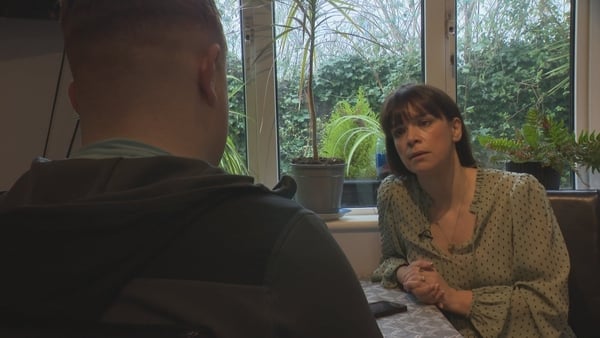
Conditions in unregulated care were 'barbaric', says ex-resident
Figures from Tusla show that the agency stopped using eight private companies providing special emergency arrangements because they did not meet the required standards, and it referred five providers to the Garda National Vetting Bureau.
These were private companies the agency was paying to house children in the care of the State for what are supposed to be short-term periods.
Tusla had placed children in the care of these private companies but subsequently questions were raised about garda vetting for staff in those companies.
Director of Investigations at the Ombudsman for Children’s Office, Nuala Ward, said the use of these special emergency arrangements is unlawful.
"Special Emergency Arrangements have no role in a social care model in any country. These are not placements, these are simply accommodation because there is a lack of placements in Ireland for these highly vulnerable children.
"We have called repeatedly for these to be banned, and they should not be in use. We have spoken to children throughout the country and they have told us how difficult they find SEAs.
"They have been used multiple times over a short period of time, some of them may only be in a placement for 48 hours but it exposes them to a lot of risk; to the risk of sexual exploitation by people who know these children are not being looked after in a safe environment."
Advocacy groups say the rise in the use of these placements is due to the lack of available beds in regulated residential homes run by Tusla, or private and voluntary providers, and also a shortage of foster carers.
Tusla says there has been a large number of children seeking asylum in Ireland which has resulted in the rise in the numbers of children placed in SEAs.
The agency said that it receives over 105,000 referrals a year and is currently challenged to balance the capacity of provision with the demand for services.
It said it is working to reduce the dependency on private residential care and increase public residential capacity to meet demand.
Wayne Stanley, Chief Executive of Epic, a charity supporting children in care, said SEAs are not appropriate care settings for children:
"We would have some concerns about the quality of staff in some SEAs, not in terms of the individuals themselves but rather the training the experience that they have.
"More broadly, the thinking is that SEAs should not be part of the system. They are by their very nature SEA, they should be scarcely used and should only be used in an emergency, but what we are seeing is a growing proliferation of them which only speaks to the crisis that is happening across the care system and the pressure in the system.
"We see that in reports on the need for more beds in special care... SEAs being used to house children who should be in special care. We see it because there is not enough capacity in our residential services and the foster care service itself is under increasing pressure."
Director of Don Bosco Care, Terry Dignan, who works with children in care, says that the care system is failing children in Ireland and he says the Government needs to act.
"We need investment from the Government to address the situation, and this is not like adding money to Tusla's budget. This is targeted investment to actually address this particular problem which is we do not have capacity - we don't have the number of beds that these children need.
"This is not Tusla's solution to solve this, it is the Government's solution to solve. These children are in the care of the State and Tusla is an agent of the State and is tasked with doing particular things for the Government.
"But this goes back to the Government. This goes back to the Government investing in it and supporting Tusla to plan properly."
Barnardos Practice Manager and Guardian ad Litem, Claire Brogan, said: "It's Barnardos position that these placements are unlawful, they are unregulated setups, they are holiday homes at times, they are rented houses, they are totally unsuitable and nothing has changed over the last few years."
Figures show that around €188m was paid to private companies to house children in these arrangements over the past three years; over €70m in 2023, €60m in 2024 and €57m in 2025.
In a statement, Tusla said it is committed to reducing its reliance on Special Emergency Arrangements.
It added that of the 128 young people in SEAs as of the most recent figures, 126 were in privately leased or Tusla-owned properties, and two were in hotels.
"Tusla's mission is to support the safety and wellbeing of children, particularly those whose circumstances are complex or who need additional support."
The Department of Children said in a statement that there has been a 500% increase in arrivals of separated children seeking international protection entering the State since 2022, with the vast majority of arrivals aged 16 or 17.
Due to this, it said Tusla is facing significant and ongoing challenges in sourcing appropriate accommodation.
It said the department continues to prioritise funding for residential care through engagements with the Department of Public Expenditure.
We need your consent to load this rte-player contentWe use rte-player to manage extra content that can set cookies on your device and collect data about your activity. Please review their details and accept them to load the content.Manage Preferences