
A mother of two has described as "horrible" a decision she has to make about which one of her sons will avail of a single place available in a special class at their local primary school next September.
Both boys have a diagnosis of autism. One of the boys also has a diagnosis of ADHD.
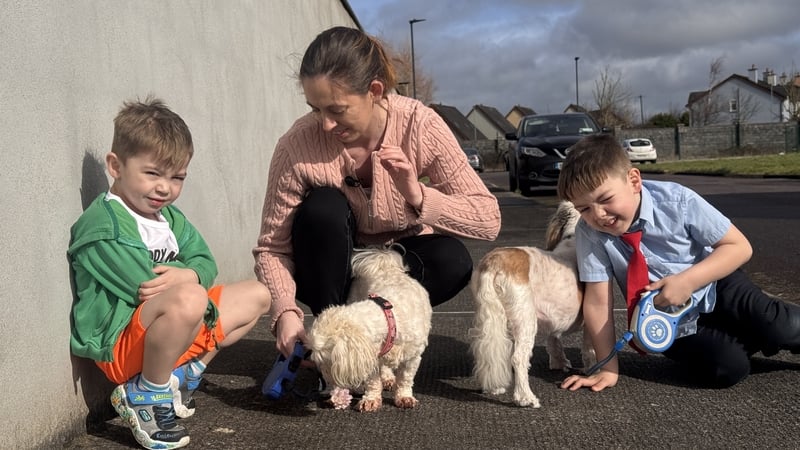
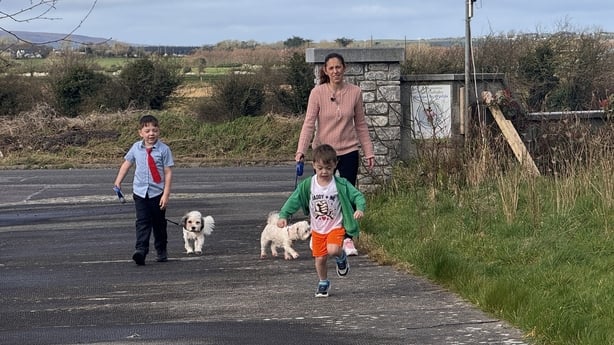
Yvonne Roche lives in Lixnaw in north Kerry with her husband, Jonathan, and her sons, six-year old Dylan and Corey, who is four.
Their assessment of need reports recommended that they should attend special classes in primary school.
Their special education needs organiser from the National Council for Special Education agreed that they were both entitled to a place in a special class, rather than attending school in a mainstream class.
Dylan currently attends a mainstream class at Ballyduff National School, as there is no place for him in the existing special class at the school.
His younger brother is due to start school there next September.
However, in September, there will be just one place available in the special class currently open at Ballyduff National School.
Dylan and Corey are currently first and second on the waiting list for that place.
Ms Roche describes having to decide which one of her children will avail of that place as "horrible".
"My children are number one and two on the list, so it came down to us as parents having to decide which one of our children needs that place more," she told RTÉ News.
"It's a horrible decision to have to make, because they both have the same diagnosis. They both have the same recommendations and we have to decide which one will get it."
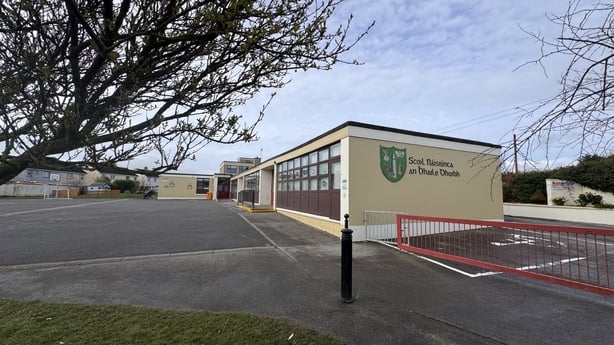
Ballyduff National School has expressed an interest to the National Council for Special Education in opening a second special class.
Principal Liz O'Grady explained that the school has an available classroom, adjacent to its existing sensory room and soft play area, and it has the staff who are willing to work in a second special class.
"We don't need a new build," Ms O'Grady said.
The school's existing special class is currently full, with six pupils.
One of those pupils is due to leave at the end of the current school year, creating a single vacancy there.
Ms O'Grady says there are six pupils currently on a waiting list for a second special class.
A maximum of six pupils are allowed in each special class, to maintain low pupil-teacher ratios there.
Ms O'Grady is appealing to the National Council for Special Education to sanction a second special class for Ballyduff National School.
Ms Roche says she is waiting and hoping a second special class will be approved for Ballyduff.
Otherwise, she is being told, one of her children will have to attend school in a special class up to 20km away.
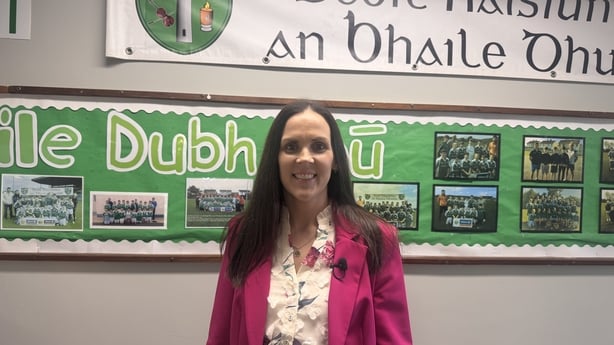
"We have sent numerous emails to the department (of education) and TDs, but you just get generic replies which don't address the situation in Ballyduff specifically," Ms Roche said.
"It is absolutely horrible to have to make a decision like that. The department are telling me to send one of my children to another school, but I don't want to separate them. How could I send them some place where they don't know anyone."
She says both children are embedded in life in Ballyduff. Their friends are there. Dylan plays with the local football and soccer clubs and Corey is due to start playing football in Ballyduff next month.
In a statement to RTÉ News, a spokesperson for the Department of Education said the expression of interest by Ballyduff National School in opening a second special class is "both appreciated and commended".
"However," the statement adds, "it is not always possible to open additional special classes in every school that expresses an interest".
The statement offers no commitment to opening a second special class in Ballyduff, other than saying that the National Council for Special Education has already sanctioned 351 special classes this year, "with more planned in the coming weeks".
The Department of Education spokesperson went on to outline details of significantly increased investment in the provision of special classes and special school places next year.
"Budget 2026 provides funding for over 400 new special classes and at least 400 new special school places for the 2026/2027 school year," the spokesperson said.
"This will see almost 3,000 new special education placements created for September 2026.
"This will be in addition to placements created due to the natural movement of students, such as those transitioning from primary to post primary or those completing school."
There are no figures available for the number of children on waiting lists for places in special classes and in special schools, but the investment outlined by the Department of Education has to be seen within the context of comments made recently by both the Taoiseach, Micheál Martin, and the Secretary General of the Department of Education, Bernie McNally.
Speaking in the Dáil on 25 February, Mr Martin warned that the number of applications for places in special classes in mainstream schools and in special schools next year was "over and above anything contemplated".
The following day, at the Public Accounts Committee, Ms McNally confirmed there was "substantially increased need coming down the track".
"I can't share the number," she said, but it was "significant".
The Department of Education has insisted that in the current school year, 30,500 students with more complex needs will be enrolled in special classes and in special schools, representing an increase of 67% on such enrolments since 2020.
The NCSE was asked to comment but failed to respond.