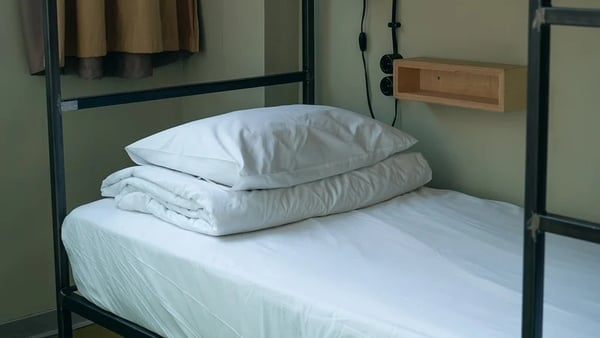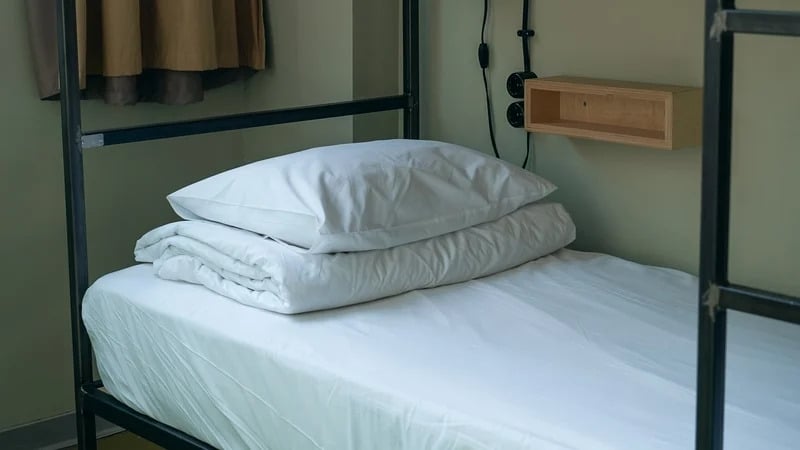

The State has created a "two-tier" asylum accommodation system resulting in significant gaps in oversight and regulation, according to new research.
The study led by the Irish Centre for Human Rights in Galway on behalf of Doras, which works with migrants, highlights overcrowding in emergency accommodation and lack of oversight.
'The Reception Gap: Permanent International Protection Accommodation versus Emergency Accommodation' examines reception conditions within the International Protection Accommodation Service (IPAS).
A survey of 246 residents, peer-led groups and interviews were conducted.
Many of the residents had been in Ireland for between one and three years.
Twenty-four of the participants were living in the reception system for longer.
They reported concerns about food provision, lack of private space, and prolonged stays in settings originally intended to be short-term.
The report recommends "a decisive shift" by the State from reactive, emergency-driven responses towards a coherent, rights-based reception framework.
It has also suggested that the Health Information and Quality Authority (HIQA) be provided with an expanded statutory remit to inspect all international protection accommodation, including emergency and short-term provision.
Limited remit for HIQA inspections
In 2024, the HIQA began inspecting permanent IPAS centres, however, its remit does not extend to emergency accommodation.
Yesterday, it published its annual overview report for 2025 which said the number of centres under its remit had reduced.
It currently inspects 30 centres, which is 10% of all accommodation settings for people seeking asylum in Ireland.
That is a reduction of 15 centres from January 2025 being inspected, when 45 centres fell under its remit.
However, due to contract changes between service providers and the Department of Justice, Home Affairs and Migration it is inspecting fewer facilities.
It is understood providers are moving from permanent accommodation centres to emergency accommodation over which HIQA has no legal remit when it comes to monitoring or inspection.
Doras has said emergency accommodation should be strictly a last resort and that the regulatory and inspection gap must be closed "as a matter of urgency".
CEO John Lannon said the hospitality sector had been managing accommodation and all aspects of life for people who had gone through traumatic experiences.
"They are not hotel guests, these are children, men and women who need trauma-informed, trained staff to support their integration needs. The system is simply not fit for purpose," he said.
He expressed hope that the "extensive research" would feed into reform efforts at Government level, as Ireland prepares to implement the EU Pact on Migration and Asylum.
We need your consent to load this rte-player contentWe use rte-player to manage extra content that can set cookies on your device and collect data about your activity. Please review their details and accept them to load the content.Manage Preferences