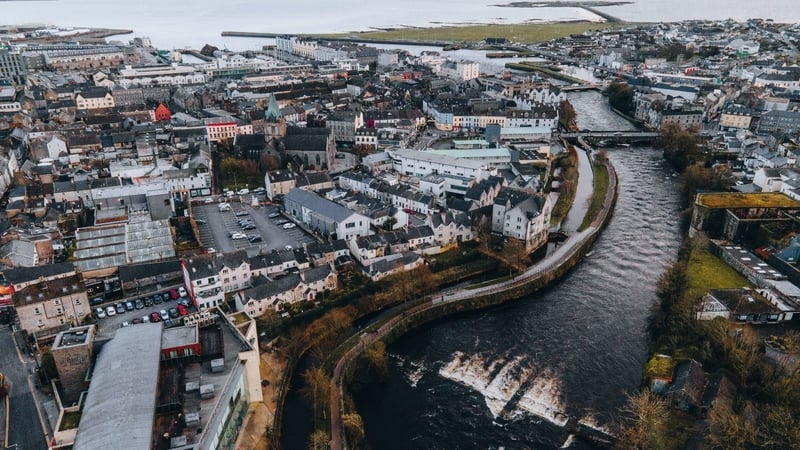

In what seems like the dim and distant past, but what was really just the 1990s, queues would form on Church Lane in Galway on a Wednesday afternoon.
They'd snake down the pedestrianised walkway and onto Shop Street, as participants waited for the early release of weekly accommodation listings that would be published in the classified section of the Galway Advertiser the following day.
On a good week, in late summer, there would be hundreds of people waiting for the A3 pages to be given out.
Getting your hands on the ads meant you had a slight head start on others looking for a place to rent. But it also required planning.
A list was no use without a stack of coins to call prospective landlords from a public telephone.
These facilities were limited, so more homework was called for. Pubs with phones provided shelter from the elements and the option for refreshments, to ease the house hunting task.
In turn, this sometimes led to distraction.
But somehow, the whole process eventually worked and thousands upon thousands of people were able to source accommodation with a combination of determination, perseverance and, perhaps, a degree of temperance.
Those attributes aren’t enough anymore.
The classified section in the Advertiser remains, but just four city properties were listed for rent in last Thursday’s edition.
And the supply pipeline isn’t just being shared online instead.
Across Galway city, less than 60 houses or apartments were on offer on daft.ie earlier this week.
Asking prices start at around €1,600 for a two bedroomed unit, and go as high as €4,500 per month, for a five bedroomed house in the suburbs.
A reset for landlords and renters
From tomorrow (1 March), new rules will be in place for anyone starting a tenancy. They don’t apply to those who are already renting.
The Government says the measures are intended to help address the housing crisis and will "further extend protections for renters".
But opposition parties say the moves will lead to a massive increase in rents.
That concern stems from a change which will allow landlords to reset rents for new tenants, as a 2% cap on the allowable increases will no longer apply in such cases.
In Galway, where accommodation is already in such short supply, the impact on those seeking a rental property will be keenly monitored.
Figures from the property website daft this week showed rents rose by 11.4% in the city last year.
As with the rest of the country, the laws of supply and demand are stark here.
Fergal Leonard, a Director at DNG Estate Agents in Galway says there is widespread confusion about the impact the new regulations will have on both the availability and cost of rental properties.
"The first thing that needs to be shouted from the rooftops is that nothing changes unless a new tenancy starts after the 1st of March" he says.
Recently, some property owners have been holding vacant places, in anticipation of the new rules.
"It has definitely been the case for the last few months leading up to this, where people are kind of going, 'OK, I've been hammered for the last number of years with low rent’ and feel they might be able to soon achieve market rents above the 2% increase allowed at present."
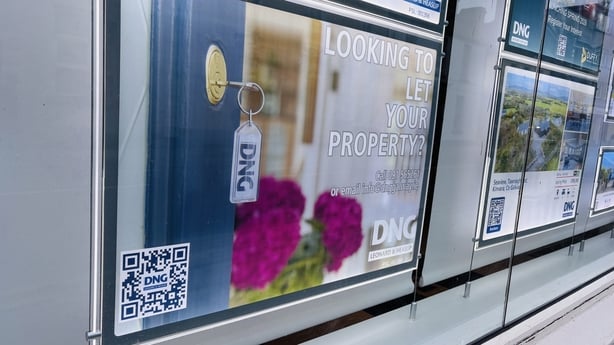
Mr Leonard says this could add to the supply of available properties in the coming weeks, and that already there’s been a slight increase in the number of houses and apartments listed as available.
"There could be a lot of landlords who have held back houses that have become vacant since last September, October. They just left them empty. And now they'll come to the market hoping to get the market rent. So if you have an excessive number of houses coming to market looking for high rent, that could drive the prices down".
But the auctioneer emphasises that what might happen is still all in the realm of speculation.
Right now, the overarching feeling is one of uncertainty.
"I'm reading about it. I'm in this every day…. And I'm still answering questions or trying to give you commentary on it. And I'm nearly second guessing myself" he says.
Others at the coalface are extremely concerned at the impact the new measures will have for the thousands of students attending the city’s two universities.
The maximum 2% cap on annual rent increases will not apply to student specific accommodation, with increases instead allowed in line with inflation.
Students competing with short-term lets
But the option for landlords to reset rents for new tenancies is a bigger worry for Seán de Búrca, Vice-President of the University of Galway Students’ Union.
"The Minister for Higher Education said last year that one of the most significant barriers students face today is the cost and availability of accommodation. And now what we're seeing is that it looks like that's going to be made worse," he states.
"Part of the reason for that is students will be coming in and out of tenancies, so essentially prices in housing market that apply for students can increase at a much higher rate.
"At the same time, if the supports that are existing for students, as in financial supports like Susi [grants], aren't going up at that same rate, then you're just going to be worse off."
Discussions about the merits or otherwise of the new rules governing rents is again generating debate in Galway about ongoing housing issues.
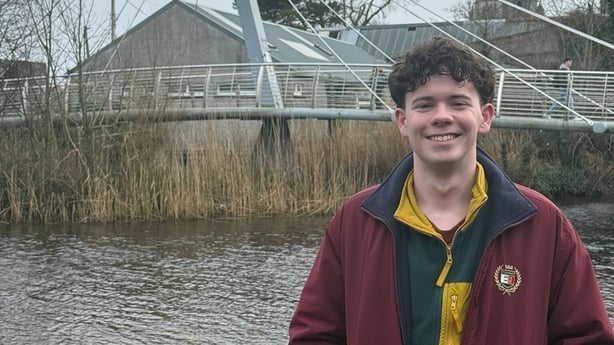
Mr de Búrca argues a laser-like focus is needed to radically increase the supply of properties available for students.
He suggests the repurposing of derelict buildings, owned by third level institutions, as one way of doing this, or having proper enforcement of laws around short term lets.
"I think the number of legal Airbnbs in Galway is in the double digits, whereas the number available is in the thousands. Landlords who would normally rent to students are choosing that option because they can get a bit more money, it's a bit handier, that sort of thing.
"And as a part of the new laws where tenancies are going to be a minimum six years, we'd imagine that there's going to be more people who are going to say, you know what, I'll just do the Airbnb instead."
"I wouldn't necessarily say that there's a supply issue, but there's certainly an artificial reduction of supply due to the law not being followed."
Fergal Leonard says he spoke to three people in the last fortnight who "between the three of them had 86 or 88 properties that they were letting in Galway City and suburbia on Airbnb."
He says that if even some of those were to come back into the long term rental market, it would make a significant dent on the things.
A huge backlog to be addressed
Economics lecturer at the University of Galway, Stephen McNena agrees.
But he says there is still a huge gap when it comes to need and availability.
"Since 2015, the construction of new dwellings has increased from under 20,000 annually to about 36,000 during 2025.
"Over the ten years, an extra 232,000 new dwellings have been built. However, over the same period, the population has increased by about 700,000 people.
"This means there is huge latent demand for housing, and a massive backlog."
The new rules in relation to new tenancy arrangements might chip away at the problems in some respects but few are expecting them to lead to a major change in that demand.
"In 2024, the Housing Commission estimated the size of the deficit at between 212,500 and 256,000 houses, and even that was based on figures from the 2022 Census" says Mr McNena.
"Even increasing new house construction to 50,000 to 60,000 per annum would not reduce the deficit by that much."