
The latest figures show that almost 320,000 people were in arrears on their electricity bills in December last year, an increase of over 20% on the previous year.
Meanwhile, nearly 180,000 people were in arrears on their gas payments.
Reporter Joe Caulfield spoke to some of the people who are having trouble paying their energy bills and are left paying the human cost to their wellbeing.
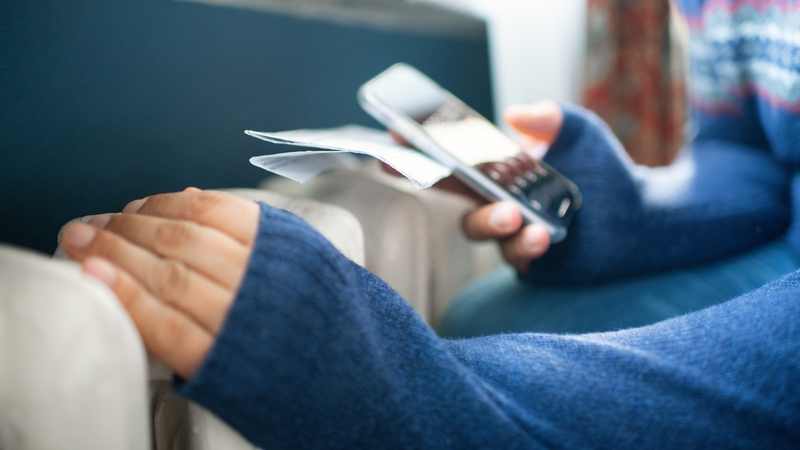
Liz is one of over 320,000 people struggling to pay her electricity bills and clear the debt she has already accrued.
"Sometimes you're sitting here and the alarm goes off (on the pre-pay meter) and you think 'here we go again, I'm only after topping up two days ago and now it’s gone’.
"It's like a vicious circle. If you didn't laugh, you cry," she said.
Liz said she had electricity and gas but cancelled the gas as it was "working out too expensive".
She said there is a debt on her gas meter, due to the outstanding amount from the last bill.
"When your credit goes below €3, the alarm goes off constantly until you top up.
"I topped up on Sunday with €20 and by Tuesday that was gone, so I had to add another €20.
"Now that's gone down under €10, so I’ll have to stick another €20 on it soon. So, that's €60 already since Sunday, and it’s only Thursday.
Liz said that half of her wages every week go on heat and electricity.
"Sometimes you won't be able to afford to shop at the end of the week, you just pick up few bits in the local shop, to keep you going.
"When you wake up in the morning and you're getting dressed, you get that damp feeling from your clothes because they’re so cold.
"It’s really difficult."
We need your consent to load this rte-player contentWe use rte-player to manage extra content that can set cookies on your device and collect data about your activity. Please review their details and accept them to load the content.Manage Preferences
The weather is a major contributory factor in gas and electricity bills, with over 45 consecutive days of rain this year.
Eddie explains the impact it is having on himself and those like him.
"Guys call in to me with their problems and that, and I help them out as much as I can.
"I’ve noticed now in the winter, they're coming in and they're having a cup of tea and they're staying with me for an hour because I have my heating on, that's how bad it is.
"The weather has been absolutely shocking as well.
"What can you do if it's pouring down?
"You might make your way over to the shop and back, but that’s about it.
"So, you're using all your electricity, you're making cups of tea and obviously having showers, and you need your heating on because you might have grandkids coming up now and again, so, you have to make sure they're nice and warm when they come into your home."
In October of last year, the Government confirmed the €250 energy credit would be discontinued for all households.
The following month, the Society of St Vincent de Paul received 5,423 requests for energy assistance, their highest ever monthly total.
Head of Social Justice and Policy at the St Vincent de Paul Louise Bayliss explains why so many people are falling short of paying their bills.
She said the National Energy Affordability Task Force has estimated that the average household will see an increase in their energy costs of €321 a year.
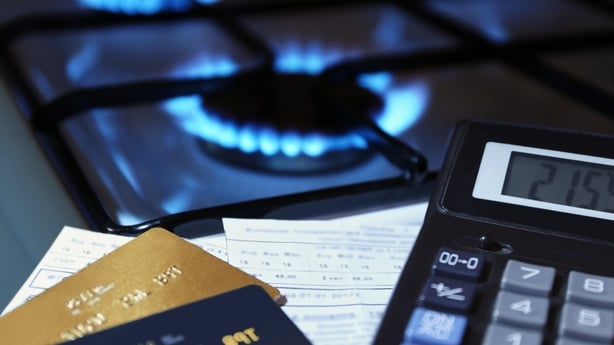
"However, if you look at the lowest income households, those in receipt of fuel allowance, people on disability payments, old age pensioners, they got an increase in the fuel allowance, but it went up by €140 a year, compared to a €321 increase in their cost.
"You see that deficit all the time," Ms Bayliss said.
"We hear increasingly that people are going to the library, they're going to cafes and they're going to bed earlier and earlier in the evening, so they don't have to heat the house for as long.
"What we're seeing is people have chosen to pay for heat, and then they're approaching us looking for food.
"So, we’re not only seeing an increase in demand around energy, we are seeing an increase in the demand for food assistance, where people have decided to make that choice, to heat the home, but then are left with not enough food in the cupboards."
Government energy credit was 'massive benefit'
In the two months following the Budget from November to December 2025, the number of people in arrears on their electricity bills increased by almost 16,000.
Mary says the withdrawal of the government energy credit has had a massive impact.
"Because we received the energy credit the last two years, when we didn’t get it this year, there was a constant worry to keep topping up the energy meter.
"Sometimes, during the really bad weather, I wasn’t able to top it up. I couldn’t believe it was gone so quickly.
"So, we didn’t have heating for a day or two. But that's the reality."
Mary described the high energy bills her daughter faces.
"My daughter lives in a two-bedroom apartment in Crumlin, and she has storage heating.
"Both of them work full time, so the children aren’t there during the day, and their bill for December and January was €720.
"I would dread that bill coming in to me, because I know I couldn't afford to pay that in one lump. So that's why I have to prepay.
"I found the government energy credit was a massive benefit, I know a lot of people who felt the same.
"I'm delighted that they still give you fuel allowance, but with the amount of times that I have to top up, that only covers me for about four days."
A targeted approach to those most in need is a lot fairer
Senior Research Officer with the ESRI Dr Muireann Lynch said that the Government must identify families that are struggling with their energy bills and ensure that they get the support that is needed.
It comes as opposition parties have called for the re-introduction of energy credits, after figures showed almost 320,000 people were in arrears on their electricity bills.
Speaking on RTÉ's Six One, Dr Lynch said: "If we look back at when the energy credits were being paid, we saw arrears in gas rose a lot faster than arrears in electricity."
She said because the energy credits came on electricity bills directly, it suggests that people were actually using that credit to avoid falling into arrears in electricity because there were no similar credits on gas bills.
Dr Lynch said the real problem with the energy credits was that they were universal.
She said there are likely many more than the 320,000 in arrears, who are "really struggling to pay these high bills".
"But there are about two million households in the country. You would have to ask whether or not giving an extra cash credit to every person in the whole country is the best way to go about this," she said.
She said evidence and research from the ESRI suggests that a targeted approach to those most in need is a lot fairer.
Dr Lynch said when payments are increased through the tax and welfare system it gets to people when they need it.
She said it is still the case that there are an awful lot of families struggling and it is a matter of identifying those families to make sure they get the supports they need.
She said it is "tricky" to answer the question on whether energy companies should shoulder the blame for charging excessive prices, as "we don’t have all the data to answer it".
However, she said Ireland’s wholesale costs are higher than most of Europe and that the gap between wholesale costs and what companies charge is quite large and "much larger than it has been historically".
She said that research is needed into the causes, but a lack of competition may be one reason but that more data is needed.