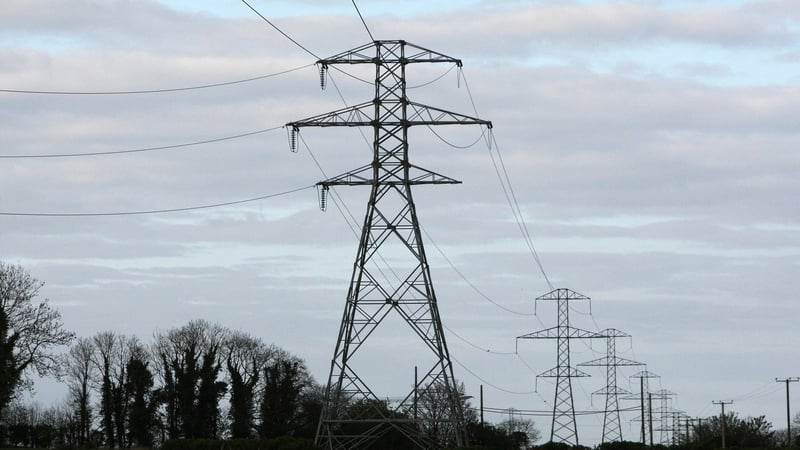

The operator of the national grid has warned of "a potentially challenging situation" in meeting electricity demand between 2026 and 2028.
EirGrid said it expects there will be "a steeper" growth in demand out to 2030, with "a steadier increase" in growth between 2030 and 2035.
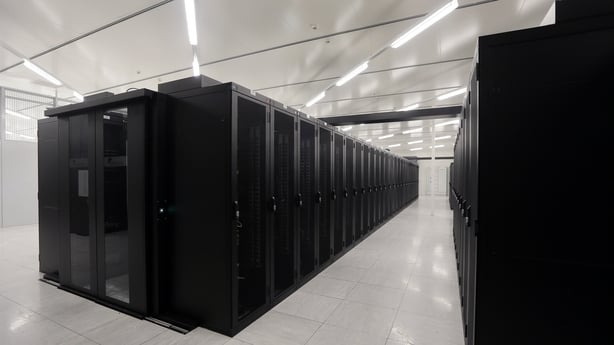
The State body said the demand growth will come from data centres, and the increased electrification of transport and heat, such as electric vehicles and heat pumps.
It also pointed to "delays in generation capacity".
EirGrid said Temporary Emergency Generation facilities and the Moneypoint Power Plant in Co Clare are available as "out of market measures to provide critical back-up generation".
It said the facilities "will be called upon in the event of a shortfall in market-based capacity and where alerts on the system are likely".
We need your consent to load this rte-player contentWe use rte-player to manage extra content that can set cookies on your device and collect data about your activity. Please review their details and accept them to load the content.Manage Preferences
Head of Power System Insights and Research Design Authority at EirGrid Marc Senouci said they will be "critical back-up" over the next couple of years from an adequacy and security perspective.
In its annual All-Island Resource Adequacy Assessment, which looks at the balance between electricity demand and supply, EirGrid also said there will be "a need for further generation to meet demand" in the early part of the next decade ranging from 200 megawatts to 400 megawatts.
The national grid operator said the proportion of the total electricity supply being by datacentres is rising.
Mr Senouci said the level is currently in the "low 20% of total demand" but he added that "as we move into the next decade, we're seeing that rise closer to the low 30s percentage perspective".
EirGrid said over the next 10 years, the sources of electricity supply will continue to change as the country transitions to a predominantly renewable power system.
Mr Senouci said as society consumes electricity in different ways, and amid the transition to a renewable-led transmission system, "the electricity industry will need to identify new ways to meet growing demand for energy".
He said as the landscape of demand and generation supply changes, and as electricity demand increases, "government policy will help guide the transition, but a coordinated effort to manage both the volume and type of new capacity will be needed".
"In addition, it's crucial that the capacity market delivers new capacity efficiently, and the type and volume of capacity needed to underpin the energy transition."