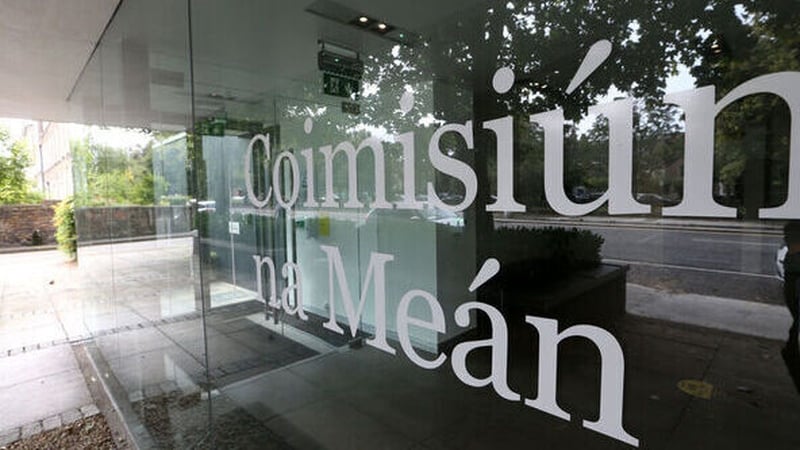

The media regulator, Coimisiún na Meán, will tell the Oireachtas Committee on Artificial Intelligence (AI) today that tougher laws relating to AI-generated deepfake sexual imagery could be useful.
In his opening address to the Committee, Jeremy Godfrey, Executive Chairperson at Coimisiún na Meán is expected to say the issue of non-consensual AI-generated imagery potentially engages legal obligations beyond the current framework of online safety laws.
Under the EU's Digital Services Act (DSA), risk assessments are required when an AI system is integrated into a very large online platform or search engine, and when a system meets the definition of a "general purpose AI" system under the AI Act.
Mr Godfrey will tell committee members that it is worth considering whether to supplement these requirements.
"For instance, it could be useful to make it a prohibited practice to deploy AI systems that are capable of producing intimate imagery of real people without their consent, or which are capable of producing child sex abuse material," he is expected to say.
"It may also be useful to widen the scope of "high-risk systems" under the AI Act to include a wider range of chatbots and generative AI tools," according to the opening statement.
Mr Godfrey is also expected to say that while we have begun to see companies making changes to make their platforms safer, the changes have not yet been sufficient and new types of harm, especially harms related to AI, have emerged.
The Oireachtas AI Committee is examining issues around images, deepfakes and consent, in the wake of the Grok controversy which saw users deploying the AI tool to generate sexualised images of adults and children.
Today's meeting will also hear from the Data Protection Commissioner Dr Des Hogan.
Last week, the DPC announced an investigation into X, the parent company of Grok, over the generation and sharing of sexualised images.
In his opening address Dr Hogan will tell the committee that, as with all its inquiries, it is the DPC's intention to conduct a thorough, swift and fair inquiry into the matter.
He will also tell members that it is essential that the DPC remains appropriately resourced and fully equipped to meet its regulatory objectives.
"Regulators such as the DPC require sustained support from Government as new responsibilities increase workloads," Dr Hogan is expected to say.
"This is vital if Ireland is to maintain its global standing as a digital regulatory hub while fully discharging our obligations as leading EU regulators," according to his opening statement.
Today's hearing will also be attended by representatives from Google.
"Our meeting this week will focus the online harms that have become apparent in recent months with misinformation, disinformation and harmful non-consensual material being circulated online," said Committee Cathaoirleach Malcolm Byrne.
"The committee looks forward to engaging with the regulatory bodies and our tech representative Google on how best to move forward and improve online safety for our democracy," Mr Byrne said.