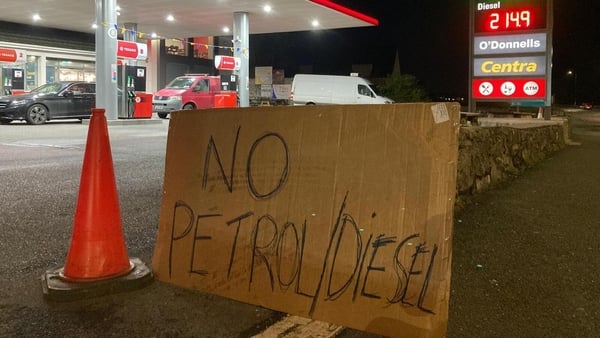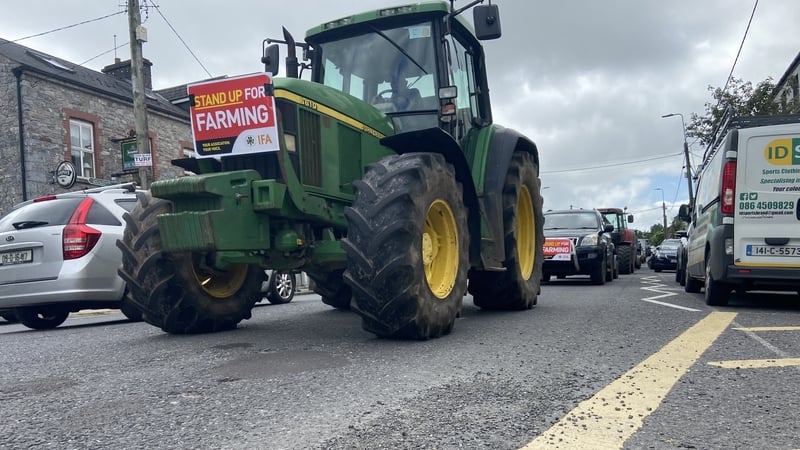

Irish farmers, with the support of the Government, have had some big wins in recent times.
Last December Ireland secured a renewal of its nitrates derogation from the European Union - a crucial measure allowing around 7,000 Irish farmers to keep more livestock per acre of land than allowed under the EU Nitrates Directive.
The mood music hadn't been good around a renewal, but intensive lobbying from both Irish politicians and farming organisations in the lead-up to the vote helped get it over line - albeit with some additional conditions.
While last month, after a little bit of apparent wavering from the Government, it backed farmers in their opposition to the Mercosur trade agreement in an EU vote.
The proposed trade deal may well still end up being adopted by the 27 member states but it could take longer and include additional terms to protect farmer interests.
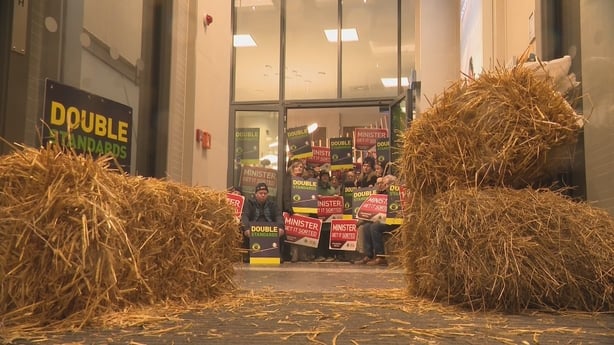
And in recent weeks farmers - notably the Irish Farmers' Association - have been locked in a dispute with both the Government and Bord Bia over the chair of the semi-State agency, Larry Murrin.
Farming organisations have all called on Mr Murrin to step down after it emerged his company Dawn Farms has been importing Brazilian beef.
Farmers say this creates a conflict of interest for Mr Murrin, given Bord Bia's role in promoting Irish food.
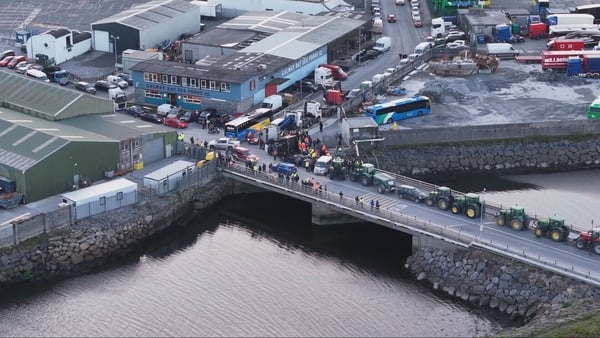
Since 26 January, IFA members have been protesting at Bord Bia's Dublin office over the issue.
So, who are the key individuals and groups in the Irish farming lobby and how much financial heft do they have?
Irish Farmers' Association (IFA)
The IFA is far and away the largest and most powerful representative group for farmers in the country.
It has around 72,000 members spread all across Ireland, and as demonstrated by the ongoing Bord Bia protest, it has extensive manpower and financial resources to draw upon when needed.
It's the loudest and most prominent voice in the sector on a variety of issues facing farmers.
Last year the IFA had an income of €17.6 million, €7.7 million of which came from member contributions.
But the organisation also had significant outgoings in 2025 ... spending €16.8m, €6.2m of which went towards staff costs.
The highest-paid members of the IFA are also its key individuals.
President Francie Gorman earns an annual salary of €140,000, however, this figure is reduced by any directors' fees payable to him by outside bodies that come as a consequence of his IFA office. This meant the IFA contributed just over €88,000 to its president's earnings in 2025.
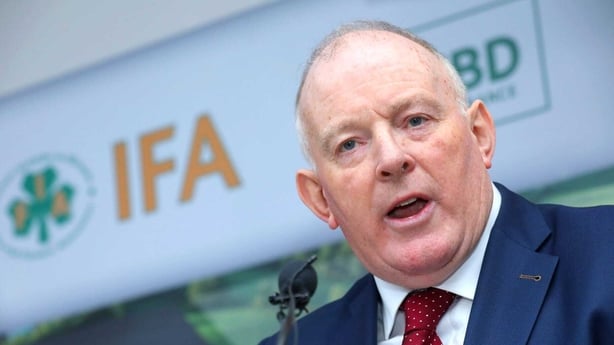
But it was Director General Damian McDonald who was easily the organisation's biggest earner last year - receiving more than €260,000 (around €34,000 of which was made up of pension contributions).
The IFA has previously said the salary of its Director General is designed to be "in line with the pay scale for the Secretary General of the Department of Agriculture, Food and the Marine".
Mr Gorman is the public face of the IFA, while Mr McDonald is one of its most influential figures working largely in the background.
Both have been regular attendees at the Bord Bia protest, as well as the many meetings the IFA has held across the country to discuss the dispute.
The group also operates a full-time office in Brussels, which is used mainly for its engagement with EU institutions, politicians, and officials in the Belgian capital.
According to the IFA's annual report, it spent €680,000 on its Brussels operation in 2025 (€100,000 more than in 2024) - which is headed up by the farming group's Director of European Affairs Liam McHale.
Not only does the IFA have an unrivalled membership and reach compared to other Irish farming organisations, but its financial muscle is also far more considerable.
At the end of last year, it had more than €14 million in a "Special Reserve Fund", which was established by the IFA National Council in 1985 to maintain a financial reserve for the organisation that can be accessed in "exceptional circumstances".
When the IFA feels it needs to highlight an issue it can draw on these exceptional financial resources, as well as unrivalled grass-roots support to do so.
The latter was in evidence when the Taoiseach and senior Government ministers appeared to be wavering somewhat in their opposition to Mercosur, before reports of IFA members coming out in force to contact their local backbench TDs to encourage the Government to maintain its opposition to the deal.
The IFA also has a 24-hour rota in operation to maintain its protest at Bord Bia's Dublin HQ, with members from different counties taking shifts on-site to ensure a round-the-clock presence.
By Thursday 26 February, if it is still in place, the protest will have been running continuously for a month.
It's questionable how many other farming groups here - if any - could do similar.
Irish Creamery Milk Suppliers Association (ICMSA)
The ICMSA represents around 18,000 dairy farmers, and although it's not on the same scale as the IFA, the organisation is heavily influential in the agricultural sphere.
It has members across the country, but it has a heavy concentration of people in the milk-producing areas of Munster, south Leinster - as well as in Cavan and Monaghan, with the counties home to several creameries and co-ops.
The ICMSA has around 15 staff, who are paid a combined €725,000 annually.
ICMSA President Denis Drennan is reportedly paid roughly €50,000 a year for his role.
Traditionally the organisation has had a less-commercial emphasis than the larger IFA, and this is reflected in the vastly different finances of the two groups.
Meanwhile, the ICMSA has been reluctant to establish commercial links, fearing it might dilute the influence of its members.
The dairy-farmer group is well respected among officials and gets a seat at the table for pretty much any key agri-sector talks.
The Irish Cattle & Sheep Farmers' Association (ICSA)
With roughly 10,000 members the ICSA isn't on the same level as some of the other farming groups, and while it hasn't been as prominent on agricultural issues recently, the organisation has a strong track record for securing particular payments and subsidies for cattle and sheep farmers.
President Sean McNamara is the face of the ICSA and oversees a small executive team.
Macra
The voice of younger farmers, Macra, has a membership of around 15,000 (around a third of whom are active farmers) spread across 170 clubs.
The group gets funding and support from a lot of different sources, including Government departments, state agencies, and private companies.
This broad support structure means it can sometimes be tricky for Macra President Josephine O'Neill to be especially outspoken on any particular issue.
However, Macra is strong in terms of speaking up for younger farmers and highlighting the many barriers to entry for the next generation to the profession.
It's also worth noting, the IFA - in an observer capacity - has a seat on the council of the young-farmer organisation.
The farming lobby at EU level
Although the IFA has a dedicated Brussels office, much of the lobbying done on behalf of Irish farmers happens through COPA-COGECA - the umbrella group representing over 22 million farmers across Europe.
This is the most practical way of advances Irish farmers' stances on issues at EU level.
Ireland makes up just 1% of the EU's population, while we have 14 out of 720 MEPs.
Although we're a small piece of a much bigger pie, it's still vital to have a footprint in Brussels to make sure Irish agricultural interests aren't left behind.
Irish farmer representatives have had that presence since Ireland joined the EU in 1973.
For example, groups like the Irish Co-Operative Organisation Society (ICOS) - and indeed the IFA - use their presence in Belgium to facilitate meetings between Irish agricultural groups and EU officials, MEPs, etc.
They also play an important role in the feedback loop when the EU is considering implementing new policies that may impact the agri sector; taking proposals back to their respective members and in turn relaying responses and recommendations to policymakers.
A lot of these groups' activities might not qualify as lobbying, but they work to ensure Irish farming interests are being considered at the decision-making level.