Groups representing autistic people are calling to be included in the disabled parking scheme, and for it to be extended to people with "invisible disabilities".
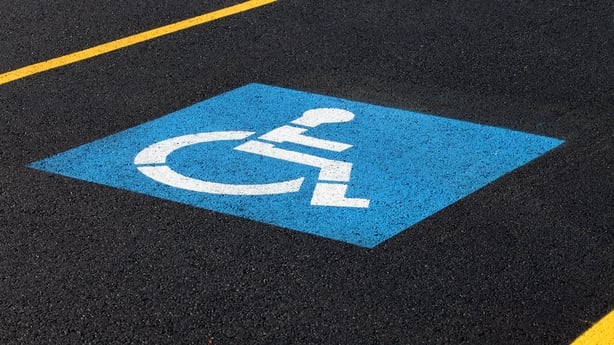
Currently, disabled parking bays are available to those who have a permanent condition or disability that severely restricts the ability to walk.
The Department of Transport is undertaking a review of the scheme, including eligibility.
One of those in favour of widening the criteria is Katie Weafer. Her daughter Lydia is non-verbal and autistic.
Ms Weafer said daily tasks, like shopping, are a constant challenge.
"We always need to make sure we are parking in the exact same spot every single time we go shopping. Otherwise, she thinks we're not going... it can be really, really tough.
"So, we may need to take a couple laps around the shopping centre... we may need to do five or six laps of the actual shop before we can go in," she said.
"It may take us an extra half an hour than anybody else just to get from the car to the actual shopping centre,' said Ms Weafer.
She said her daughter will be a flight risk and has no sense of danger if they do not park near their destination.
"She does this thing called eloping, which is essentially she will just bolt, she'll just go and she'll just run.
"So, when we're taking her out of the car, it's constantly holding her hand and making sure that we're just securing her from all dangers possible.
"Just being able to easily walk outside the door and put your kids in the car and take them out and go around shopping. We don't have that"
"You know, with cars going up and down, especially on busy streets, that's something that we would need to have the disabled spots around as well," she said.
Ms Weafer said while there are some spots in some places designated as 'neurodivergent' and for families with young children, she said they do not offer the same protection as the official blue badge spots.
She said the reassurance of the same spot and the extra room is key and is all about reducing the anxiety.
"The food shop is taken for granted by so many people.
"Just being able to easily walk outside the door and put your kids in the car and take them out and go around shopping. We don't have that.
"What may take 10 or 15 minutes for one family, for us, it could take an hour and a half to two hours - that's the process of getting in the car and getting her out and just making sure that we're making it as stress free as possible for her," she said.
"So the difference it would make is immense. It would really change everything."
'Lack of availability of disabled driver spaces'
There are around 150,000 blue badge holders. Just how many spaces there are is more difficult to ascertain, with official estimates putting the figures at around 25,000.
With the number of permit holders growing by around 10% in the last few years, there are concerns in some quarters that widening eligibility could put pressure on a system already feeling the strain.
Public Engagement Manager with the Irish Wheelchair Association John Fulham said: "The first thing to say is to reiterate that we're not against the opening up of the scheme for people who really need it."
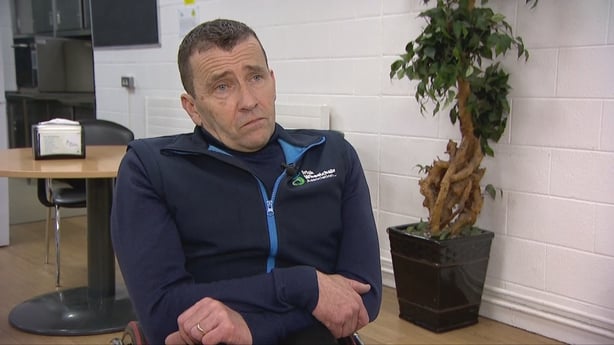
"But I think the worry is that if you expand the eligibility without reacting and increasing the number of available spaces, you're going to make a much bigger problem out of something that's already a challenge," he said, adding that his members routinely report a lack of spots.
He said the challenge is "the lack of availability of disabled drivers parking spaces, which is in turn impacting in people's ability to live independently, to access medical appointments, to get to where they need to be".
"And then the other piece is the enforcement element, and that's the abuse of the spaces. And we need to make sure that with any increased eligibility there, that it needs to be transparent and that the abuse of the spaces is cut out," he said.
The penalty for parking in a designated accessible space without a display of a permit is a fine of €150, with enforcement the responsibility of the gardaí and local authority traffic wardens.
Latest figures from gardaí show they issued 5,444 fines last year, compared to 4,870 in 2024.
The Department of Transport is currently undertaking an extensive review of the scheme, including looking at the eligibility criteria.
A number of interest groups, including autism charity, AsIam, have already entered their submissions on the matter.
In a statement, the department said it is expected that the review will be concluded later this year.
Changes could be on the way.
We need your consent to load this rte-player contentWe use rte-player to manage extra content that can set cookies on your device and collect data about your activity. Please review their details and accept them to load the content.Manage Preferences