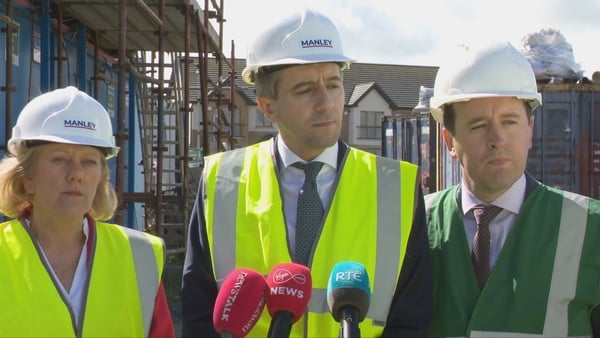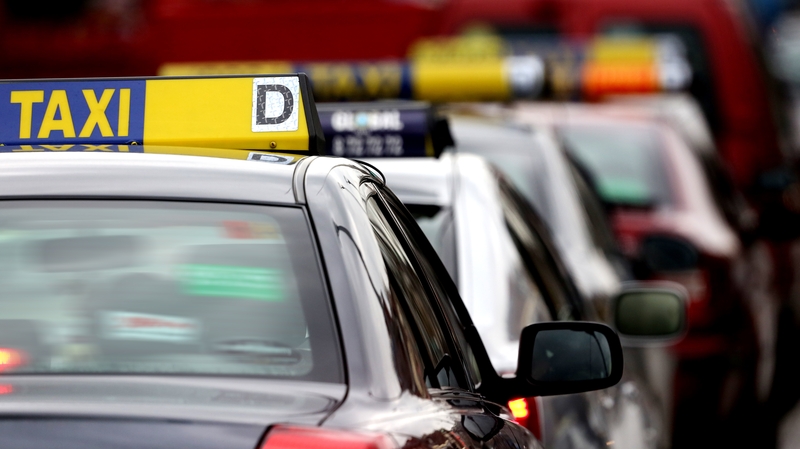

Minister for Transport Darragh O'Brien has said the full introduction of ride-hailing services is not Government policy and there is "no intention to introduce it", amid calls from the CCPC to open the taxi market up to them.
The Competition and Consumer Protection Commission (CCPC) has said it wants the removal of regulatory barriers to facilitate services such as Uber or Bolt, which currently only operate with licensed taxi drivers, into the market.
The move would mean allowing private drivers to provide services using their own cars, subject to regulatory safeguards.
The commission said that research it carried out between January and February this year has highlighted a shortage in the supply of taxis.
A survey of more than 1,000 consumers suggested that more than half of respondents (57%) do not believe there are enough taxis in their area.
In a statement, Mr O'Brien said he noted the research from the CCPC, adding however that such a move was "not Government policy and there is no intention to introduce it".
"The protection of the consumer and personal safety are vital objectives and must continue to be central to how the taxi and hackney sector is regulated and operated," he said.
Mr O'Brien said the taxi and hackney market has undoubtedly changed since liberalisation of the market took place and more notably in recent years, in relation to the role of dispatch operators.
"I have requested that the NTA conducts a regulatory assessment of dispatch operator licensing in Ireland in the context of ensuring that the regulatory framework for this element of the overall sector is sufficiently up to date and robust to respond to developments since the enactment of the Taxi Regulation Act 2013."
Watch: Lack of taxis is not 'delivering what consumers want', says CCPC
Mr O'Brien encouraged taxi drivers, passengers, the CCPC and other stakeholders to engage with this review.
The commission's research found there were "stark differences" of opinion in relation to taxi numbers, depending on the location.
The research found that in Dublin, 56% of those surveyed believe there are enough taxis.
However, outside Dublin, just 28% of people agreed. In Connacht and Ulster, the figure was even lower at 21%.
The CCPC said that 49% of consumers surveyed said they would like the option of a ride-hailing service, and 60% supported a fixed-fare option.
Chair of the CCPC Brian McHugh said that consumers are suffering due to a failure to facilitate innovations in the industry.
"Regulatory barriers in the taxi market have failed to facilitate innovations that have flourished in other countries, and consumers are suffering as a result. Our research shows a clear preference for more choice among consumers who are not getting the service they need.
"This is not about abandoning oversight or regulation. Any new entrants could and should be regulated to maintain high service and safety standards.
"Consumers and businesses deserve an innovative, functioning taxi sector that provides choice. Consumers shouldn't be faced with long waits or the possibility of staying home due to a lack of taxi availability," he said.
We need your consent to load this rte-player contentWe use rte-player to manage extra content that can set cookies on your device and collect data about your activity. Please review their details and accept them to load the content.Manage Preferences
Speaking on RTÉ's Morning Ireland, Mr McHugh said the current market was not working, as consumers do not have enough supply or choice in relation to taxis.
He said that the addition of ride-hailing platforms would be regulated and in addition to the current taxi fleet.
"It's not delivering for consumers. So, we are looking for the market to be opened up, for there to be new entry, more taxi drivers."
The survey also indicated that 40% of people who tried to get a taxi last December had issues in doing so.
The CCPC is now calling on the Government to remove key regulatory barriers in the taxi market.
It said the goal is to achieve a balance that protects consumers and ensures access, while also allowing competition and innovation.
The research comes ahead of the National Transport Authority’s (NTA) regulatory assessment of the licensing of dispatch operators, which is due to begin later this year.
The CCPC said it looks forward to engaging with the NTA in its consultation process.
Freenow seeks reform of hackney scheme
Taxi company Freenow by Lyft Ireland said it believed "the key to improving the industry is through targeted measures, such as reform to the Local Area Hackney Scheme".
In a statement, its General Manager Danny O'Gorman said: "There is little evidence that simply increasing overall driver numbers would solve" rural supply challenges.
"Most taxi drivers work in urban centres, where demand is concentrated, [and] a sharp increase in new licences would likely skew the balance further towards cities, leaving rural areas no better served.
"A sudden influx of new entrants would undermine the ability of existing SPSV-licensed (Small Public Service Vehicle Licence) professionals to earn a stable income.
"Our research shows that proposals to deregulate the sector could see drivers lose nearly €400 a month in earnings.
"53% of our driver partners would consider leaving the sector entirely if unlicensed drivers were allowed, while 66% expressed deep concern for their long-term financial stability.
"Full deregulation is a race to the bottom that would inevitably lead to a decline in service quality," ," Mr O’Gorman said.
Uber said "it is clear that the Minister for Transport and the NTA need to begin a serious reform process that improves access and availability for consumers and drivers.
"We support the Taxis for Ireland Coalition call for a national taxi strategy that strengthens the market while supporting a well-regulated industry," a statement said.
Primary focus is on ensuring passenger safety - NTA
In a statement the National Transport Authority said: "The NTA regulates taxis, hackneys and limousines under the 2013 Taxi Regulation Act. Our primary focus is on ensuring passenger safety, and creating a quality, accessible and environmentally sustainable taxi fleet.
"Drivers are vetted by An Garda Síochána in order to be licenced to serve passengers, and the NTA sets vehicle standards to ensure taxis are safe and suitable.
"There are no caps on the number of licensed drivers and licensed taxis, hackneys and limousines in Ireland."
The NTA also said that at the end of January, there were 27,955 SPSV licenced drivers and 21,071 licenced SPSV vehicles in Ireland.
It said that approximately 6,000 new drivers have entered the industry in the last three years and that drivers can use their own vehicles once they meet suitability standards, are licensed and appropriately insured.
"In Ireland, taxis operate under a framework where maximum fares are set to protect consumers. The last decade has seen the entry into to the Irish market of numerous international 'app-based' dispatch operators who have brought innovation and convenience to drivers and passengers alike.
"These ‘ride hailing’ apps continue to expand, allowing passengers to easily access the supply of SPSVs in real time.
"Drivers can use more than one app. Traditional methods of booking taxis (hail on the street, local dispatch telephone service, taxi ranks) operate in parallel. The NTA estimates that 65% of taxis are booked through dispatch operator apps," the statement added.
The NTA said it is consulting on the regulatory framework in relation to dispatch operators in the coming months and it notes the CCPC comments in this regard and welcome the views of all stakeholders as part of this process.
It said that in relation to rural transport, following consultation last Autumn, the NTA intends to soon introduce new measures for Local Area Hackney services.