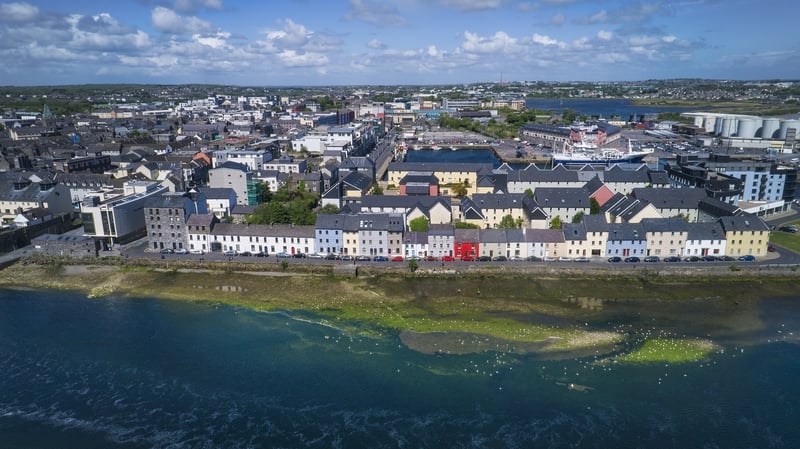

Border counties are set to lose out on levels of EU funding available to similar European regions as a result of the wider region being reclassified in the next EU funding period.
The move, confirmed by the European Commission to the Northern and Western Regional Assembly (NWRA), will see co-financing rates for major projects fall from 60% to between 40% and 50%, meaning the Government will need to contribute more.
The European Commission views the counties of Donegal, Cavan, Leitrim, Sligo, Monaghan, Galway, Roscommon and Mayo as the northern and western region.
The NWRA said Galway, Mayo, and Roscommon have a GDP per capita of 133% of the EU average while five border counties lag at 70% of the EU average.
Overall, the region's GDP per capita has risen to 104% of the EU average, resulting in the reclassification of the northern and western region from a "transition region" to a "more developed region" in the 2028-2034 EU funding period.
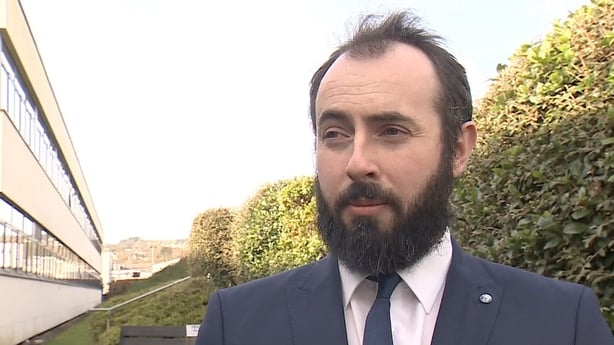
NWRA Economist John Daly said the changes "seems to have been predominantly driven by the three counties of the west - particularly Galway - with GDP figures in the five border counties in line with some of the poorest regions in the EU27.
"During this evaluation period, the border’s GDP per capita amounted to 70% of the EU27 average, whereas the west’s GDP per capita amounted to 133%, showing that there is significant economic gap even within the northern and western Region of Ireland," he said.
Mr Daly said disparities appear to be driven by the growth of Galway, with the county accounting for almost 40% of economic output in the region and 58% of all employment in IDA client companies.
He said incomes in Galway are 10% higher than the regional average, and he added, the county’s population share has grown from 27.5% in the 1990s to 31% in the latest census - a trend likely to continue considering job growth.
"While such growth in the west is to be strongly welcomed, the Government will need to explore how greater investment can be delivered in a manner that ensures all parts of the northern and western region of Ireland can grow in line with or above the EU27 average," he said.
Mr Daly said this consideration "is not an unreasonable target given the Irish economy is one of the richest countries in the EU".
"This is particularly important as the latest labour market data shows that the border’s unemployment levels have risen by around 50% in quarter three last year," he added.
Urgent investment needed in infrastructure in border counties - NWRA
The European Commission confirmed the new designation in a document to the NWRA, which manages the European Regional Development Fund, which co-finances infrastructure projects in less-developed EU regions.
The Assembly is calling on the Government to prioritise the delivery of long-awaited key infrastructure projects and ringfenced funding, particularly in border counties.
NWRA Acting Director Conall McGettigan said urgent investment in infrastructure and greater decentralisation is imperative to tackle widening disparities.
"In this regard, the revised National Development Plan (NDP) will be key to improving the region’s transport connectivity and enhancing the region’s provision of third level education services," he said.
Mr McGettigan said the NWRA is urging policymakers to fast-track the 35 infrastructure priorities in its submission to the NDP, including the Donegal Ten-T Road, the N2 Clontibret to Border Road, the Western Rail Corridor, and upgrades to regional electricity and water infrastructure.
He believes Ireland needs to begin a process of decentralisation, with the view of providing regional and local authorities with the resources to deliver their own infrastructure priorities as a means of addressing regional imbalances.
"As of now, nearly 90% of all government expenditure in Ireland is managed by central government, with Ireland regarded as one of the most centralised government systems in the OECD.
"Research has shown that these types of government models tend to neglect remote regions and until we become more decentralised it is inevitable that regional disparities will rise in Ireland," Mr McGettigan said.
EU vital in mature student's career progression
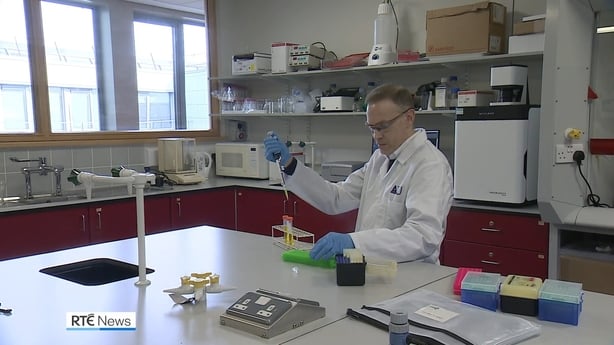
Lecturer in Science Dr Wesley McCormick who returned to education as a mature student, said the EU was vital in his career progression and academic research.
"I came back as a mature student. It was a difficult move to make, but one that I'll never regret.
"The European funding was vital to my career progression. Without it, I wouldn't have completed my PhD. without it.
"I moved into post doctorate research related closely to my PhD research. I have now become an assistant lecturer in science," he said.
'Message will remain the same' - ATU President
Atlantic Technological University President Dr Orla Flynn said that the northern and western region’s status as a region in transition has helped unify the institution.
Dr Flynn said it allowed the multi-campus institution to unite behind a common mission and gain a clearer understanding of the region’s wider needs, particularly in research and innovation.
Dr Flynn said a variety of EU funding instruments have been progressive and very helpful for the university across the region.
The Technological University Research and Innovation Supporting Enterprise (TU RISE) scheme has allowed ATU to recruit up to 60 PhD candidates to builds research capacity between academia and regional enterprises in the west and northwest.
"I have spoken in other fora about how important the kind of knowledge intensive activity, knowledge transfer and the research agenda is for any region in terms of stimulating economic growth and for driving prosperity, and that very much remains a priority for us," she said.
"The fact that we're no longer a region in transition is obviously really good news on one level, but I wouldn't take it that it’s a job done.
"We need to continue with the plans that we've set down in terms of increased focus on research and innovation, and particularly to make sure it’s equitable across the region.
"The change in funding structures will be managed in the normal course of events, but the message will remain the same, that we need to continue to focus on strengthening our research and innovation performance," she added.
We need your consent to load this rte-player contentWe use rte-player to manage extra content that can set cookies on your device and collect data about your activity. Please review their details and accept them to load the content.Manage Preferences