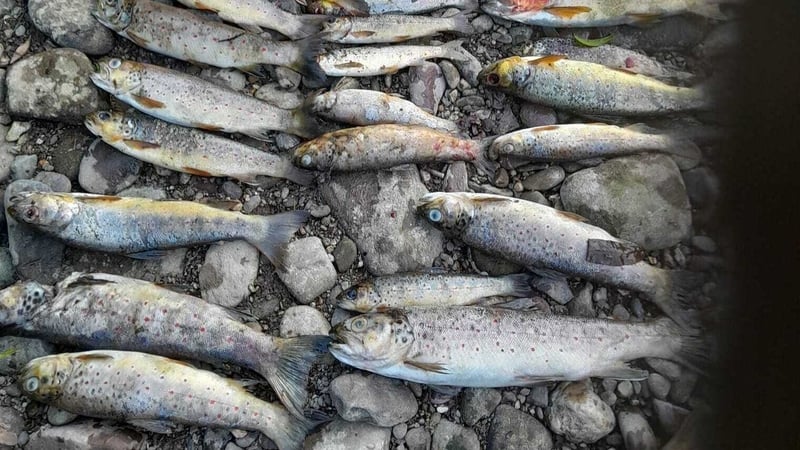

The European Commission's Joint Research Centre has published an independent report about the lessons learned from Ireland’s largest ever fish kill incident on the Blackwater River near Mallow last August.
It said although investigating agencies responded rapidly and logically, the response to major fish kills in Ireland could clearly be improved.
The cause of the fish kill has still not been found.
Minister of State with responsibility for Fisheries and the Marine Timmy Dooley described the recommendations set out in the report as "practical" and "forward-looking".
These included a call for basic continuous monitoring with current and historical results available online for all rivers greater than 100 kilometres in length.
Since neither the pollutant that caused the fish kill nor its source has been identified, it said monitoring vigilance in the Blackwater River and its tributaries should be maintained and intensified by Inland Fisheries Ireland and Cork County Council.
An estimated 42,000 fish died in the Blackwater fish kill causing widespread upset in the region and across the country.
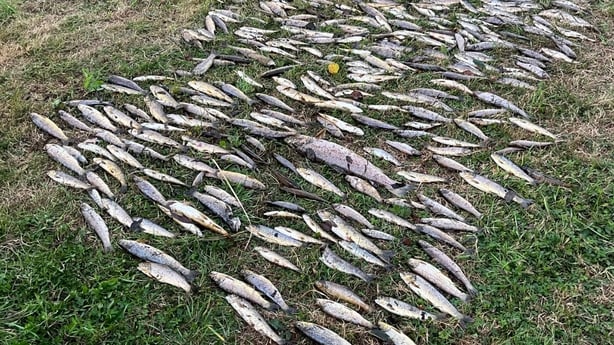
Today’s independent report found the initial response by State agencies, including Inland Fisheries Ireland, Cork County Council and the Environmental protection Agency was rapid, with investigations occurring within hours of notification.
Subsequent investigations, extended for weeks, including habitat inspections of the main river channel and its tributaries, macroinvertebrate and water samples of the river, and inspections of licenced industries as well as smaller businesses and farms in the region.
The report identified opportunities where coordination and communication could have been improved, while also acknowledging that a "detection gap" exists, where a short-lived pollution event occurs and dissipates before it is detected, limiting the investigation and enforcement.
It said a new multi-agency protocol for major fish kills needs to be developed, agreed and tested.
This should include comprehensive sampling of any affected river as well as discharging facilities throughout relevant catchment areas.
A public communication strategy also needs to be developed to immediately pass on knowledge about fishkills, specify any uncertainties, outline investigative steps being taken and dispense immediate advice for the public.
In addition, research needs to be carried out to determine high risk areas for fish kills so that preventative action can be taken and determine the economic cost of any fish kill.
Ongoing restoration efforts in the Blackwater catchment area affected by the fish kill now need to be intensified according to the report, to achieve the environmental objectives under the EU Water Framework Directive.
Minister Dooley said that many of the recommendations made in the report will be progressed in the short term, including those aimed at strengthening how State agencies work together.

An Inter-Agency Protocol Group has been established by Inland Fisheries Ireland to coordinate this work and is expected to be completed before the end of March this year.
This single agreed protocol for all agencies involved in investigating fish kills, will ensure that the relevant expertise, resources and information are brought together quickly, and will ensure consistency in how incidents are handled and communicated in the future.
The report also sets out a range of longer-term recommendations, such as improving habitat quality and water flows, and enhanced detection and real-time monitoring on major rivers.
Minister Dooley said these recommendations are complex and will require careful assessment and planning.
His Department is exploring the potential to develop a pilot in the Blackwater catchment region, to test, assess and evaluate the implementation of these recommendations in practice before considering a wider rollout.
Community involvement would be a core consideration in developing such an approach, he added.
Local stakeholders and angling groups in the Mallow region were the first to raise the alarm about the fish kill last August.
Today’s report lists some of their concerns and criticism about how the State agencies conducted their investigations.
They criticised the investigators for putting too great a focus on the potential role of a pathological cause for the fish kill when there was clear evidence of it being a pollution event.
They also complained that the information flow from agencies was too slow, not detailed enough, and there was a lack of health and safety notification to the public.
Read more: Probe into Blackwater fish kill finds no definitive cause