
Local authority crews in Dublin are working to assist people likely to experience possible flooding as a Status Orange warning for rain comes into effect for the capital.
With seemingly no end in sight to the heavy rainfall and flooding across the east coast, crews in South Dublin are working to clear debris, operate pumping stations and distribute sandbags to residents and businesses.
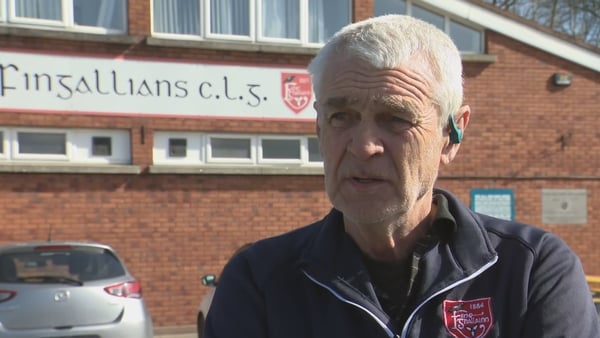
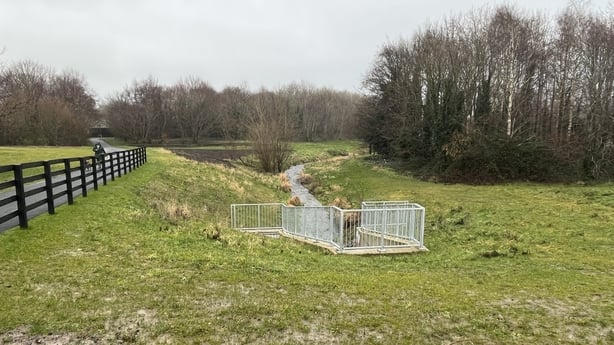
At a river screen, filtering debris from the flowing water of the River Camac, one local authority crew member, Dan, describes what the team will be focusing on, ahead of rainfall.
"We're going to be cleaning all the screens and cleaning off all the rubbish that is blocking up waterways. They're getting clogged by debris and foliage, and also from people dumping, so we have to get machinery and clear all of that.
"If the screens block up, it just builds up and then it'll come out on the roads and the banks and everything. So, they have to be cleared. We're also going to be handing out a lot of sandbags to people in the areas most likely to be affected by the flooding."
Brian is another member of the crew, and has worked for the local authority for 26 years.
He says he has noticed a significant change in that time.
"It's a lot worse. Climate change definitely has something to do with it. We're getting a lot of heavy rainfall now at different times of the year. Where it would normally be just the winter months, we're getting it now during the summer as well.
"We delivered around 1,000 sandbags over the past week. We dropped them in to old people, and vulnerable people who would struggle to get out, and then we left more in central locations for people to collect."
While a lot of preparations are in place, Senior Executive Engineer at South Dublin County Council Ger Staunton said staying vigilant and adapting to the situation as it changes is vital.
"There's a couple of reports of trees down from yesterday, so we're sending crews there, and there are a couple of more we need to make sure are not becoming a problem. Those trees are kind of in the middle of the river flow, so it's too unsafe to get out into the middle of it, so they're monitoring them for now.
"Some of the inspectors will be going down looking at levels in places on the river where we have seen flooding before, to see if the levels are rising.
"We have two crews on the operations side of things, that are going around to the screens and clearing trees, and other crews looking after our water quality and water pollution. But then there are hundreds more staff that we have been calling on to switch over and give us a hand. They delivered a lot of sandbags in the last few days, because obviously, if our lads are busy doing all the screens and things, they don't have time to do both," Mr Staunton said.
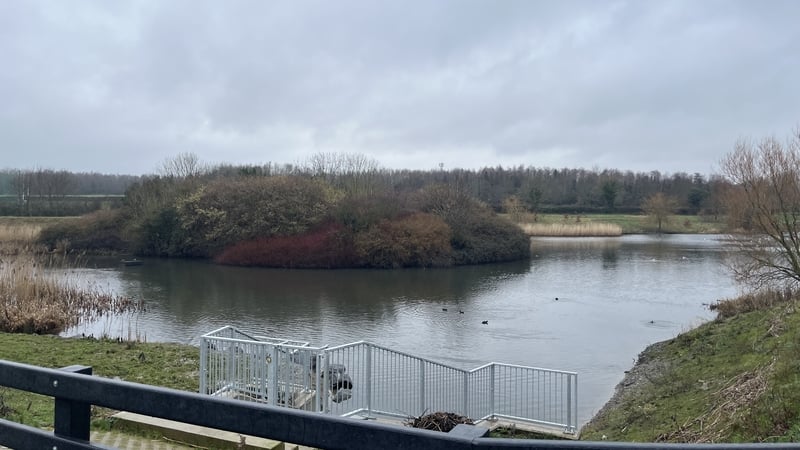
However, it is not just short term, reactive measures that are being taken. Resident Engineer at South Dublin County Council David Grant explained how the Poddle Flood Alleviation Scheme in Tymon Park provides much needed protection for residents and businesses in the area.
"Here at the main lake in Tymon Park, we've constructed a two-metre rail embankment around the lake and incorporated a flow control structure. So, when the heavy rains come, the flow control structure lets out a certain amount of water, which in turn allows the lake to back up and store the water."
He added: "From the design of this scheme, we predict that we will protect over 950 properties, both commercial and residential, from here down as far as Harold’s Cross and the Kimmage area. Back in 2001, when the river broke its banks at multiple locations, it caused severe damage, severe flooding, up to over €100 million in insurance claims, transport loss, and unfortunately, a loss of life.
"We've had three significant flood events since this scheme came into operation last February, and the reports we've received show houses that would previously have been flooded, have now been protected from flooding."