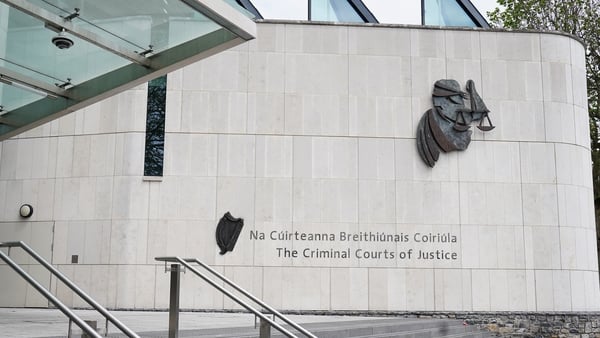

A Cork GP has admitted three counts of poor professional performance at a fitness-to-practise inquiry held by the Medical Council into the care of a ten-year-old girl, who died after a Strep A bacterial infection was left untreated for several days.
Vivienne Murphy, from Millstreet in Co Cork, first became unwell on Valentines Day 2019 and died in hospital in Dublin two weeks later on 1 March.
Dr Joyce Leader, a practising doctor in Kanturk, Co Cork, was working in the out-of-ours GP service South Doc.
The Medical Council heard that she did not contest allegations that, on or around 19 February 2019, she had failed to conduct or to arrange an urgent in-person clinical examination in circumstances where Vivienne's condition was deteriorating or not improving and where she had been suffering with a febrile illness for five or six days.
By 19 February, she also could not stand up or weight bear, and had leg and hip pain.

Dr Leader failed to refer the patient directly or immediately to an emergency department in circumstances where this was warranted and in order to rule out a possible diagnosis of septic arthritis, which the GP had considered.
She also failed to express sufficient urgency regarding Vivienne's condition to her parents around the necessity of bringing her directly to a hospital emergency department.
The hearing heard that the three allegations had been admitted by Dr Leader, including that they constitute poor professional performance.
The Medical Council inquiry, chaired by Jill Long, found that the three allegations against her had been proven beyond reasonable doubt and that Dr Leader's poor professional performance in relation to the allegations had failed to meet the standards expected in applying the knowledge and skill to a patient in her care.
She had obtained her medical degree in 2011 and had been working as a GP since 2017 in Co Cork.
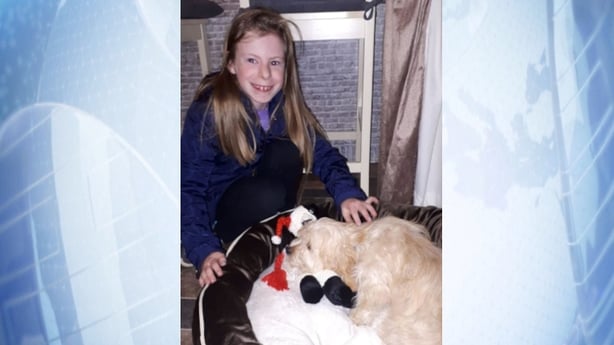
When she first saw Vivienne who was not one of her regular patients, it was a Thursday evening after she had come home from school with a sore throat.
Her parents had, a fortnight earlier, given her an antibiotic that had been prescribed at an earlier date before she went back to school.
At the time of her first consultation, the patient was described as miserable with a blanching rash. She was given a steroid inhaler and told to take medication to control her temperature.
She again attended the South Doc service on Saturday 16 February 2019 when she saw another GP.
At this point, she continued to have a temperature and a rash and was complaining of aches and pains.
This doctor was also of a view that this was a viral illness and her parents were advised to contact their own GP if she had not improved.
She was brought to her own GP who also believed the rash was viral.
However on 19 February, the date to which the fitness to practise inquiry relates, her right knee was swelling, she could not weight bear and she also had a rash and blisters. She was triaged over the phone and her parents reported increasing symptoms.
'Screaming all the time in pain'
Audio recordings of Vivienne's parents were played to the inquiry in which they both described their daughter's worsening condition to the triage nurse at South Doc in which they said their daughter had a reddish rash all over her body from the neck down and was "screaming all the time in pain".
They said when they went to carry her, she was "roaring screaming" and that she could not be moved in the car to go to the South Doc.
Her father, Dermot, said they had been told this was a virus but he said "this is something different", and he questioned whether a virus could have affected her joints as he said the pain was increasing in his daughter's right knee.

The triage nurse said she needed to be seen and that a doctor might refer her to hospital for bloods.
An expert witness Professor Susan Smith who is a public health and primary care specialist from TCD and herself a practising GP had reviewed the evidence and given a report to the inquiry.
She found that Dr Leader had failed to conduct an urgent in person consultation and said this was a serious failure in her clinical conduct.
She noted that the parents had only been told to attend the emergency department if they were not happy or if the clinical situation deteriorated and that no hospital referral letter had been written by Dr Leader, who had been influenced by her own and other GP opinions, that this was a virus.
Strep A can prove fatal if left untreated by antibiotics and by the time she presented at Cork University Hospital (CUH) in the early hours of 20 February, Vivienne had a black mark on her leg which was investigated as possible sepsis.
She was later diagnosed with a rare bacterial infection necrotising fasciitis.
'I'm sorry for crying nurse. I know you're trying to help me'
The Medical Council heard from statements submitted by her parents, that when she arrived at CUH, she had thanked them for taking her to hospital.
"That was the kind of little girl she was," her parents said.
They added that she said to one of the nurses treating her: "I'm sorry for crying nurse. I know you're trying to help me".

Vivienne was transferred from CUH in Cork to Temple Street Hospital in Dublin, where they were told that if there was to be any chance for her, they would have to operate straight away and debridement surgery was carried out, removing tissue from her right knee, up to her stomach and on her right leg.
After the operation, she went into cardiac arrest on 21 February and a team of medics worked for 40 minutes to save her.
However, she needed an MRI to assess for brain damage and her parents were told there was no hope for her recovery.
They had to take the difficult decision to take her off a ventilator before she died and the inquiry heard they had been left devastated, shocked and scarred for life by their daughter's death.
They had questioned how something that could be so simply treated was missed by some many. They said had their daughter been diagnosed earlier, she would have had a greater chance of survival.
The inquiry heard that whilst necrotising fasciitis was a rare bacterial infection, rarely seen in GP settings that Strep A infection was not rare.
The contents of Prof Smith's expert report had been accepted by Dr Leader. She found that the culmunative effect of the allegations against the GP had led to a serious failure to meet the strandards in the application of knowledge in treating a sick child.
Legal assessor for the Medical Council, Senior Counsel Patricia Dillon, said the committee noted the admissions made and that the fitness to practise committee would sit again at 9am tomorrow to hear submissions in relation to possible sanctions against Dr Leader.
Vivienne’s parents Lilly and Dermot are also expected to address the media at the conclusion of the hearing tomorrow.