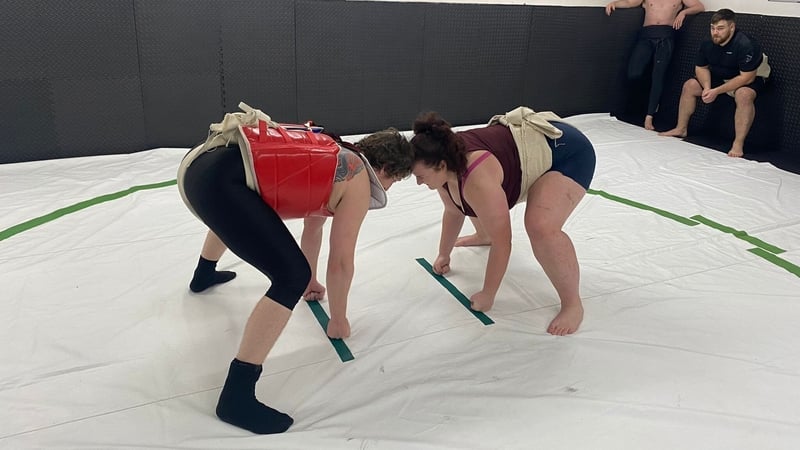

Sumo wrestling is an ancient Japanese sport, with rituals and rules steeped in the Shinto religion - and it's attracting a growing number of Irish practitioners.
Sumo na hÉireann is thought to be the first sumo wrestling club on the island of Ireland, with branches in Belfast and Dublin.
Members have been training to compete in the first ever British Isles Sumo Championships, due to be held in Belfast on Saturday, 31 January.
The sport involves two wrestlers competing inside a circular ring called a dohyō.
The aim is to force an opponent out of the ring, or make them touch the ground with part of their body other than the soles of their feet.
Johnny Templeton took an interest in the sport during lockdown, and when he discovered there was no club in Ireland, he co-founded Sumo Na hÉireann.
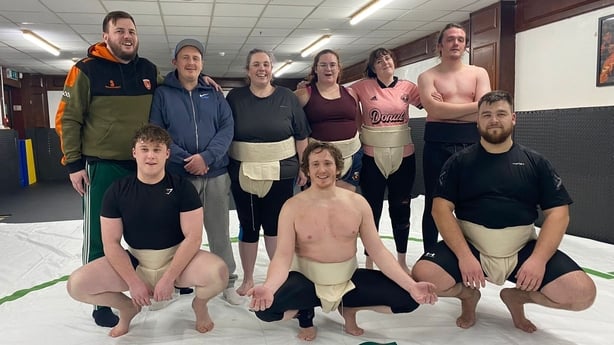
Club members train for strength, flexibility and speed.
"It kind of takes over your life," said Mr Templeton.
"When we're in the gym, we're training for sumo. When we're cooking at home, we're eating for sumo.
"Nutrition is key. I try to encourage these guys to eat a healthy, robust, nutrient-rich diet. It's not a small diet. You're not going to lose weight on this diet, but you're going to get strong and stay active."
Unlike professional sumo, the amateur version has weight classes, so wrestlers do not have to be pitted against someone much bigger than them.
Sumo is one of the oldest organised sports in the world and is intrinsically linked to the Shinto religion in Japan.
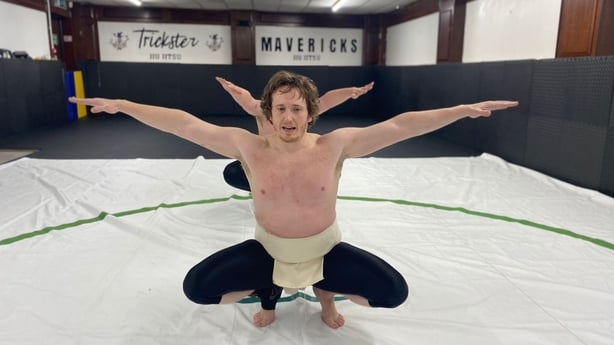
Mr Templeton thinks people continue to be drawn to the sport due to a fascination with the symbolism and meaning behind the rituals.
"When they're building the ring, a pro sumo ring is called a dohyō, and they'll actually bury offerings into the ring, so the sumo ring has sake, fish and rice buried inside it.
"The grand champion, the yokozuna, he will do an opening ceremony where he stamps his feet on the dohyō to stamp out bad energy and bad spirits."
Amateur wrestlers respect the heritage of the sport, but the adherence to tradition can be looser.
We need your consent to load this rte-player contentWe use rte-player to manage extra content that can set cookies on your device and collect data about your activity. Please review their details and accept them to load the content.Manage Preferences
In Japan, women are not allowed inside the ring, but women compete internationally at an amateur level.
Until recently, Toraigh Mallon thought she was the only female sumo wrestler in Ireland.
In recent weeks, more female members have signed up to Sumo Na hÉireann.
Ms Mallon hopes to represent Team Ireland, and is training hard in preparation for the inaugural British Isles Sumo Wrestling Championship this Saturday.
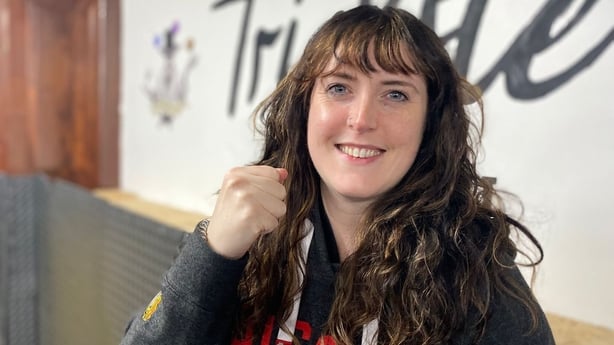
"Everybody I know has bought tickets to come and spectate. I'm in uni and the people in my class have all got tickets, so the word is getting spread and hopefully we'll get a lot of support and support for Ireland."
The sumo club receives messages every day from people who are interested in the sport, and every week more people turn up to training.
A recent evening in January was the first session for Tori Moffet.
"We were actually sitting with my rugby team, and it came up on Facebook and they said, Tori, here you should try that out just for the craic. And here I am."
Ms Moffet said sumo makes her feel "strong" and "powerful" and she will definitely return to training.
Johnny Templeton says interest in sumo is booming across Europe and he hopes the British Isles Championships in Belfast will bring more eyes to the sport.
He has a theory about why it's taking off in Ireland.
"In Ireland we actually used to have a sport very similar to sumo, collar and elbow wrestling, which has died away and fallen out of the culture.
"So, I think we do have grappling in our blood, and no outlet for it, so maybe sumo's providing that outlet."