
A High Court judge has ruled that three objectors to a proposed IPAS centre at Coolock in Dublin must pay the costs of their failed injunction application.
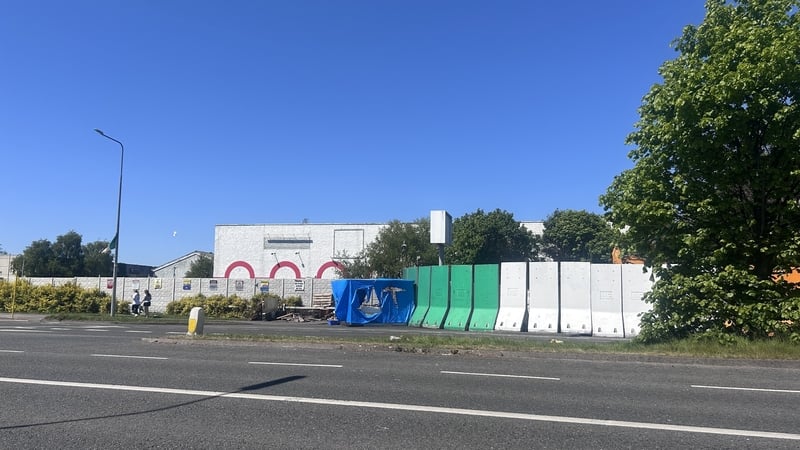
The plaintiffs had been refused a temporary injunction in 2024 against the development of the former Crown Paints factory in Coolock as accommodation for international protection applicants.
Last year, the case was struck out after the judge ruled the issue was "moot" or pointless after the Government announced it was not proceeding with the plan.
However, in a recently published judgment, Mr Justice David Holland, ruled the three plaintiffs, having lost their case at the injunction stage, must pay the costs of those proceedings which were taken against the developers and the State.
The judge said the plaintiffs in the case, Alan Croghan, Amanda Farrelly and Melissa Kelly, could not benefit from costs protections which arise in some cases such as judicial review or environmental proceedings.
Ms Kelly, a farmer with an address in Woodlawn, Ballinasloe, Co Galway; Ms Farrelly, a taxi driver living in Coolock; and Mr Croghan, a resident of Fairfield Estate, Coolock, had represented themselves in the proceedings.
Judge Holland said "unequivocally and simply" the plaintiffs had lost the application for an interlocutory injunction. In such cases, the losing side usually pays the costs of the winning side.
Referring to his refusal to grant an injunction, the judge said he had refused the application "because the case in law on which the application was based was unstateable. I was also highly critical of the Plaintiffs' conduct of the case".
The judge referred to his earlier judgment refusing the injunction in which he said the plaintiffs' statements had no supporting evidence and that "baseless and vicious allegations had been made" along with "viciously destructive pleadings" in relation to immigrants and immigration.
The judge said his observations were made while recognising there may be legitimate concerns as to the State management of immigration.
He added: "I also observe that in that judgment I made no findings, and I make none now, that the Plaintiffs or any of them are racists. But in my judgment, I described some of their pleadings and evidence as "disgraceful", "appalling" and "execrable" and "awash in meaningless conspiracy theories". I said that together they "comprise a vicious narrative" to be "fundamentally and unreservedly deprecated".
The judge said he wanted to be clear that while the failed case was sufficient to award costs against the plaintiffs, he considered the conduct of the plaintiffs and the manner in which they pleaded their case weighed heavily against any departure from the general principle on costs.
The judge said while Mr Croghan and Ms Farrelly now regretted taking the case and he had sympathy for them, the fact remained they had taken an unstateable case on a "deplorable" basis.
He said Ms. Kelly had sought costs to be awarded in her favour and "in contrast, has expressed no such regret, instead seeking to insist on her alleged rights of political speech".
The judge said he would award the costs of the injunction in favour of the State but in the case of the developer Townbe, he awarded only 60% of its costs to mark his disapproval of incorrect information being given to the court during the injunction proceedings.
He said Townbe had asserted that the works were internal only and did not need planning permission, but this was untrue.