
A second meeting due to be held by the Department of Agriculture to discuss the first detected case of the bluetongue virus in the Republic has been rescheduled to tomorrow.
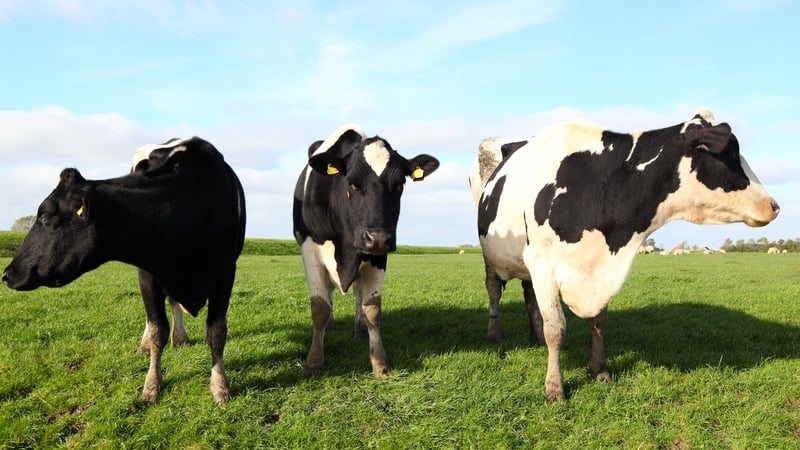
The impact that the case, identified in a herd of cattle in Co Wexford, will have on the Irish livestock export market is expected to become clearer over the coming days.
It is understood that the case was detected on a farm in the east of the county.
Sources have stressed the near impossibility for any farmer to fully prevent one of their livestock from becoming infected by the virus, as it is spread by midges.
The small fly-like insects bite an infected animal before passing it onto the next one they bite.
It is understood that no other animals in the farmer's herd in Co Wexford will have to be culled, nor will any animals have to be placed in isolation.
This is because bluetongue is not spread from animal to animal, and the recent cooler temperatures mean the virus cannot currently be spready by midges.
Given that bluetongue has already spread across Europe, Britain and recently Northern Ireland, Minister for Agriculture Martin Heydon said yesterday's development is "unwelcome" but not surprising.
Further testing of animals in the herd in which the case of bluetongue was identified as well as on surrounding farms will take place tomorrow and on Tuesday.
The results of this blood sampling are expected to be known on Tuesday or Wednesday.
No risk to human health
Bluetongue is an animal disease that can cause severe illness in livestock, such as cattle and sheep, but also in goats, deer and llamas.
It does not pose any risk to human health or food safety.
However, it will affect live exports of cattle and sheep to some countries outside of the EU that require Ireland to have a disease-free status.
This will see such live exports to smaller markets, such as the UAE, suspended for 12 months.
Additional animal testing may also be required for exports to some other countries, including the larger export market of Spain.
This could result in additional costs and logistical issues for farmers here who must comply with the rules set down by the country of destination.
The virus is only spread through midges when it is warmer than 12 degrees Celsius.
Therefore, it is hoped that the current cooler winter temperatures will prevent bluetongue from spreading widely here.

However, Minister Heydon has said that the risk of infection will increase from April when temperatures begin to climb.
Mr Heydon also said testing for the virus was being carried out "at a very high level" and that the detection in Co Wexford came as a result of routine surveillance.
He said that the positive test was found in a sample taken from a slaughtered animal.
"It has been identified, we are tracing back to that herd. We thankfully have excellent traceability across our herd and the epidemiological tests of all of those animals that were in the same herd in that area and beyond will continue."
Minister Heydon said the exports of live cattle and sheep from Ireland would be affected but the sale of meat and dairy products to most overseas markets would continue.
Farmers should be vigilant
Irish Farmers' Association Deputy President Alice Doyle, who is a farmer in north Wexford, has urged farmers to be vigilant.
She said: "Our main message to farmers is that it is very worrying, but it is not a panic situation.
"We know that there is an outbreak on one farm in Wexford that has been picked up under routine testing. It has been contained on that farm, and the department are keeping a very close eye on it.
"Our second message to all farmers - livestock farmers and sheep farmers - is to check your livestock on a regular basis for any signs or symptoms that might be related to bluetongue.
"If you are at all worried, contact your vet and have it confirmed or proven that it is not there."
Animal Health Rep with IFA Wexford Pat Murray said his thoughts and the thoughts of the entire association go out to the affected farmer in Co Wexford.
He added: "I need to send out a clear message that our live exports are OK.
"We're coming into a very important time of the year with a lot of farmers calving. There could be up to a million calves born, and farmers are worried.
"But from the department and what we are clearly seeing is that we will be allowed to export animals."
An emergency meeting was convened by the Department of Agriculture yesterday to discuss the current situation and the implications it would have for farmers.
A second emergency meeting was scheduled for this morning but will now take place tomorrow instead.
Department of Agriculture veterinary officials and stakeholders, including farming organisations, will be among those joining tomorrow's meeting, which will take place online.
According to Bord Bia, cattle were the largest contributor to live animal exports from the Republic last year, representing 80% (€390 million) of all animals exported.
Bord Bia’s latest Export Performance and Prospects Report also states that the "value and importance" of the live animal trade continued to grow last year, with exports reaching an estimated total of €480 million in 2025, a 40% increase when compared to the previous year.
The overall total also included the export of live pigs to Northern Ireland worth €85 million and a relatively small number of sheep traded with mainland Europe.
Bord Bia also said that Ireland being the only European country to maintain bluetongue-free status at the time was a key driver of demand last year.