
The Irish Farmers Association (IFA) has said the confirmation of a case of the bluetongue virus in Co Wexford is "deeply worrying".
However, it said its message to farmers is not to panic, and to be vigilant and immediately report any symptoms of bluetongue in their animals to the Department of Agriculture and local vet.
An emergency meeting was held by the Department of Agriculture this afternoon to discuss the current situation and the implications of the development.
Department of Agriculture veterinary officials and stakeholders, including farming organisations, took part in the online meeting.
Minister for Agriculture Martin Heydon previously announced that a bluetongue vaccine can be administered to cattle and sheep in Ireland this year after suspected cases of the virus at four farms in Co Down last year.
The Minister this morning confirmed the first case of the virus had been identified in the Republic in a herd in Co Wexford.
Mr Heydon said testing for the virus was being carried out "at a very high level" and that the detection in Wexford came as a result of routine surveillance.
He said that the positive test was found in a sample taken from a slaughtered animal.
"It has been identified, we are tracing back to that herd. We thankfully have excellent traceability across our herd and the epidemiological tests of all of those animals that were in the same herd in that area and beyond will continue."
Minister Heydon said the exports of live cattle and sheep from Ireland would be affected but the sale of meat and dairy products to most overseas markets would continue.
He said that the export of cattle and sheep to the EU and UK will be unaffected, but that there may be issues with other countries depending on their individual trade requirements.
Live exports to some smaller to be suspended for 12 months
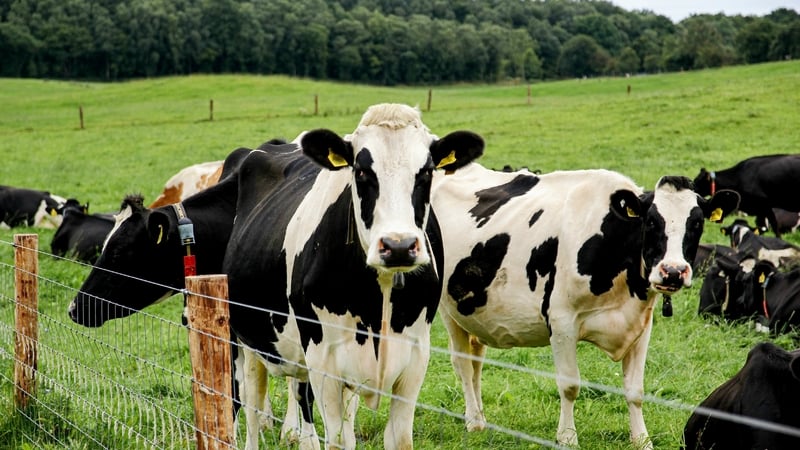
Bluetongue is an animal disease that can cause severe illness in livestock, such as cattle and sheep, but also in goats, deer and llamas.
It does not pose any risk to human health or food safety.
However, it will affect live exports of cattle and sheep to some countries outside of the EU that require Ireland to have a disease free status requirement.
This will see such live exports to smaller markets such as the UAE suspended for 12 months.
It is understood that trade to likes of the Netherlands, where bluetongue has already been detected, will continue as before.
However, there will be additional animal testing requirements for exports to the likes of Spain and some other countries.
This will result in additional costs and logistical issues for farmers here who must comply with the rules set down by the country of destination.
Bluetongue is not contagious and is primarily transmitted through midges.
A midge that bites an infected animal will spread it to the next animal it bites.

However, the virus cannot replicate in a midge at temperatures below 12 degrees Celsius.
As a result, Minister Heydon has said he is hopeful that the recent drop in temperatures will mean the infection is unlikely to spread widely.
In a statement issued this morning, Minister Heydon said while the news is "unwelcome", it is not surprising "given the spread of this virus across Europe, Great Britain and recently Northern Ireland".
Minister Heydon said: "This virus predominantly is spread by midges. The replication of the virus in infected midges cannot happen when the daily temperatures are lower than 12 degrees Celsius.
"The recent seasonal drop in temperatures means that infection is unlikely to spread widely at the current time."
Mr Heydon said, however, that he expects the risk of bluetongue spreading will increase from April when temperatures are higher.
He said additional sampling is taking place to fully understand the epidemiological situation.
Mr Heydon said: "This outbreak will have an impact on exports of cattle and sheep, with additional costs and logistical issues required in order to comply with the rules set by the countries of destination.
"In respect of meat and dairy products, there are no implications for exports to the EU, UK and to most of our international markets."
He said his department has been negotiating revisions to many trade certs for third countries so that the impact of any outbreak would be minimised.
In the event of a bluetongue detection, restriction zones and movement controls are put in place.
He also said the Department of Agriculture had been engaging with vaccine production companies to prepare for "this eventuality".
Confirmed case 'very disappointing'
The IFA also said that its sympathies go out to the affected livestock owner in Co Wexford.
IFA President Francie Gorman described the confirmed case of bluetongue as "very disappointing".
He said: "The Department of Agriculture has resolved some of the issues affecting the live trade, but must ensure all international trade certs are amended so animals from Ireland can continue to be exported to these countries.
"Most EU Member States with [bluetongue virus stereotype 3] have overcome the issues with live exports through bilateral trade arrangements.
"This is helpful and ensures this vital trade can continue, but there are additional costs involved for export to some countries that must be resolved."
Meanwhile, Irish Creamery Milk Suppliers Association (ICMSA) President Denis Drennan said the news is "hugely worrying for the family concerned and the wider farming community".
"It is hugely important that we all work together to contain the outbreak as much as possible and that every support is given to farmers impacted by bluetongue," he said.
He added that farmers should take the department's advice in relation to best practice on biosecurity adding that immediate measures are required to ensure that live trade and live exports continue as normal.
A further meeting between Department of Agriculture officials and farming organisations is scheduled to take place tomorrow morning.
More details on the full effects that the first confirmed case of bluetongue in Ireland will have on the country's livestock export market are expected to become known at the meeting.
Additional reporting Gavin O'Callaghan