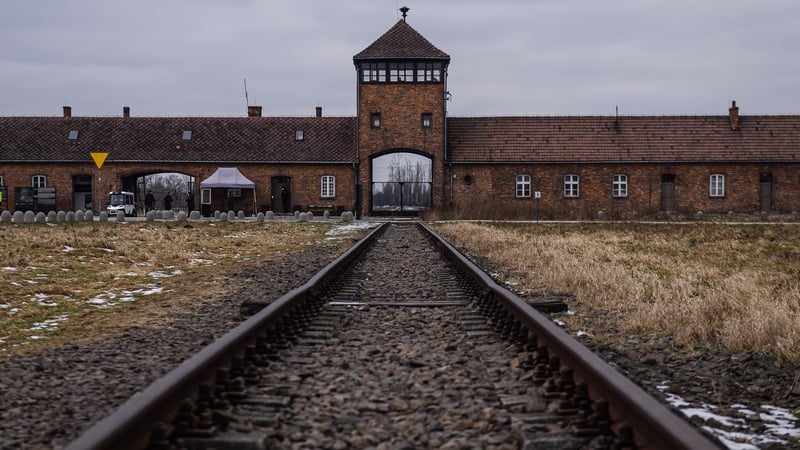

Almost 10% of young adults in Ireland believe the Holocaust was a myth and did not happen, according to a survey on Holocaust awareness.
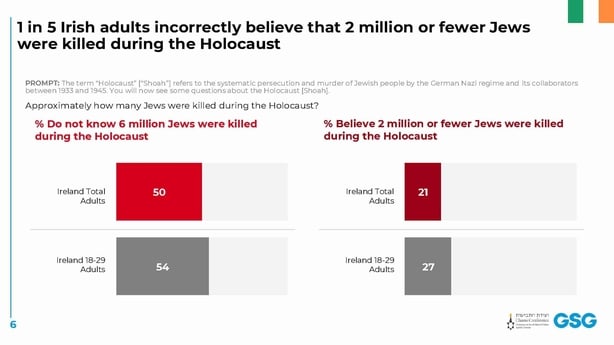
It also found that half of all adults surveyed and 54% of younger adults aged 18-29 did not know that six million Jews were murdered in the Holocaust.
The survey is the latest to be released by the Claims Conference (Conference on Jewish Material Claims Against Germany) in its mission to understand the current state of Holocaust education and increase Holocaust knowledge and awareness globally.
Conducted in partnership with Global Strategy Group, the online survey of 1,000 people found that 88% of Irish adults believe the Holocaust should be taught in schools.
The survey was carried out between 15 October and 6 November 2025. The margin of error is +/- 3.1%.
The Holocaust was the state-sponsored persecution and murder of six million European Jews by Nazi Germany and its collaborators, which occurred throughout Europe between 1933 and 1945.
The survey showed that 91% of those aged between 18 and 29 and 92% of adults overall said it was important to continue teaching about the Holocaust, in part, so it does not happen again.
Respondents to the Holocaust Knowledge and Awareness Survey overwhelmingly agreed that Holocaust education is important.
While overall awareness about the Holocaust was high among survey respondents, participants also said Holocaust denial and distortion were high.
Holocaust denial is the outright rejection of the fact that the Holocaust happened, while Holocaust distortion accepts that the Holocaust occurred but misrepresents, minimises or twists key facts.
A quarter of adults overall said Holocaust distortion was common in Ireland.
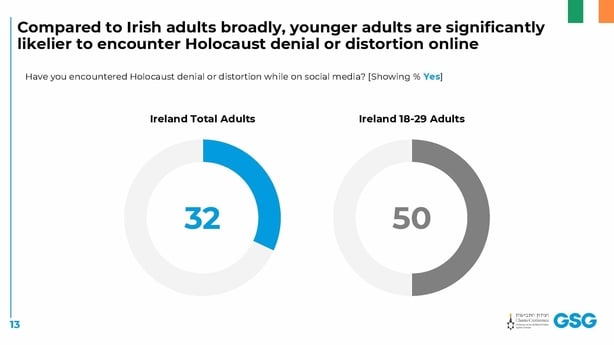
Half of those aged between 18 and 29 said they had encountered Holocaust denial or distortion on social media, with TikTok, X and Instagram being highlighted as the platforms where denial or distortion were encountered most frequently.
Almost 10% aged 18-29 surveyed believed the Holocaust was a myth
The survey showed that 9% of adults aged 18-29 believed the Holocaust was a myth and did not happen; 19% believed the Holocaust happened, but that the number of Jews who were killed during the Holocaust had been greatly exaggerated.
While 60% of those surveyed knew of Auschwitz, the infamous death camp employed by the Nazis, one in four of those aged 18-29 were not able to name one of the more than 40,000 camps and ghettos in Europe during the Holocaust.
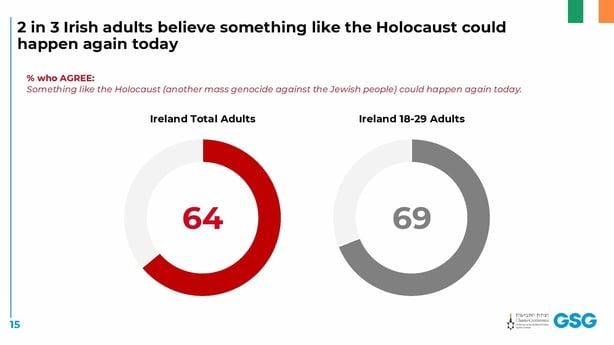
64% of Irish adults overall said they believed something like the Holocaust could happen again today.
The Claims Conference said this finding aligned with previous surveys in other European countries, where 69% of UK adults and 63% of French adults surveyed also believed something like the Holocaust could happen again.
The survey conducted in Ireland is the 16th across 11 countries that have been completed by the Claims Conference.
The Chair of the Jewish Representative Council in Ireland said there is a gap in Holocaust education in Ireland, which is not due to a lack of public will.
Maurice Cohen said the survey showed that the public "overwhelmingly wants Holocaust education. When 64% of Irish people believe another Holocaust could happen and 50% of young adults are already seeing denial online, this is no longer history. It is a warning."
Founder of Holocaust Awareness Ireland Oliver Sears stressed the importance of educating "young minds" to whom the legacy would be entrusted.
"Combating Holocaust denial and distortion on the internet and social media must be a priority," Mr Sears said.
"It is very encouraging to read that an overwhelming percentage of Irish people believe that Holocaust education should be taught in schools. We must ensure our educators are equipped to teach a comprehensive history of the Holocaust.
President of the Claims Conference Gideon Taylor said the data provided a foundation needed to strengthen Holocaust education as a means to combat hatred.
"It also comes at a time when anti-Semitism, hate crimes against Jews and Holocaust denial and distortion are on the rise globally.
"These results in Ireland show both cause for significant concern and, at the same time a path forward given the overwhelming support for Holocaust education," Mr Taylor said.
The Holocaust Knowledge and Awareness Index was commissioned by and with assistance from the Conference on Jewish Material Claims Against Germany and supported by the German Federal Ministry of Finance.
We need your consent to load this rte-player contentWe use rte-player to manage extra content that can set cookies on your device and collect data about your activity. Please review their details and accept them to load the content.Manage Preferences