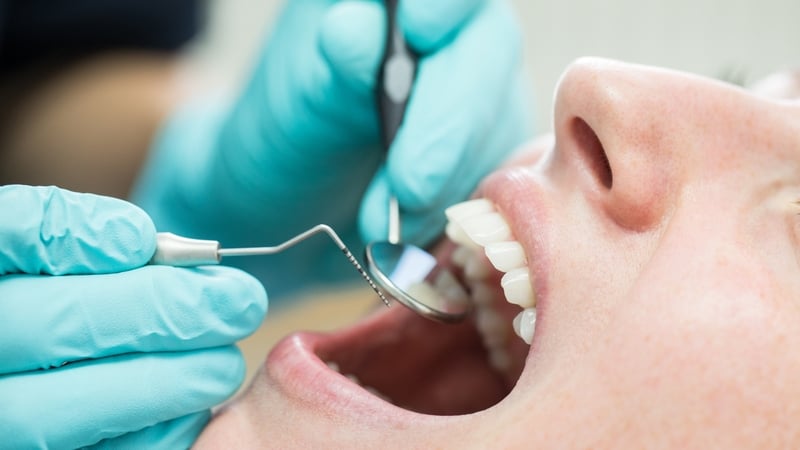

The Irish Dental Association (IDA) has said that the public dental treatment service is in a state of crisis.
It said that participation by dentists had collapsed and patients struggle to receive care.
Fintan Hourihan, IDA Chief Executive, said treatment volumes have plummeted from almost 1.6 million in 2009 to just over 970,000 in 2023.
He told the Oireachtas Health Committee that dentists have left the scheme due to State-imposed restrictions in the treatments they can provide compared to other patients, and restrictions on the materials they can use.
Mr Hourihan said dentists faced a large amount of administrative red tape, particularly where prior approval is required from the HSE and because the fees offered are considerably below the costs incurred in providing the treatments.
He said that the scheme remains restricted to emergency care and extractions, with limited preventive options.
Mr Hourihan said the Department of Health, which walked out of talks on a new scheme in 2008, must sit down for comprehensive talks on a new modernised scheme.
He also said the HSE school screening programme had deteriorated sharply.
The State promises screening in three stages in primary school - in second, fourth and sixth class.
But he said that many children are only seen once, or not at all.
He said that in 2023, fewer than 104,000 children were screened compared to 152,000 in 2018, despite an eligible cohort of 200,000.
Mr Hourihan said it was vital for children to access preventative care, which dramatically reduces the need for future interventions.
He told the Committee that Ireland faces a shortage of dental professionals and it is estimated that at least another 500 extra dentists are needed across the public and private sectors to meet demand.
We need your consent to load this rte-player contentWe use rte-player to manage extra content that can set cookies on your device and collect data about your activity. Please review their details and accept them to load the content.Manage Preferences
Committee Chairperson, Social Democrats deputy Pádraig Rice said the public dental scheme was outdated and in a state of crisis.
The HSE told the Committee that over 307,000 adults received care last year under the Dental Treatment Services Scheme, an increase of 20% on 2022.
Tony Canavan, Regional Executive Office, HSE West North West, said that in relation to dental services for children, 138,000 new patients were assessed up to November last year.
He told the Committee that the HSE oral health budget last year was €182 million and that it has 773 staff in the dental system, including consultant orthodontists, dental surgeons, dental nurses and hygienists.