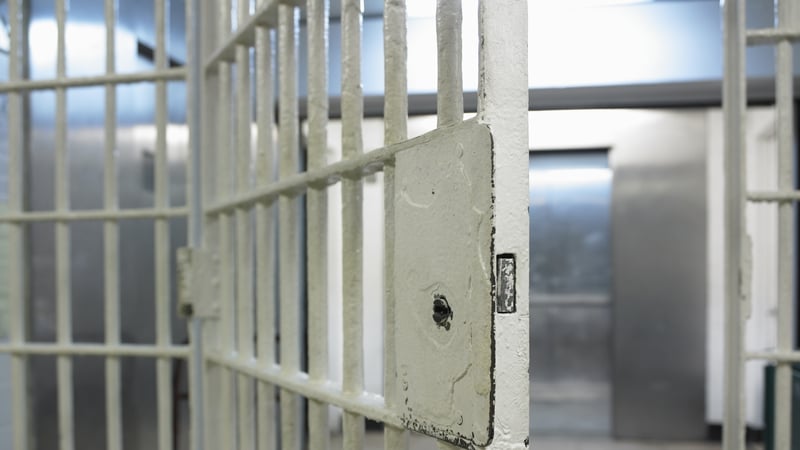

The Chief Inspector of Prisons has described the overcrowded conditions for prisoners as inhuman, degrading, an affront to human dignity and unworthy of Ireland in 2026.
Mark Kelly told the Oireachtas Committee on Justice that the current conditions for some people living in Ireland's prisons are amongst the worst that he has ever seen anywhere, at any time.
He said that eventhough everyone accepts that the current situation is unacceptable, it continues to worsen every day.
By the end of 2024, the prison population was over 5,000, almost 300 in excess of the numbers that could be safely accommodated.
The current capacity is 4,718, but last night 5,747 people were in prison and over 600 were obliged to sleep on mattresses on the floor, an overcrowding ratio of 122%.
The European Committee for the Prevention of Torture returned to Ireland just before Christmas to re-examine the situation, four months after it published a highly critical report based on inspections carried out 18 months ago.
The report said there were overcrowded cells where "three or four prisoners were held in cramped, squalid spaces with insufficient ventilation" and that "many prisoners, including mentally ill individuals, were forced to sleep on mattresses or flimsy camp beds".
The chief inspector said that an enforceable ceiling on the number of people who can safely be held in each of the prisons must be enforced and that "reducing the current prison population, not building more prisons, should be the priority".
Mr Kelly also called for greater independence for his office which, he said, is undermined by the fact that he is funded by the Department of Justice and that the minister decides when his reports can be published.
He pointed out that his annual report for 2023 was only published in February 2025, 11 months after it had been submitted, while last year's report was published over six months later.
He also said that 20 more of his reports (reports on seven inspections and 13 deaths in custody investigations) remain with the minister and are, as yet, unpublished.
The Chief Inspector told TDs and senators that the 2022 Inspection of Places of Detention Bill to expand the mandate of the office to include monitoring all places of detention across the criminal justice system - including garda stations, court holding cells and detainee/prisoner transport - "continues to languish in the Office of Parliamentary Counsel and has yet to see the light of day".
Mr Kelly also said that the current overcrowding crisis was "wholly incompatible with Ireland's legal commitments at national, European and international level" and that "resolving this crisis requires political action to reduce the prison population, to place enforceable limits on capacity, to strengthen independent oversight, and to deliver the legislative and policy reforms that have long been promised".
We need your consent to load this rte-player contentWe use rte-player to manage extra content that can set cookies on your device and collect data about your activity. Please review their details and accept them to load the content.Manage Preferences
Minister says has permission to construct more prison spaces
Minister for Justice Jim O'Callaghan said that he has received permission from the Government to construct more prison spaces.
"We know in Ireland our population is increasing very significantly. And similarly, just because our population is increasing, of course our prison population will increase as well," he said on RTÉ’s News at One.
"I think there's a recognition that we didn't invest previously in terms of constructing further prison spaces.
"I've got authority and funding from Government to proceed with the construction of up to 1,500 new spaces over the next four to five years."
Mr O’Callaghan said there will be extensions made to Cork Prison and to the Midlands prison.
He added that a decision has been made in relation to the construction of a new prison at Thornton Hall in Dublin.
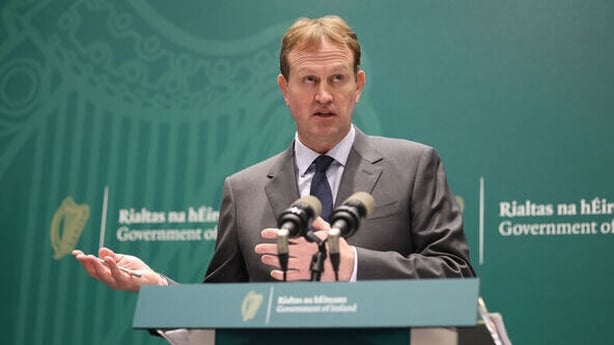
"We have also in the Programme for Government indicated that we intend to build a new prison in Thornton Hall," he said.
"I've got a decision made in respect to that, and you will see progress in that in terms of the back end of the National Development Plan."
The minister said that he was not overly concerned about overcrowding in women’s prisons, particularly in Limerick Women’s Prison.
"I've visited Limerick Women's Prison and it is one of the finest developments that we've had in the country. It's an excellent new prison," he said.
"I'm conscious that when you look at the statistics, that there is overcrowding there, but the cells are large down in Limerick Women's Prison.
"I'm not enormously concerned about the fact that there are two women staying in one room down there. Sometimes that is by choice of the women as well."
The minister said that additional prison spaces would not necessarily solve the problems of overcrowding.
"I need to ensure that I get more spaces available," he said.
"I also want to say, however, that I recognise we cannot just solve these issues by exclusively looking at building more prison spaces.
"I'm bringing forward community service legislation that will ensure that district judges must consider non-custodial sanctions for sentences that can be imposed for up to a period of two years.
"I will also have put in legislation, which is coming in the Miscellaneous Provisions Bill, options to provide further hours of community service."
Overcrowded prison system does not reduce reoffending, says Gannon
Social Democrats' Justice Spokesperson Gary Gannon said the chief inspector's evidence was among the "clearest and most serious warnings we have heard about the state of our prison system".
"He was unequivocal that some people in Irish prisons are being held in conditions that are inhumane and degrading, and that this situation is unworthy of Ireland in 2026.
"What was particularly striking was the strength of the evidence laid out around why our continued reliance on short custodial sentences is actively making the problem worse.
"The Inspector was clear that overcrowding undermines safety, rehabilitation, mental-health care and basic human dignity - and that simply building more prison spaces will not solve these problems," Deputy Gannon said.
Deputy Gannon said a prison system that is "overcrowded, chaotic and degrading" does not reduce reoffending or make communities safer. "It does the opposite," he added.