


And so here we are, the fourth and final day of this year's State Paper release.
There has been an abundance of fascinating stories in recent days offering new insights into a variety of subjects - and today is no different.
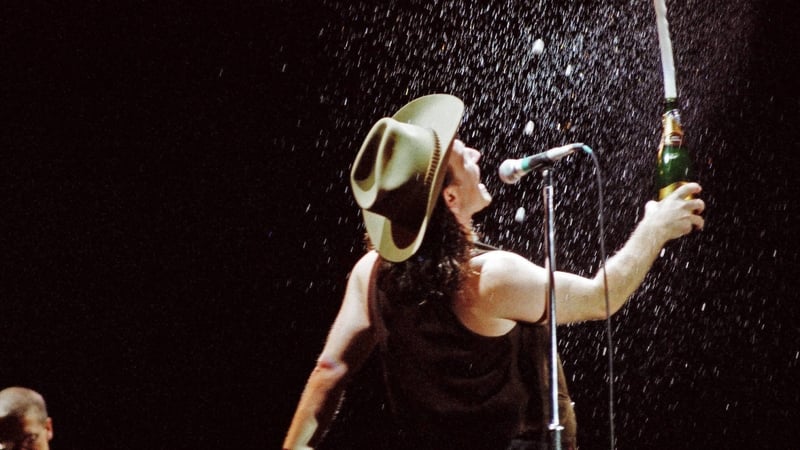
Among the documents making the stories today: Saudi plans for a Cork oil refinery, Fianna Fáil opposition to the 'Ethics in Public Office' bill and diplomats left red faced over tickets for U2's Joshua Tree tour of America in 1987.
Here are five things we learnt from the State Papers today:
1. Billy Wright's father accused govt of 'selective justice'
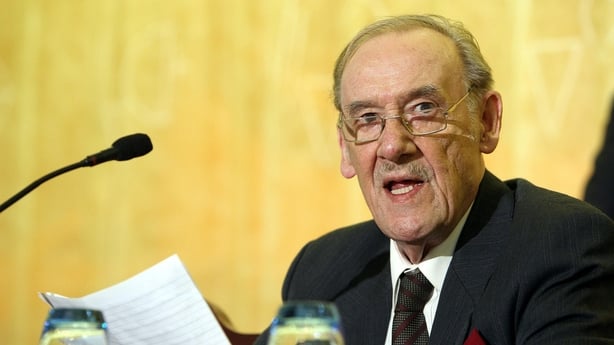
The father of Billy Wright accused the Irish government of "indulging in selective justice" after being told taoiseach Bertie Ahern would not be able to meet him to discuss holding a public inquiry into the Loyalist Volunteer Force leader's murder due to a heavy schedule of commitments.
Wright, known as 'King Rat', was shot dead by three republican prisoners at the Maze Prison, where he was also a prisoner, in Co Down on 27 December 1997.
In October 1998, three members of the Irish National Liberation Army were convicted of his murder and given life sentences.
In the letter to Mr Ahern, released under the annual State Papers, David Wright wrote: "Last week, an inquest into his death, the jury, in returning their verdict, included the words 'person or persons unknown, unobserved and undetected’ indicating quite clearly that parties other than the three men convicted of the murder were actively involved.
"In view of these issues I am left with no alternative but to continue my campaign for a public inquiry into my son’s death."
David Wright then formally requested a meeting with Mr Ahern "to enable me to present my case fully to you and your administration".
Mr Wright made reference to Mr Ahern meeting "at short notice" Paul Nelson, husband of Rosemary Nelson, a human rights lawyer, who was killed by a loyalist car bomb in March 1999.
He also highlighted "recent remarks" made by Mr Ahern in relation to the death of Pat Finucane, another human rights lawyer, who was shot dead in February 1989.
In the letter, which was marked by department officials as "for your urgent attention", Mr Wright wrote: "It would appear so, then the Irish government is guilty of indulging in selective justice and adopting a discriminatory attitude towards my section of the community."
In response to Mr Wright’s letter on 21 May 1999, David Feeney from the Office of the Taoiseach said that due to a heavy schedule of commitments, the taoiseach was "unable to accede to your request for a personal meeting".
However, Mr Feeney wrote that officials from the Department of Foreign Affairs would be available to meet Mr Wright and a family representative.
2. Fallout over 2003 publication of Stakeknife's identity
Another story from Northern Ireland that emerged through this year's release of the State Papers relates to Agent Stakeknife.
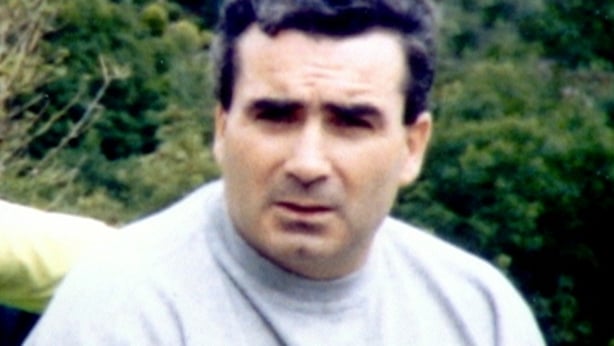
A British army agent at the heart of the IRA for many years, Stakeknife - widely believed to be Belfast man Freddie Scappaticci - died in 2023 aged 77 in England.
A central figure in the IRA's internal security unit, the 'Nutting Squad’, whose job was to root out and kill suspected informers in the ranks, his name was back in the headlines recently with the publication of the Operation Kenova report.
While the report found that Scappaticci was "a critical person of interest", he had died before prosecutors reached a decision on charges linked to their investigation, and he was never convicted of any Troubles-related offences.
Connected to 14 murders and 15 abductions, the Kenova team said that his activities had probably cost more lives than they had saved.
The newly released files show the impact that the identification of Stakeknife had on Sinn Féin in 2003 with senior Sinn Féin figure Ted Howell saying during a meeting with an official from the Department of Foreign Affairs that it was a "huge internal distraction".
3. Proposed SIPO legislation opposed by Ahern, Andrews
Another familiar name in the files, is that of former taoiseach Bertie Ahern.
When Dick Spring proposed legislation aimed at creating more transparency around the "interest" of politicians in 1993, he met some opposition.
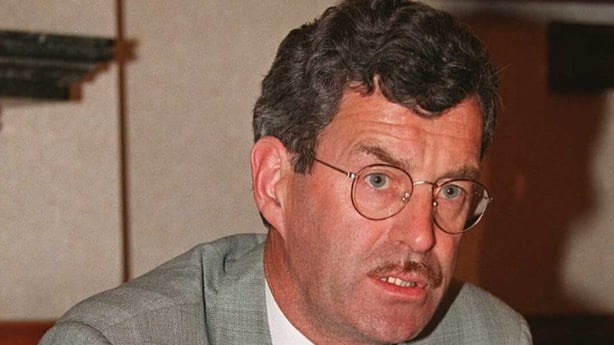
Arising from the erosion of public confidence in the political system due to controversies including the Beef Tribunal, Mr Spring proposed to roll out the Ethics in Public Office Act.
Newly released files at the national archives show that Bertie Ahern had issues with the draft legislation.
His opposition to it included the requirement for officeholders to declare the interests of their spouses and children under the terms of the act.
Minister for defence and the marine, David Andrews - another senior Fianna Fáil party member - also questioned the proposal, and claimed the legislation was "very extreme and quite unwarranted".
The Ethics in Public Office Bill was developed as a measure to require officeholders including TDs, senators and senior public servants to disclose financial interests and gifts as well as follow procedures for the appointment of special advisers.
It also provided for the establishment of the Standards In Public Office (SIPO) Commission and a register of interests of members of the Houses of the Oireachtas.
Mr Spring prepared a memorandum for the government in November 1993, that referred to Mr Ahern's issues to the creation of SIPO as well as provisions relating to the directors of state bodies.
4. Ambassador frustrated with govt attitude to $1bn oil deal
There are some fascinating insights too into the mysterious tale about the $1 billion proposed investment by a group of Saudi Arabia financiers in Ireland's oil facilities.
The investment was part of an ambitious proposal from a group of Saudi Arabian investors in the Cork oil refinery in Whitegate, and the Whiddy Island oil terminal and it raised eyebrows in the government and amongst officials in the mid 1990s.
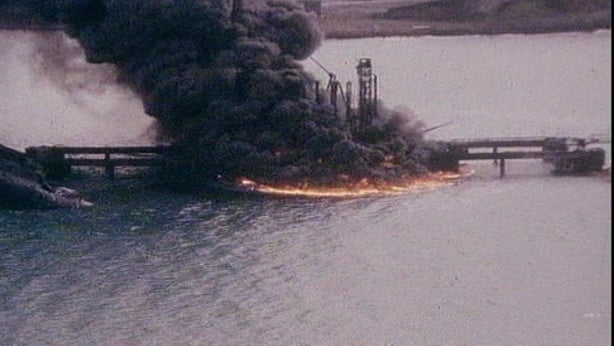
The Saudi group’s proposals included constructing a new refinery with a capacity of up to 150,000 barrels per day for distribution around Europe.
They proposed taking an 80% shareholding in the State-owned Irish National Petroleum Corporation and transferring crude oil shipped to Whiddy via a pipeline to Whitegate. However, there were concerns about the quality of the proposals and the competency of the investors plans.
One Irish official described the group’s submissions as "gobbledygook," while it was also felt that the group had suffered from being advised by "a plethora of advisers, bankers and lawyers".
5. 'Embarrassing situation' over limited U2 tickets in 1987
Finally, a group that still hasn't found what it’s looking for!
The newly released documents reveal that in 1987, the rising popularity and influence of U2 across America was seen as a golden opportunity for promoting Ireland by the Department of Foreign Affairs.
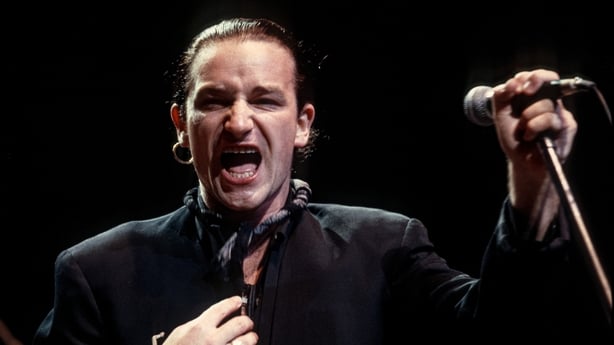
Irish diplomats were keen to get in on the action, and documents detail a lunch meeting hosted by U2’s Paul McGuinness in February 1987 with three officials from the Department of Foreign Affairs that make for intriguing reading.
The meeting was described in documents as being "very useful" and held to "discuss possible mutual cooperation towards the benefit of Ireland's image abroad".
The plan was for officials to get tickets so they could host people at the gigs across US major cities, but some diplomats got a bit too carried away with planning their guestlists.
By the time the band confirmed that they could offer ten tickets per night it led to "an embarrassing situation" as the VIP lists were much longer than that.
