


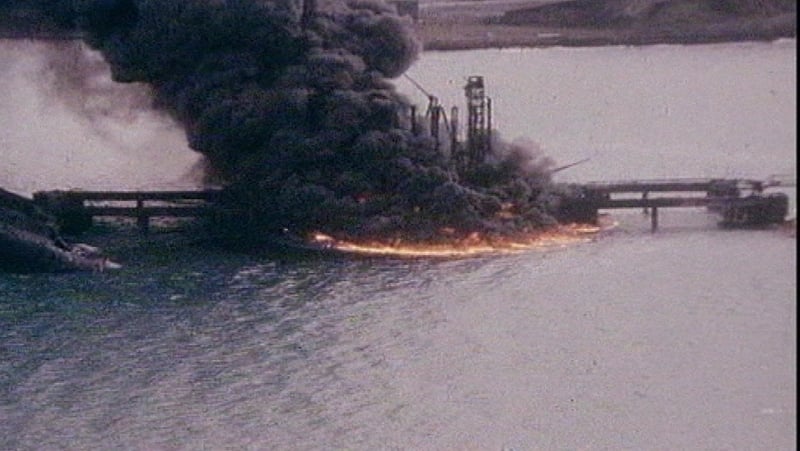
An Irish ambassador's frustrations at department officials for their attitude to a proposed investment of $1bn from Saudi investors in the country's oil facilities is contained in newly released files from the National Archives.
"I think it is very strange that we should have to persuade, never mind that we cannot persuade, a government department to give full attention to a $1,000 million project for which an investor is at least considering Ireland as a location," Brendan J Lyons, ambassador to Saudi Arabia, wrote.
The investment was part of an ambitious proposal from a group of Saudi Arabian investors in the Cork oil refinery in Whitegate and the Whiddy Island oil terminal for a $1 billion investment, which had raised eyebrows in the government and amongst officials in the mid-1990s.
The Saudi group’s proposals included constructing a new refinery with a capacity of up to 150,000 barrels per day for distribution around Europe.
They proposed taking an 80% shareholding in the State-owned Irish National Petroleum Corporation (INPC) and transferring crude oil shipped to Whiddy via a pipeline to Whitegate.
Newly released files by the State archives show, however, that the government preferred the proposal of a smaller $70 million investment offer focusing on just the Whiddy facility from a UAE based Sheikh because it was more "businesslike".
The existing facility in Whitegate had been valued by the Government at $40 million.
Officials considered the $1bn dollar pitch to be flawed, as the plans were described as "sketchy" while their advisers showed a "lack of technical and business competence".
The investors were described as "a number of prominent and wealthy Saudi personalities" including Sheikh Haleem Faris Al Rahbani who had access to supplies of Middle East crude oil.
In December 1994, a Department of Transport, Energy and Communications senior official wrote that he had seen nothing to convince them that "Rahbani’s people have shown the competence to be entrusted with custody of our strategic reserve".
The official noted that the group’s claims of having experience of refining in Angola and Djibouti could not be verified which was "very damaging".
One official had described the group’s submissions as "gobbledygook," while it was also felt that the group had suffered from being advised by "a plethora of advisers, bankers and lawyers".
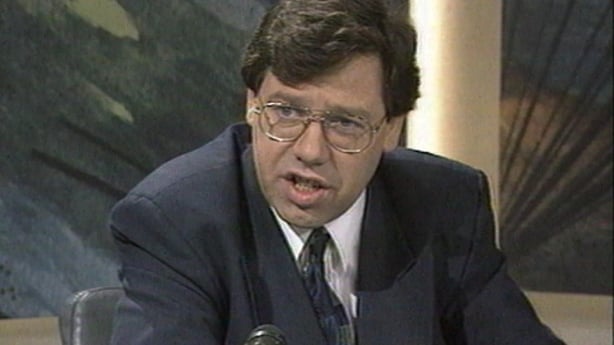
The minister for energy Brian Cowen later wrote to say that while they would be welcome to establish a refinery elsewhere in Ireland, their proposals did not fit with the government’s policy for the development of the energy sector which was based on keeping a controlling interest in INPC.
However, one of the advisers to the investment group told the Irish Ambassador to Saudi Arabia, Mr Lyons, that he had withheld the letter as the sheikh would "blow his top" and walk away from locating the project in Ireland if he read it.
The ambassador asked him to hold on to it while the proposal could be considered by a variety of government departments as the proposed investment was such a considerable figure.
In February 1995, Sheikh Rahbani, outlined his frustrations at being unable to progress the plans to the Irish ambassador, because he could not get the information which would enable him to cost the upgrade that the Whitegate refinery needed.
The ambassador reminded the sheikh that his advisers had not been able to provide information on the composition of his group of investors or his plans for distributing the output of the refinery.
The ambassador also pointed out that the group’s advisers had not been impressive and some of their information had been incorrect.
Files show Mr Lyons remained in contact with both sides in relation to the proposed investment.
However, he expressed frustration in one letter that neither he nor the Department of Foreign Affairs had been able to persuade the Department of Transport, Energy and Communications to take a proactive role towards the Saudi proposal.
When informed that Mr Cowen’s successor, Michael Lowry, was going to respond in a way that was "less than forthcoming," the ambassador remarked: "This is no way to attract foreign investment."
Officials wondered why the Saudi investors wished to construct a refinery in Ireland but an adviser of the investment team - explained that the Whitegate refinery would give them an immediate supply of refined products and a short lead-time for their project to blend lubricating oil.
Ultimately the government announced in March 1995 that the INPC was investing IR£18m to restore the Whiddy oil terminal following a devastating fire at the facility in 1979.
It was also noted that the UAE sheikh remained interested in investing in Whiddy and officials were unclear if his interest was "a genuine proposal or a graceful way of withdrawing".
The records show that talks with the UAE investor who had made proposals about investing in Whiddy came to a halt in late 1994 as he was unsuccessful at raising the required funds.
