


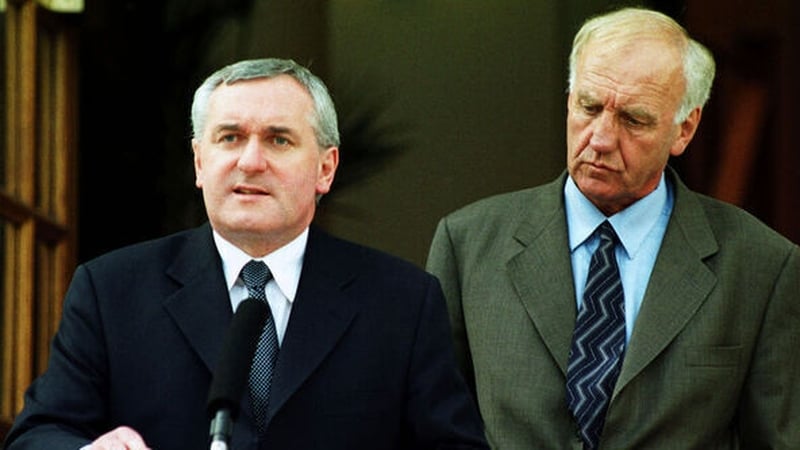
When Dick Spring, the tánaiste and minister for foreign affairs, proposed legislation aimed at creating more transparency around the "interest" of politicians in 1993, he met with some opposition from leading Fianna Fáil members.
Arising from the erosion of public confidence in the political system due to controversies including the Beef Tribunal, Mr Spring proposed the rollout of the Ethics in Public Office Act.
Newly released files at the national archives show that then-minister for finance Bertie Ahern had issues with the draft legislation.
His concerns included the requirement for office holders to declare the interests of their spouses and children under the terms of the act.
Minister for defence and the marine, David Andrews - another senior Fianna Fáil party member - also questioned the proposals, and claimed the legislation was "very extreme and quite unwarranted".
The Ethics in Public Office Bill was developed as a measure to require officeholders including TDs, senators and senior public servants to disclose financial interests and gifts as well as follow procedures for the appointment of special advisers.
It also provided for the establishment of the Standards in Public Office Commission (SIPO) and a register of interests of members of the Houses of the Oireachtas.
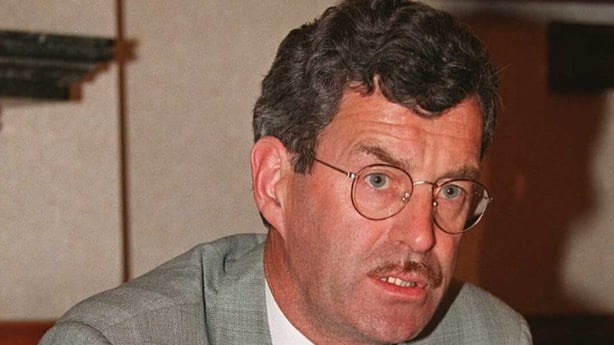
Mr Spring prepared a memorandum for the government in November 1993, that referred to Mr Ahern's objections to the creation of SIPO, as well as an Oireachtas Select Committee on Members' Interests and provisions relating to the directors of state bodies.
Mr Ahern’s concerns, as recorded by the Department of Foreign Affairs, appeared to be mainly based on his issues with the fact that the office would impact ministers and state bodies from discharging their responsibilities in relation to discipline and conduct in the public sector.
Mr Ahern argued that the Commission getting involved would be counterproductive as it would "dissipate responsibility", the files noted.
Mr Ahern had suggested that it would be preferable for the responsibility of enforcing the Ethics in Public Office Act to be left to ministers and State bodies.
Mr Spring stated he understood the concerns expressed by Mr Ahern given the novel nature of the proposed Commission.
However, the tánaiste said he regarded the Commission as "an essential element" of the legislation for a number of reasons, including that it was a "concrete expression" of the need to have an "independent and powerful, monitoring and enforcement agency," in place.
He predicted that the existence of such a Commission would also help win public support and confidence in the bill.
Mr Spring said it was very unlikely SIPO would intervene in a matter affecting a State body if that organisation was willing and able to take appropriate action itself.
Despite Mr Ahern’s objections, however, Mr Spring said it was essential that declarations by directors of State bodies should be copied to the Commission.
