


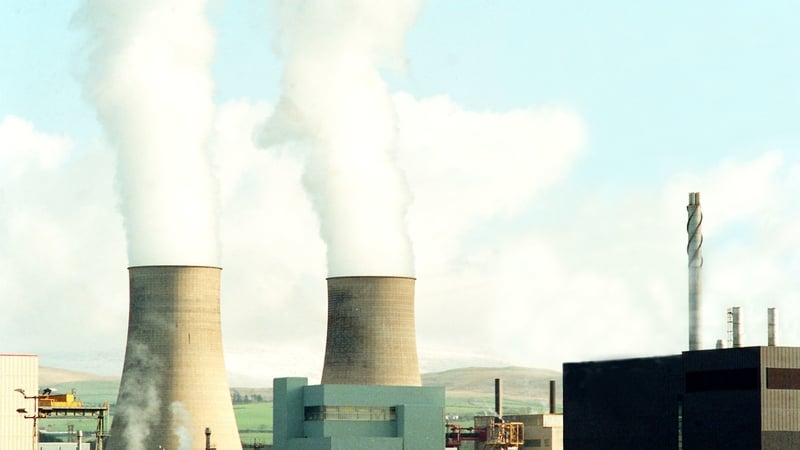
In 1995, escalating fears of a radiation accident at the Sellafield/Thorp nuclear facilities in Cumbria in the UK led the Irish government to consider taking legal action.
Then-taoiseach John Bruton was taking the issue very seriously and went as far as raising it directly with the then-prime minister John Major.
According to a newly-released briefing document, the possibilities for legal action were extensively assessed by the government of the time.
The Office of the Minister for Environment led a review of files and documents and reassessed the possibilities for legal action against the Sellafield/Thorp facilities, according to a 29 November 1995 briefing.
It said: "The Attorney-General has previously advised that any such legal action would have to be based on scientific evidence as to the injurious effects of operations at Sellafield-Thorp on Ireland."
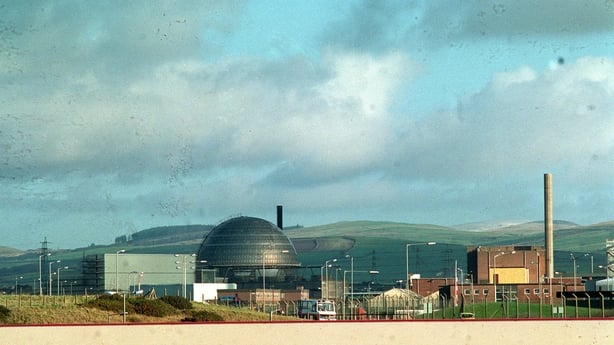
Two separate nuclear-related incidents happened at Magnox power plants in Wylfa in Wales and Dungeness in Kent in 1993, leading Emmett Stagg, the then-junior energy minister, to describe the company's record on nuclear safety as "not reassuring in the least".
He added, in a letter to Tim Eggarm, Britain's energy minister, on 19 September 1995, that this was a "cause of ongoing deep concern to my Government and to the Irish public.
Mr Stagg added that it was the Government's position that all ageing Magnox reactors should be phased out.
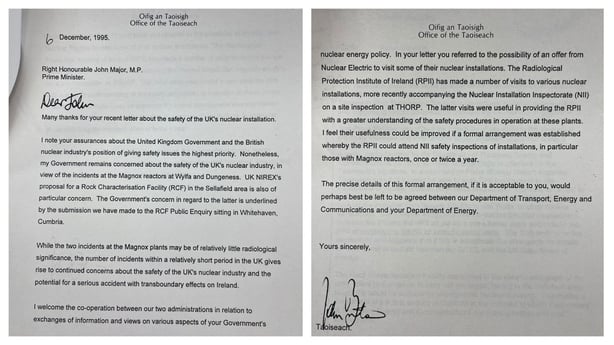
Two months later, on 6 December 1995, a document highlighted how Mr Bruton held a meeting with Mr Major in Mallorca, Spain, where Ireland's concerns were raised.
It said: "While the two incidents at the Magnox plants may be of relatively little radiological significance, the number of incidents within a relatively short period in the UK gives rise to continued concerns about the safety of the UK's nuclear industry and the potential for a serious accident with transboundary effects for Ireland."
Mr Bruton suggested allowing Radiological Protection Institute of Ireland experts to attend safety inspections of some of the installations involved.
"The precise details of this formal arrangement, if acceptable to you, would perhaps best be left to be agreed between our Department of Transport, Energy and Communication and your Department of Energy," he said.
In response, Mr Major warned that there had been "sensational reports" of the incidents, adding he understood that the Irish public "may have been alarmed".
However, he added: "I can assure you that, both for the United Kingdom Government and for those involved in the nuclear industry, safety takes the highest priority" - the word 'highest' was specifically underlined.
"Although some isolated safety incidents have occurred, overall the companies in the nuclear industry have an excellent safety record," Mr Major concluded.
[Based on document 2025-115-541]
