


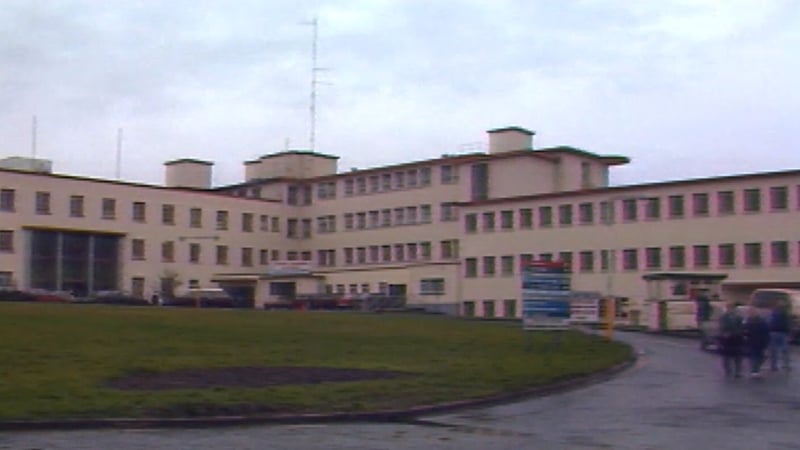
Almost half a century ago, overcrowding and a lack of bed capacity was identified as a major issue at University Hospital Limerick (UHL), a new document released under the State Papers shows.
Today, UHL regularly tops waiting lists for hospital beds - and the Government recently announced plans to expand capacity in the region - but the overcrowding situation around 1979 and 1980 prompted repeated efforts by health officials to address the issues.
This included pleas to secure extra bed capacity, assessing beds in other Limerick facilities, hiring extra nurses and securing the appointment of more consultants.
A report prepared for the Mid Western Health Board in June 1980 in relation to Limerick Regional Hospital (now University Hospital Limerick) warned that extra bed capacity was required.
"Any increase in the number of beds would take time to implement and would require very full and careful examination of the alternatives," it stated.
Department of Health staff visited the hospital after a meeting of staff to address overcrowding on 24 July 1979.
Following the visit, approval to hire 23 extra nurses was granted by the department. However, more consultants or new wards were precluded due to budgetary difficulties within the State's coffers.
The report stated that a factor behind overcrowding at the hospital was the inability to discharge elderly patients.
It said: "A contributory factor to overcrowding in the acute hospital is the difficulty at times in securing accommodation for geriatric patients who, because of the nature of their illness or home conditions (no relatives etc) cannot be discharged to their own home but are suitable for long stay beds in the geriatric hospitals.
"Acute beds are therefore occupied by such patients for periods longer than is necessary for their treatment because of the heavy demand for long stay accommodation."
"The provision of new and additional bed accommodation presents serious capital and revenue cost implications and other solutions should be given prior consideration," it added.
The other solutions ranged from community care investment, less expensive accommodation such as hostels to improved outpatient facilities.
One doctor, who had been acting in a geriatric role in a temporary capacity, recommended a minimum of 20 extra beds, according to a file on 28 May 1982.
"There is no possibility of providing such accommodation at the Regional Hospital," the report said, recommending that alternatives were examined, including access to part of the St Camillus Home, where there were 27 beds available.
However, staffing issues remained a challenge, with the note stating: "The staffing (16 nurses and attendants) presents a problem as this proposal has now been affected by the present staffing embargo and consequently the unit cannot be brought into operation until such a time as staffing is approved."
[Based on document 2025/161/17]
