


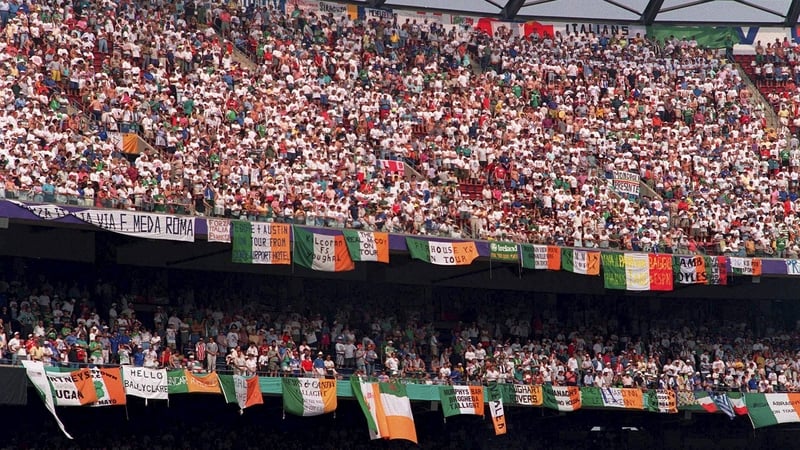
Irish embassy officials gave thousands of pounds worth of World Cup 1994 tickets to Irish fans left stranded and ticketless in Florida - after a British travel agent suddenly went bust - in order to prevent what they feared risked becoming a "riotous situation".
The concerns are outlined in State Papers released to the National Archives of Ireland, which said the decision needed to be made to protect the long-admired public image of Irish football fans.
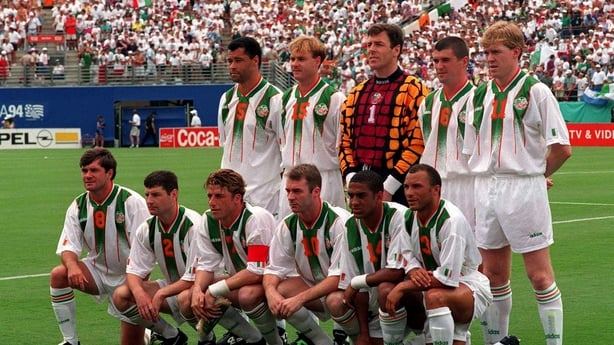
When Jack Charlton's Republic of Ireland team qualified for USA '94 - a result fans hope will be repeated by the current team next summer - they were placed in a group with Italy, Mexico and Norway.
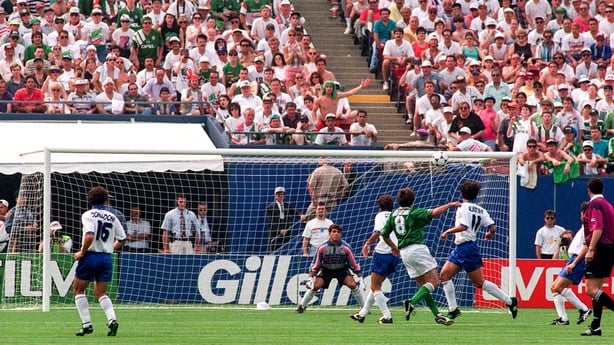
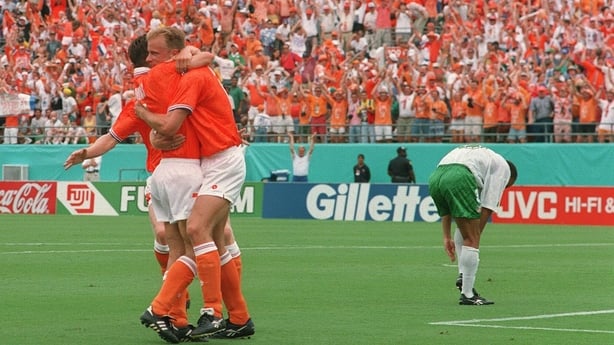
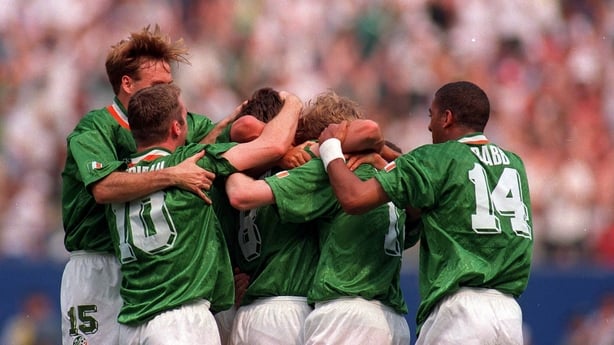
While Ireland qualified from the group after a historic Ray Houghton-inspired 1-0 win over Italy in New Jersey’s Giants' Stadium, a 2-1 defeat to Mexico in Orlando and a 0-0 draw with Norway back in New Jersey, the team were ultimately knocked out in the second round after a 2-0 defeat to the Netherlands in Orlando.
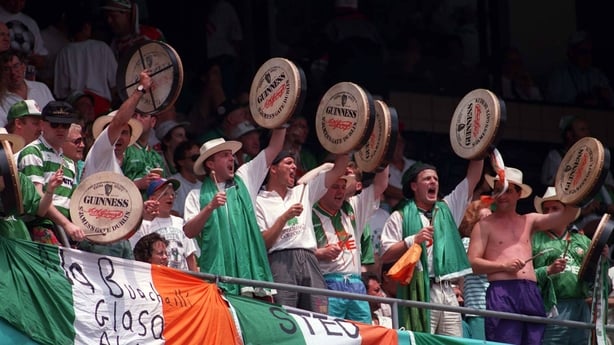
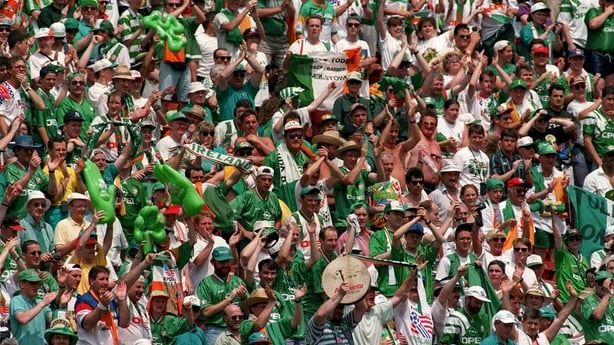
The tournament is remembered just as fondly for the actions of Irish fans, who were praised globally for their large numbers, creative ways of getting more tickets than expected, and friendly non-aggressive nature.
However, newly-released records show that that well-earned public image was very nearly ruined after promised and paid-for tickets for more than 300 fans did not arrive.
The situation was caused when British travel firm Sportex was wound up while fans were already in the US, meaning planned hotels and tickets for the three group games were suddenly unavailable.
On 13 December 1994, a letter from the Irish embassy in Washington DC to the Department of Foreign Affairs recalled the events in the already boiling hot June temperatures in Orlando, saying fans were irate before quick-thinking embassy officials took matters into their own hands.
It said: "They [embassy officials] saved a potentially damaging and even riotous situation when the British travel firm, Sportex, collapsed and left many Irish soccer fans stranded and without tickets in Florida.
"In this case, they were a vital safety net for Ireland and our image here, especially given the intense and daily media interest in the Sportex case…
"I might add that, though it was a purely defensive and damage limitation effort on our part, the defusion of the potentially riotous situation involving Sportex fans in Florida prevented the important enhancement of the image of Ireland, which was developed during the world cup, being seriously undermined overnight."
The description is supported by an earlier briefing note by the Department of Foreign Affairs’ consular services in June 1994, which said in relation to the tickets fiasco: "Since June 17 we have been trying to alleviate the consequences of the failure of this London company [Sportex] to pay for hotel accommodation and transport in the US, and to provide match tickets for 300 to 370 Cork people who had booked three match packages with them either direct or through Cork travel agents.
"By June 21 it was clear that no funds would be forthcoming from the company in time to be of practical relevance to the Irish clients affected.
"The company appears to have irregularly withdrawn about IR£100,000 from the fund and is under investigation by the British department of trade and industry.
"The situation on June 22 is that the consulate in Orlando has obtained tickets for most if not all the Sportex customers going to the Ireland-Mexico match and that the travel agents have paid for hotel accommodation to the end of this week for people who have booked through them.
"The position of the people who booked direct with Sportex remains to be clarified."
And it was further highlighted in two more post-tournament messages, including a 15 July 1994 letter from Ireland’s US ambassador Dermot Gallagher to Department of Foreign Affairs senior official Anne Anderson praising named embassy members for their "outstanding" performance "in difficult and intimidating circumstances", and a separate 2 August letter from then FAI chief executive Sean Connolly to Tánaiste Dick Spring.
Mr Connolly wrote: "Everybody was particularly helpful and especially the people in Orlando who were faced with a considerable amount of work when it became evident a number of people were without tickets as a result of a travel company failure in England."
While it is not in the archived records, RTÉ News understands that in some cases officials gave up their own tickets to ensure all fans who had been caught in the situation were able to get to the games.
Meanwhile, embassy officials were making last ditch-tackles of a different nature to defend Irish fans’ reputation elsewhere too, after becoming aware of what they described as "entirely fabricated" US media reports of Irish and Italian supporters fighting in New York.
On 21 June 1994, Noel Kilkenny of the Irish embassy in Washington DC sent a fax to Brendan McMahon of the Department of Foreign Affairs referencing an article in the Washington Post by "a self-confessed former soccer hooligan" headlined ‘The Soccer Hooligans Are Coming, and I Should Know’.
The article told a sordid tale of "violence between Irish and Italian fans" in Manhattan’s East Village and Hell’s Kitchen after Ireland’s historic 1-0 win at Giants’ Stadium, claiming there was "a pitched battle on Wednesday evening".
Noting the fact the game actually took place on a Saturday not a Wednesday, Mr Kilkenny’s fax went further: "These comments are, at best, inaccurate or, at worst, a total fabrication. Neither the New York City Police nor the New York Port Authority police logged a single incident involving Irish fans over the past week.
"The ‘pitched battle’ on Eighth Avenue did take place, but involved local street gangs - the police have confirmed that no soccer fans were involved."
Mr Kilkenny said he had spoken with the deputy editor of the ‘Outlook’ section of the Washington Post which published the story, and "drew his attention to the blatant inaccuracies in the report" and that "a simple phone call to the police could have avoided such a blatantly inaccurate" article.
The fax said that, in response, Mr Kilkenny - and presumably the Irish government - were told they could ask for a letter to be published in the newspaper. It is not stated how they responded.
Separate files also note the amount of public money that was being spent for government ministers and some officials to go to the USA '94 World Cup games.
One of these files from December 1995 was a Department of Finance briefing note to other officials, which said not properly registering costs and their exact reasons "is a very serious matter", and that given the "one-off nature" of World Cup trips, the comptroller and auditor general spending watchdog was likely to closely examine records.
Watch: Irish embassy officials gave thousands of pounds worth of World Cup 1994 tickets to Irish fans
We need your consent to load this rte-player contentWe use rte-player to manage extra content that can set cookies on your device and collect data about your activity. Please review their details and accept them to load the content.Manage Preferences
In all, IR£150,000 in public money was spent on the event, including IR£88,000 on grants to support companies promoting Irish products, IR£2,354 for a helicopter for then-taoiseach Albert Reynolds, IR£3,000 for car hire, and other matters.
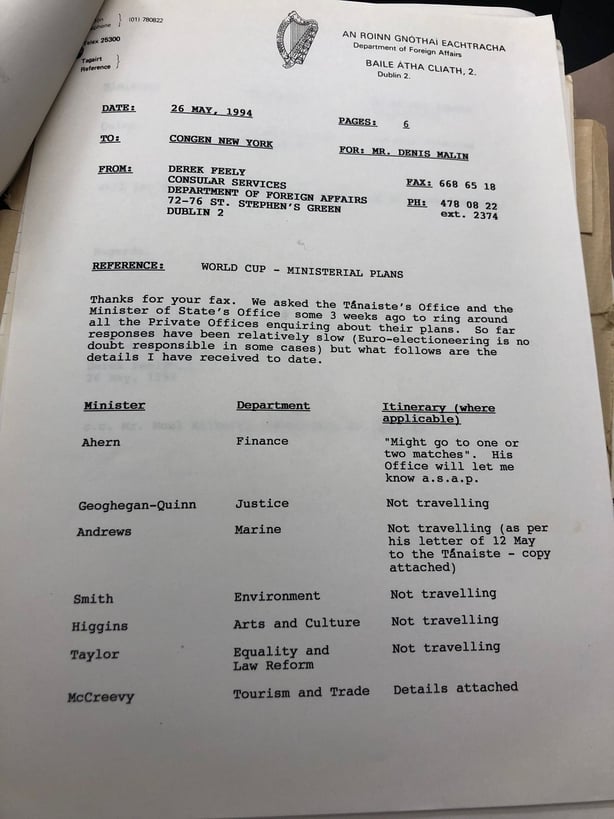
A large delegation of 11 government ministers went to various Ireland games at the World Cup, including then-tourism minister Charlie McCreevy, then ministers of state Pat 'The Cope' Gallagher, Liam Aylward and Tom Kitt, then-taoiseach Albert Reynolds, then-tánaiste Dick Spring, and then-finance minister Bertie Ahern - the latter of whom told officials when asked if he would attend "I might go to one or two matches".
That number was looked on dimly by the then opposition, including Fine Gael TD and Dáil public accounts committee chair Jim Mitchell, who questioned if all attending would actually be partaking in official duties as was claimed.
Other ministers travelling included enterprise minister Ruairi Quinn, who was attending an "Industrial Development Authority" meeting in New York in the days before the Italy game, and marine minister David Andrews, who also happened to be attending a meeting in New York, this time for the Irish Fisheries Board.
Some of those in the government delegation were seated in lucrative box and suite areas of the stadiums, with Ireland’s ambassador to the US Dermot Gallagher telling the Department of Foreign Affairs on 9 June 1994 that two boxes for the Italy game which had a "face value of $30,000 each" had been "made available to us at $1,500 each".
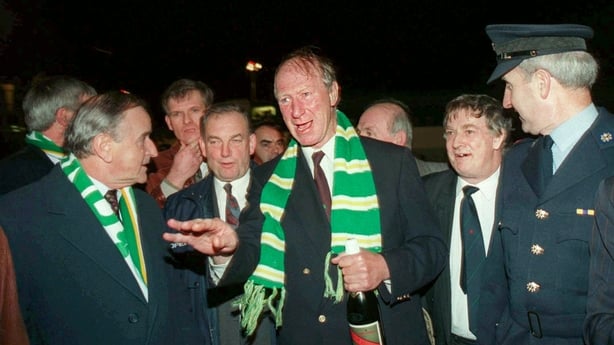
Ireland’s consul general Donal Hamill had written days earlier on 3 June that 100 tickets were available via the embassy for promotional clients and others who had been vetted, and would be for the Mexico and Norway games.
He said: "Since public money was used to purchase these tickets, it is very important that exact records be kept of each ticket… it must be transparent both that public money was put to good use and that no individual or office benefited either materially or in kind from the distribution or sale of the tickets.
"You will note that each ticket has the words ‘embassy of Ireland’ printed on it. I hardly need emphasise how important it would be that none of our allocation of tickets should reach the black market."
The sheer number of ordinary Irish fans also travelling is also identified in the records, with an acceptance by April and May that the official 10,000-12,000 figure would easily double or more due to a surge in US visa requests.
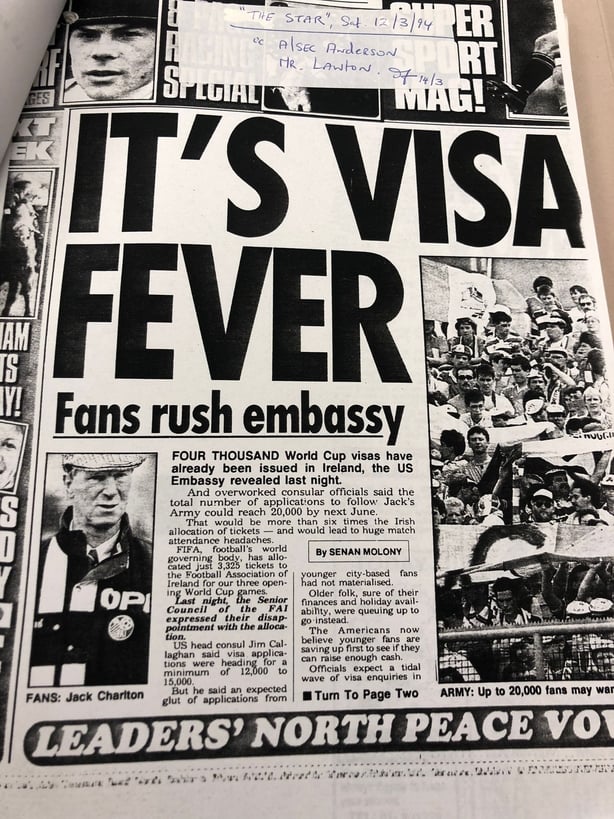
While a briefing note signed by tourism minister Charlie McCreevy said Irish fans should act as "ambassadors" and help to bring US jobs to Ireland by carrying a special card with a map of Ireland, myths of Ireland, and connections with the US, American authorities initially took a dimmer view.
A file from 31 May, 1994, marked "confidential" and from the general secretariat of the European Council, said US immigration officials had asked Belgian, German, Greek, Spanish, Italian, Dutch and Irish authorities - the EU countries which had qualified for the world cup - to provide information on any questionable characters who may be travelling.
The US request included information such as the "names of persons convicted for serious soccer-related offences", before trying to assure EU officials who raised data protection concerns that "after the world cup the lists will be destroyed".
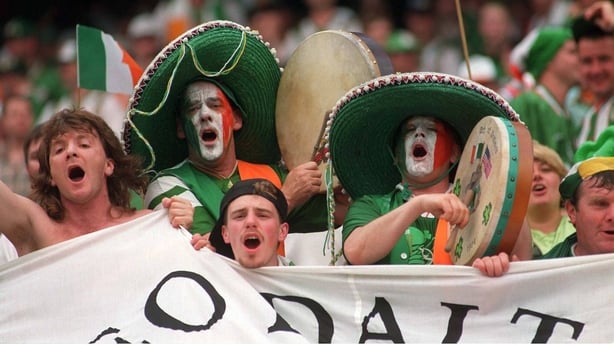
That hurdle though clearly did not put off the tens of thousands of Irish fans who travelled for the World Cup, with a final file showing that interest was already clear months earlier.
In an unexpected 25 January 1994 letter from foreign affairs minister and tánaiste Dick Spring to the now disgraced former FIFA official Sepp Blatter, who at the time was the organisation’s general secretary, Mr Spring wrote: "Ireland’s participation in World Cup ‘94 has generated a tremendous sense of pride and anticipation throughout the country. The groundswell of support for our team is quite extraordinary.
"As you know from previous tournaments, Irish fans traditionally travel in record numbers in support of their players.
"Against this background, we are very concerned that there should be an adequate supply of tickets for Irish supporters planning to travel. The indications so far have not been reassuring.
"I would hope that, when your decisions are being made in the coming days and weeks, FIFA will demonstrate as much understanding and flexibility as possible."
[Based on documents 2025/124/180 and 2025/124/178]
