


International coverage of an attack on a Jewish cemetery in Co Limerick, where a blue swastika was painted on a gate, was a matter of serious concern for the government in September 1995, new State Papers reveal.
UK-based newspaper 'The Jewish Chronical' carried a story on the attack on 1 September 1995, highlighting other damage to the cemetery, including a smashed door, an overturned prayer lectern and part of a perimeter wall being knocked down.
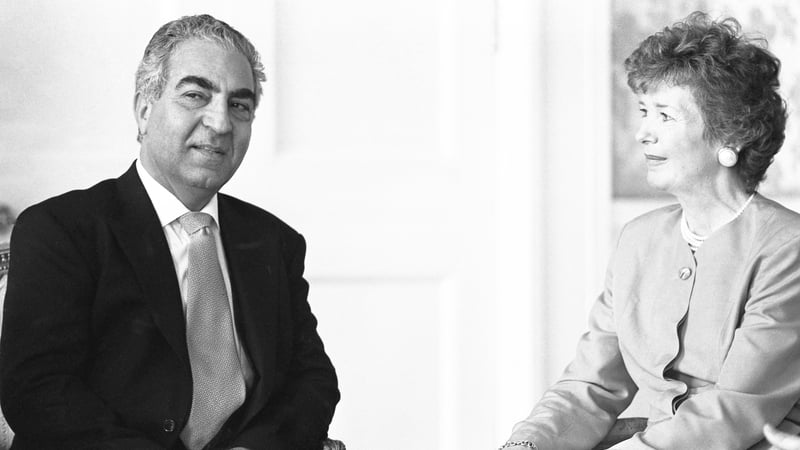
The attack occurred following a visit to Limerick city by Israel’s ambassador to Ireland at the time, Zvi Gabay.
He visited Limerick to promote the 'Jerusalem 3,000 ceremonies' - a 16-month celebration to mark the 3,000th anniversary of David becoming king of Israel.
The newspaper report highlighted how Limerick was also the focus of Ireland's only other major anti-Semitic attack during the 20th century - a boycott of Jewish shops and an anti-Jewish riot in 1904.
Avi Winchester, the author of the report, wrote to Irish press officers at the British Embassy following the attack.
He asked what measures had been taken following the incident and for further developments.
The Department of Foreign Affairs was contacted by the press officers immediately after receiving Mr Winchester’s request.
The department confirmed that the cemetery grounds had been placed under the auspices of Limerick County Council under an agreement with Ireland’s chief rabbi at the time, Ephraim Mirvis.
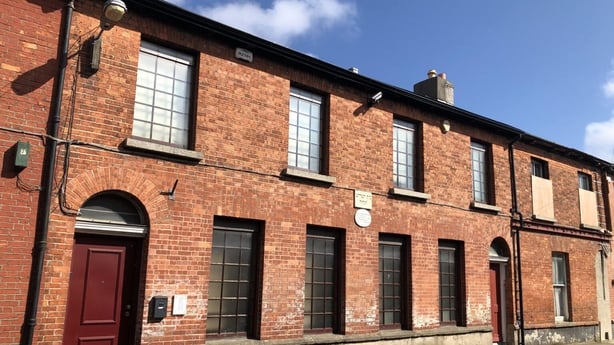
Just weeks before the attack, the government had approved a IR£10,000 grant to go towards the Irish-Jewish Museum in Portobello in Dublin.
Ruairi Quinn, who would go on to become leader of the Labour Party, was on the museum’s board and had lobbied for financial support from government.
A key request from the museum was for government copies of any records in relation to Ireland accepting Jewish refugees both before and after World War II.
It particularly asked for documents related to ritual meat slaughterers, who had been believed to have migrated to Ireland following the war in order to support Ireland’s Jewish population.
James Brennan, of the department’s organisation unit, wrote to the Department of Taoiseach, stressing that there was a positive view towards any documents being released to the museum.
He wrote: "The department's general attitude to the question of the release of archives is positive and we are anxious to ensure that our past good record in this area be maintained and even improved upon in the context of the proposed archive legislation."
He said some documents had already been located, with searches ongoing for other relevant records.
The Department of Justice, meanwhile, stated that it did not have any trace of files related to Jewish migration to Ireland.
"All the early 'aliens' files were sent to the Public Record Office some years ago and no doubt enquiries are also being directed to that office," it said.
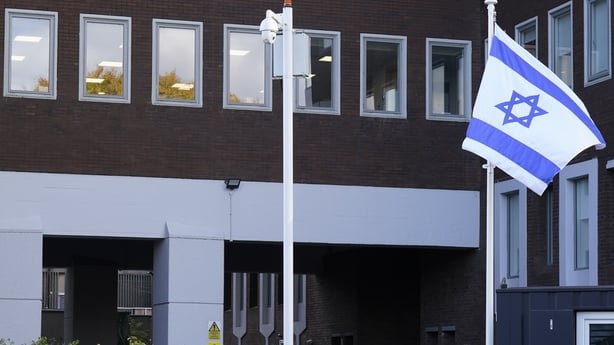
In another document released under this year’s State Papers, a delay to the opening of the Israeli embassy in Ireland is also highlighted.
The embassy was eventually opened in January 1996, after concerns of a "backlash" from Arab countries in terms of trade with Ireland, which was much larger than trade with Israel, were raised.
A memo in 1990 about initial proposals to open the embassy said: "Irish trade with Arab countries is at a ratio of approximately 10 to 1 in our favour and is mainly sourced from indigenous industry."
"Security implications" in terms of expenditure and garda time were also highlighted as a "major consideration" for government when deciding to open the embassy.
In 1992, a document stated that security for the embassy could cost as much as IR£700,000 a year.
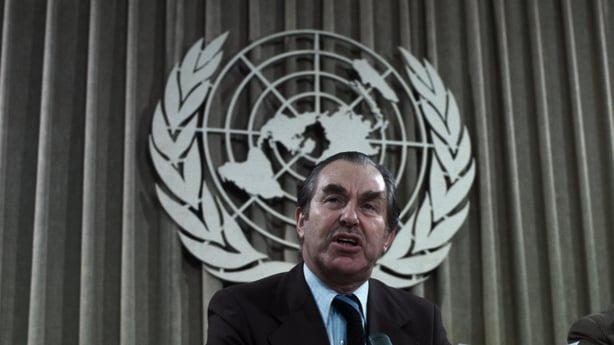
It added that Arab states would also immediately demand to be allowed open their own embassies in Ireland.
Similar concerns over antagonising Arab states were cited for reasons the president of Ireland should not undertake a State visit to Israel, a visit that has subsequently never taken place.
In 1985, then-Israeli president Chaim Herzog had undertaken a State visit to Ireland, with consideration given to President Mary Robinson carrying out a return visit before the end of Mr Herzog’s term in 1993.
A file in 1992 noted that if President Robinson was to visit Israel, it would likely not be well received by Arab states.
The memo stated: "It might be argued that the chances of our incurring the Arab world's displeasure by having a State Visit to Israel are slimmer than in the past but is it worth taking the risk?
"A State Visit is usually seen as a mark of a high degree of friendship between two countries and it would not go unnoticed in the Arab world."
[Based on documents 2025/115/932, 2025/124/352 and 2025/124/345]
Read more: How to explain the 1995 divorce referendum to Vatican?
