


Ireland's ambassador to the Holy See was given a specific briefing on how to explain the reasons for the 1995 divorce referendum to the Vatican.
This was due to the "political sensitivity" involved and the potential influence of Pope John Paul II on how some people may vote.
The situation is confirmed in a lengthy list of official documents released to the National Archives of Ireland, which also include calls from within government for the coalition not to go into "hiding" on holding genuinely open debates with the public and rival parties on the referendum plans.
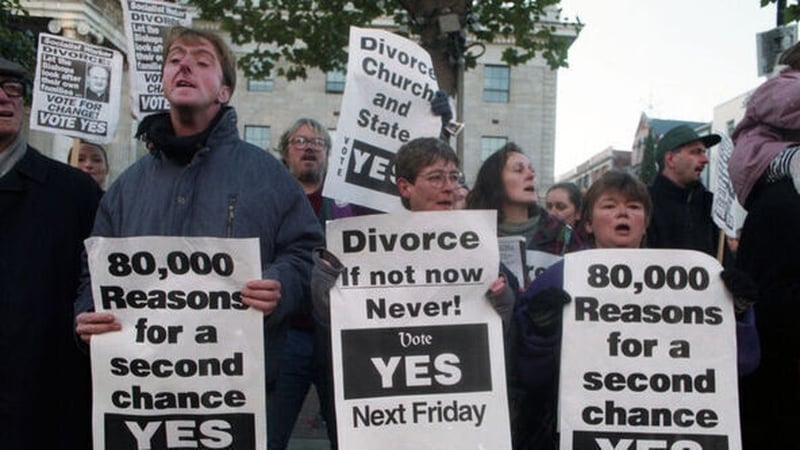
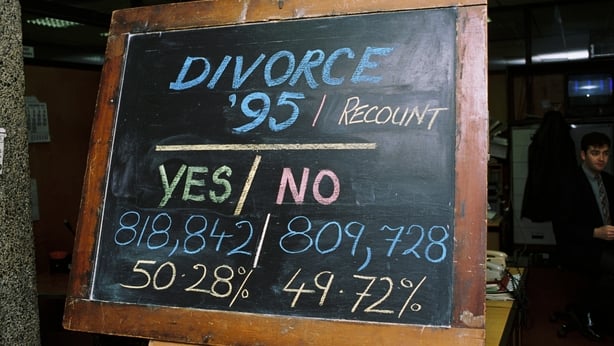
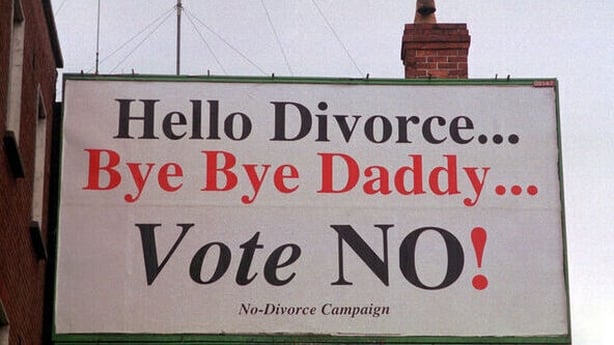
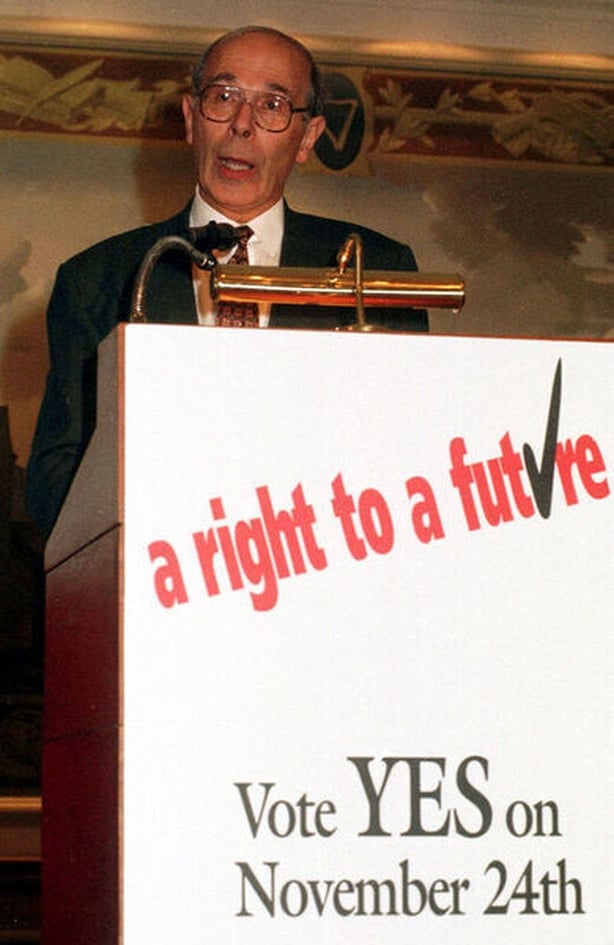
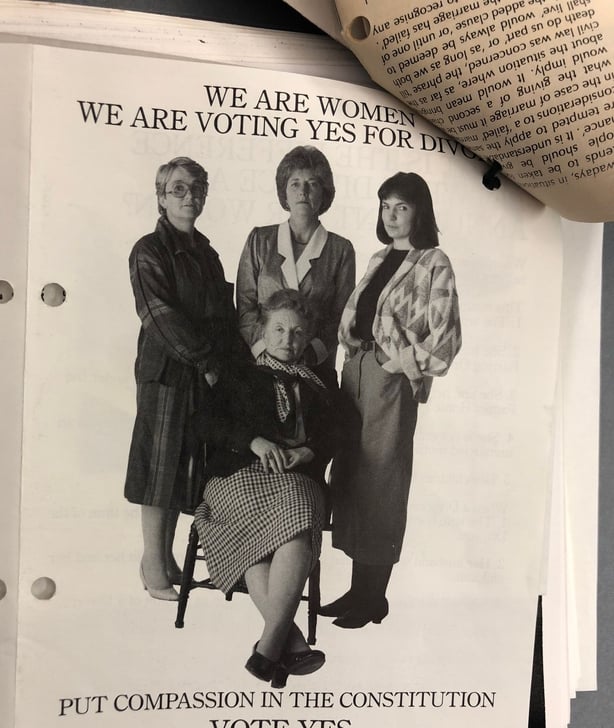
The November 1995 divorce referendum was passed by the slimmest of margins, 50.28% to 49.72%, after an intense and divisive campaign, which included slogans like "use your vote to help others rebuild their lives" and "hello divorce, goodbye daddy".
However, while moral debates were taking place in public, behind closed government doors officials were instead focused on more pragmatic matters relating to the referendum.
In a letter to the Department of Foreign Affairs secretary general Noel Dorr in December 1993 - almost two years before the referendum took place - Ireland’s ambassador to the Holy See Gearóid Ó Broin wrote: "I note references in the press from time to time about a possible referendum on the question of divorce in Ireland next year.
"As you can imagine, this is a matter in which the Holy See authorities can be expected to take a keen interest and I would expect them to take their line from that adopted by the Catholic hierarchy in Ireland.
"There is a possibility the secretariat of state may raise the matter with me directly at some stage. In the event that they do, it occurs to me that it would be useful for me to have a background brief on the issues," Mr Ó Broin wrote.
In a follow-up letter in January 1994 from Mr Dorr to Department of Equality and Law Reform's secretary general, Bernard McDonagh, Mr Dorr responded: "He [Mr Ó Broin] expects that the Holy See authorities, to whom he is accredited, will take a keen interest in the issue [the referendum] and may raise it directly with him at some stage.
"I do not know whether you are in a position to let me have something which I could send him… I think it would be desirable to do so.
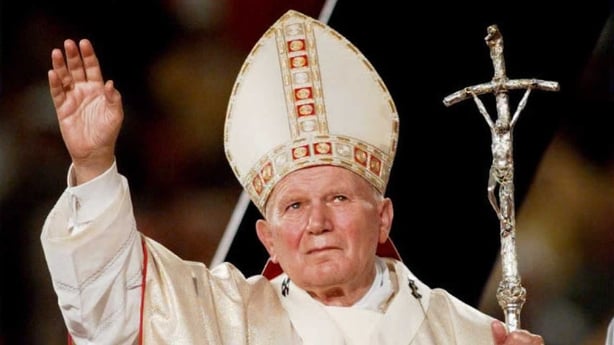
"You will be conscious, I am sure, of the potential political importance of the position which will be taken by the Roman Catholic hierarchy on the issue, and this will no doubt be influenced by - and will in turn influence - the views of the authorities in the Holy See…
"At first sight one might be inclined to respond that the question of holding a referendum to effect Constitutional change on this issue is one which the government should regard as purely internal and domestic.
"Nevertheless, it may be desirable at the right time, and without prejudice to positions of principle, to allow the ambassador to brief the secretariat of state in the Holy See on the government’s proposals as this may, indirectly, help to facilitate the acceptance of these proposals by the electorate here."
Mr Dorr’s letter concluded: "In view of the particular political sensitivity of the whole issue I am bringing this correspondence to the attention of the [then] tánaiste [then Labour leader Dick Spring] and copying it to Frank Murray, secretary of the government."
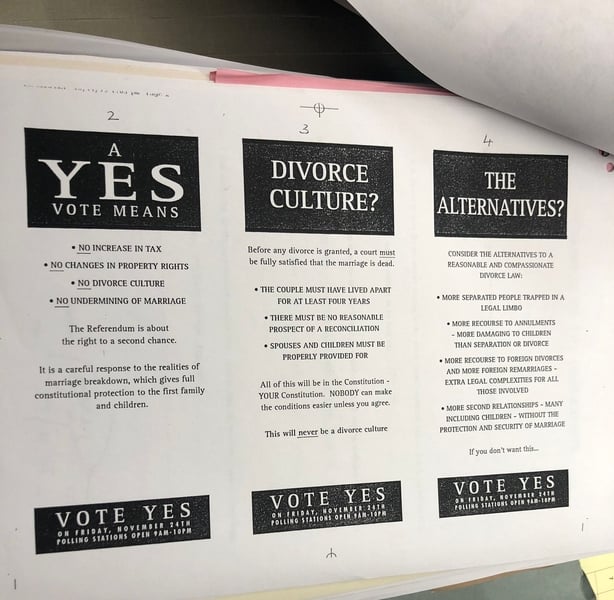
A separate file among the large tranche of documents relating to the divorce referendum included a September 1995 letter from then Labour TD and minister of state at the Department of Equality and Law Reform, Mervyn Taylor, in relation to the need for a genuinely open political debate on the vote.
With the date for the referendum still being decided and unofficial campaigning reaching fever pitch among the public, Deputy Taylor wrote to the then rainbow coalition government’s chief whip, Deputy Jim Higgins, saying: "I understand there is a proposal to take the [15th Amendment] Bill in special committee [a limited Dáil committee compared to more usual Oireachtas practices]. I have to say that I do not favour this approach for two reasons.
"(a) This Bill is exceptionally important and the government should not be seen to be hiding from debate on it.
"Every member who so wishes should be entitled to contribute on committee stage, and while this would be possible in a special committee, it would be much more appropriate to have the debate in the full Dáil.
"The government should not leave itself open to the suggestion it was avoiding a full debate in Dáil Éireann.
"(b) Any proposal to take a Bill of this kind in special committee should only be considered if there was all-party agreement.
"I understand that this is not the case, and I am very reluctant to give the opposition or any opposition party the opportunity to claim the government is unduly restricting debate or avoiding scrutiny."
Impact of McKenna judgment on campaigning
The divorce referendum files, released by departments to the National Archives of Ireland, also include significant discussion over the impact of the McKenna judgment on campaigning, and on the tax implications of the potential referendum result.
The McKenna judgment was a Supreme Court ruling in 1995, which upheld a challenge taken by Patricia McKenna in relation to how much public money could be spent by government on campaigning for a Yes vote in the divorce referendum, and the need for a balanced approach in debates.
While the judgment ultimately led to the 1998 Referendum Act and the establishment of an electoral commission to ensure complete balance in funding and information on referenda from State organisations, it also had the far sooner practical impact of delaying when the government called the divorce referendum in 1995.
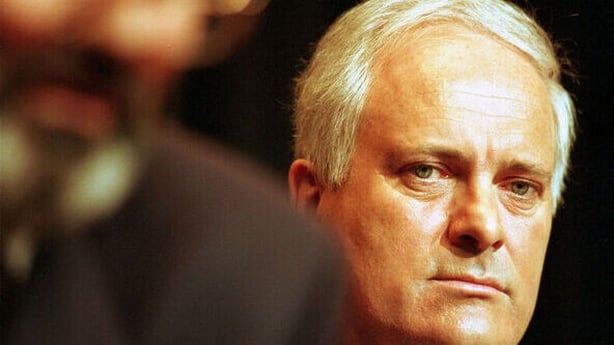
A briefing note for then taoiseach and Fine Gael leader John Bruton in November 1995 accepted the McKenna judgment meant "the expenditure of public moneys on a campaign for a yes vote was not an action in exercise of the power of the State".
Notwithstanding this point, the briefing note said IR£500,000 was already earmarked by the State as "fully committed" for spending on the campaign.
This included IR£418,365 for an advertising campaign, and a "purely factual" leaflet on sale for IR£4 called "The Right to Remarry - a government information publication on the divorce referendum", which the note stressed was not affected by the McKenna judgment ruling.
Financial questions of a different kind were also on the agenda within government a year earlier however, when Fianna Fáil was still in power.
In a May 1994 memorandum on behalf of then minister for finance Bertie Ahern by his officials, the future Fianna Fáil leader raised some pragmatic economic points on the resulting tax changes.
In reference to suggestions a non-means-tested should be provided to "certain women who work in the home", an official noted: "The minister for finance regards it as inappropriate that the government should be asked to agree a major expansion in long-term pension costs, potentially in excess of IR£40m a year.
"The memorandum does not develop any policy argument based on need, priority or equity."
Meanwhile, underlining the tension over the referendum throughout 1995, an 31 August 1995 internal letter from Department of the Taoiseach senior official, Mary Preece, to the government’s secretary general, Frank Murray, said a memo outlining official plans for the referendum would be tabled at the following week’s cabinet meeting.
The letter asked, "if the memorandum could be circulated as late as possible, i.e., Monday PM, to avoid any possible leakage".
Not for the first time, however, the memo plans were leaked.
Concern over US politicians' views of peace process after 9/11 attacks
The documents received by the National Archives of Ireland are specifically related to the Republic are dated from or before 1995.
However, files related to Northern Ireland can include those up to 2005 to stay in line with Britain, which releases its files, including those on the North, after 20 years.
A document from 2001, which will certainly catch the eye, is one which relays the government's concerns over how the aftermath of the 9/11 terrorist attacks may affect US politicians' views of the Northern Ireland peace process.
A government official warned that internal security matters and how to deal with terrorism would dominate the US government’s agenda for a "long time to come".
The memo flagged that the peace process would consequently have to compete for space on the Bush administration’s policy agenda, while US politicians could be likely to take an "exacting approach" when dealing with republicans in the North, as they would be doing so with a "whiff of cordite" in the air.
Another incident in 1995, which garnered international media attention, was an attack on a Jewish cemetery located in Co Limerick.
The front gate of the cemetery was defaced with a blue swastika, a door was smashed, a prayer lectern was overturned and part of a perimeter wall was knocked down.
The newly-released files show how the Department of Foreign Affairs dealt with a media query on how the government would respond to the incident.
And one previously unseen file details how a request from RTÉ for two giant pandas who were visiting Dublin Zoo from China to appear on The Late Late Show was turned down due to animal welfare concerns.
New files also show how government hopes to temporarily block mobile phone networks in specific locations, to prevent a bomb being set off in Northern Ireland by a call or text message in the Republic, were opposed by some mobile phone companies.
And the new batch of documents also show how then taoiseach Bertie Ahern was told by leading loyalist figures he brought to visit Dublin in 2003 that republicans were trying to create no go areas for protestants in rural parts of Northern Ireland.
[Divorce story based on documents in 2025/115/85, 2025/115/86, 2025/115/82, 2025/115/830, 2025/115/84, 2025/1/1090 and 2025/115/830]
[Other stories based on documents in 2030/50/525, 2025/120/37, 2025/115/932, 2025/124/352, 2025/124/345, 2025/123/50 and 2025/124/1, 2025/125/317, 2025/123/50 and 2025/115/968]
Read more:
State Papers: Concern for Northern Ireland peace process after 9/11 attacks
State Papers: Telecom companies opposed govt plan to shut down networks
State Papers: Chinese panda's Dublin Zoo trip may have contributed to its death
State Papers: Jewish cemetery attack in 1995 caused government serious concern
