
The European Commission is to refer Ireland back to the European Court of Justice and is seeking financial sanctions to be imposed because of Ireland's failure to comply with a 2019 court judgement for breaching of the EU Urban Wastewater Directive.
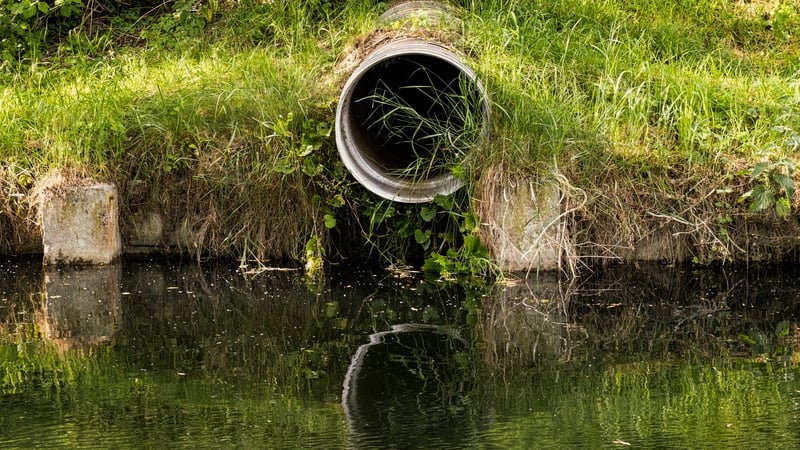
That 2019 judgement found untreated urban wastewater in 28 agglomerations around Ireland were putting human health at risk and polluting lakes, rivers, soil and coastal and groundwater.
The Urban Wastewater Directive requires EU Member States collect and treat urban wastewater before it is discharged into the environment.
It requires wastewater collecting systems to be put in place where a town has 2,000 people or more, and that the wastewater undergoes secondary treatment before discharge.
More stringent treatment is required to remove nitrates and phosphorous from wastewater in towns with more than 10,000 people.
In a statement outlining why it is referring Ireland back to the EU Court of Justice over these issues, the EU Commission noted progress in resolving compliance issues in 20 of the 28 urban areas covered by the judgment.
However, it says eight agglomerations remain in breach of the directive.
Ireland has failed to ensure that overflows from urban wastewater collecting systems are sufficiently controlled and appropriately treated in six of these eight areas.
In two other agglomerations, it said Ireland has failed to ensure secondary treatment of urban wastewater before it is discharged.
In one case, urban wastewater is being discharged into a sensitive area without being subject to a more stringent treatment according to the Commission’s statement.
Responding to the announcement, Uisce Éireann said the European Court of Judgment case has been a key focus of its work programme and commitments to protect the environment.
It said it has been developing and delivering national plans to address high priority non-compliances in the wastewater sector since its establishment in 2014 and has successfully completed works on 24 of the 28 agglomerations referenced in the original case.
This includes what Uisce Éireann described as two landmark upgrades in Enfield and Arklow delivered this year.
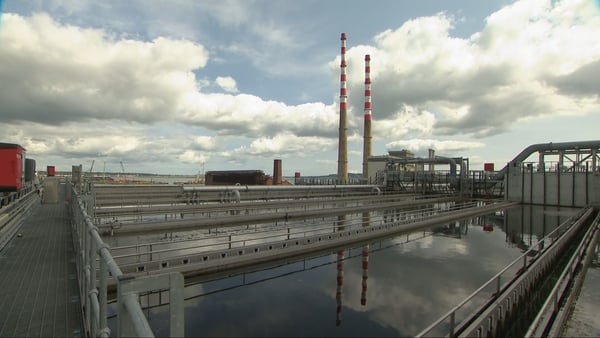
It said two further major infrastructural investments at Ringsend and Athlone are on track to meet compliance targets in the coming weeks.
This could bring the number of completed works to 26 out of the 28 agglomerations at issue.
However, the Uisce Éireann statement highlights that planning and consenting processes can also be lengthy.
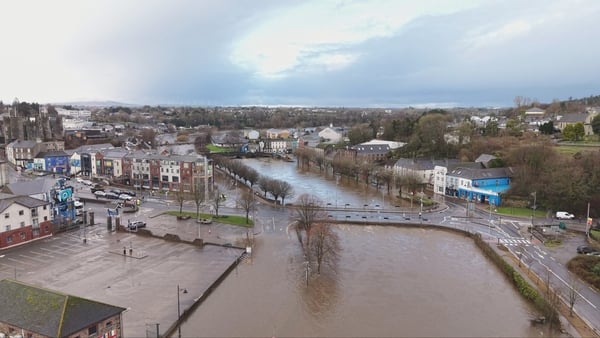
Some projects, including network upgrades in Cork city and Midleton, require extensive investigation and collaboration with other organisations to determine the extent of the problem and identify the right solutions.
Uisce Éireann said the wastewater upgrade works at Middleton are on track for delivery in 2029.
Addressing the very extensive wastewater network in Cork city will take longer but the public utility company said plans are in place to bring this into compliance.
Director for Asset Management and Sustainability in Uisce Éireann, Sean Laffey, said: "Recent progress on the Greater Dublin Drainage project, first submitted to planning in 2018 and the settlement reached only last week underline the scale and complexity of delivering major infrastructure projects."
He said these projects involve intricate planning, consenting, and construction phases, which "cannot be resolved overnight".
"The Government’s report on the barriers to infrastructure delivery launched in November, reinforces the need for systemic changes in planning and consenting processes. We welcome the recommendations as they provide a clear roadmap for addressing delays and enabling faster progress on critical projects, which will help us meet Ireland’s environmental obligations more efficiently," he said.
"Uisce Éireann remains committed to achieving compliance and protecting the environment while also enabling development and growth in support of the governments housing commitments."