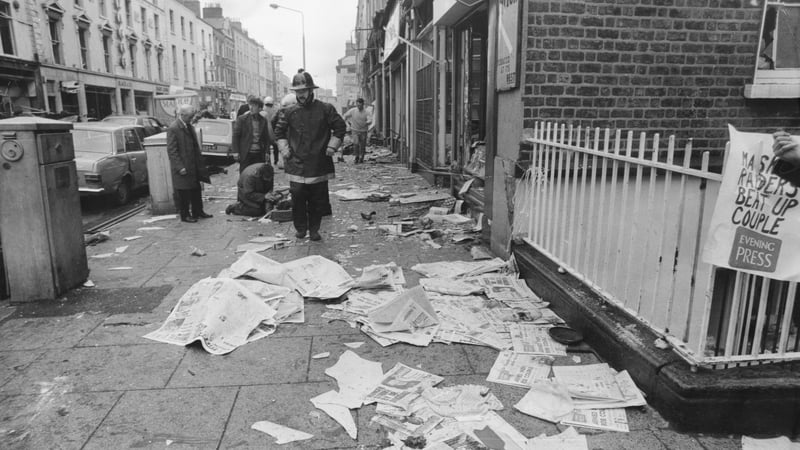

A review into the Dublin-Monaghan bombings, which claimed the lives of 34 people, has found there was no evidence of collusion on the part of the British state in the 1974 atrocity.
The Kenova Final Report says the UVF was "independently capable" of carrying out the attacks, having the knowledge, expertise and materials needed.
The report was commissioned by the PSNI in 2016 following a direction of NI's Public Prosecution Service.
"The review has not identified any evidence or intelligence which would indicate that British security forces colluded with the UVF to carry out the attacks in Dublin or Monaghan, nor has any evidence of State collusion been identified", the report says.
The UVF in Belfast planned and carried out the double bombing with support from the organisation in Mid-Ulster, according to the report.
It also says it found "no specific intelligence" which, if acted upon, could have prevented the attacks.
The bombings were reviewed under Operation Denton and published in the Kenova Final report.
Operation Denton, which reviewed 98 incidents resulting in 127 deaths, said it was "particularly rigorous" in seeking evidence of collusion in relation to the Dublin Monaghan bombings.
It said legitimate questions have been raised about the lack of information and intelligence recovered during its review, including the bombs used in the attack.
The report says that "this absence of intelligence has been presented as indicative of collusion" along with the poor investigative response in the following days and the lack of information to the victims and families.
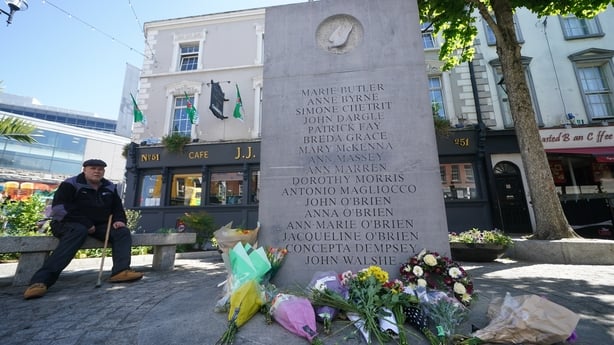
"No evidence of collusion was found by the Operation Denton team, albeit that this cannot be categorically excluded", it says.
Operation Denton carried out reviews of sectarian attacks by loyalist paramilitaries referred to as the "Glenanne Series" between 1972 and 1978, assessing allegations of collusion.
The report says the so-called "Glenanne Gang" did not exist, rather there was a broader network involving loyalist paramilitaries and some corrupt security forces which carried out horrific crimes
"While collusion at the individual level was evident, some of it long established before Denton was initiated, there was no evidence of collusion at a political or strategic level", it says.
The review said there is no evidence of "high level state collusion, or an intent on the part of the leadership of the British Army or UK government to collaborate with loyalist paramilitaries.
However, it does say there was clear collusion between some members of the UDR and RUC with loyalist paramilitaries.
"The review has not discovered any material which indicates that the security forces systematically collaborated with prolific offenders of that any individuals or groups were organisationally "protected" by the security forces".
Although Operation Denton said it is unlikely there would be records if this were the case.
The review team met with 117 families, taking accounts from mothers, fathers, wives, husbands, sons, daughters, brothers and sisters
They described all their accounts as "moving, compelling, emotive and hugely impactful".
They wanted to know who had committed the attack on their loved one, who orchestrated them, why was their family targeted, why the truth was suppressed and if there was collusion, what did it involved.
The review finds that most of the families interviewed feel that they "have endured years of being ignored, disregarded and belittled" and want their loved ones "recognised as individuals and the full impact of their loss and pain publicly acknowledged".
The report says that the majority of attacks reviewed by Operation Denton were deliberate sectarian attacks on members of the Catholic community and a number of individuals targeted were publicly affiliated with the Social Democratic and Labour Party.
Others were "popular, well-respected advocated for their communities, known for helping and supporting others", it said.
The review criticised the level of compassion the families had received, and the lack of information given to them, which sometimes led to "poorly informed speculation".
It said there were major shortcomings in the way they were dealt with the RUC.
"Many victims and families were badly let down", the report says.
Today’s report says that due to the volume of incidents taking place on a daily basis, "Troubles-era investigations" into the most serious crimes were often led by detective constables who moved from one crime to another.
It said some senior officers believed they had sufficient resources, investigative capabilities and operational capacity to deal with the evolving threat until the 1980s.
During the 1970s the RUC lost a number of officers who were murdered, as well as many who were attacked and seriously injured.
The review finds that in most cases it looked at, there was an initial enthusiasm in progressing lines of enquiry, but in some this soon waned.
"The capacity and at times capabilities of the RUC to exhaustively pursue investigations to meaningful conclusions was lacking.
"In some cases, lead investigating officers did not always receive relevant intelligence", it said.
Sharing of information and sensitive intelligence was restricted between security forces operating within Northern Ireland and those in the Republic was "severely restricted by jurisdictional constraints and operational practice".
It said many of the limitations were evident following the Dublin Monaghan bombings.
The full Denton report will be published early next year, today's review contains a brief summary on each case.
It said a number of cases involved members of the security forces who were arrested and convicted of serious terrorist offences.
"This represents clear evidence of collusion with loyalist paramilitaries by state actors" it says.