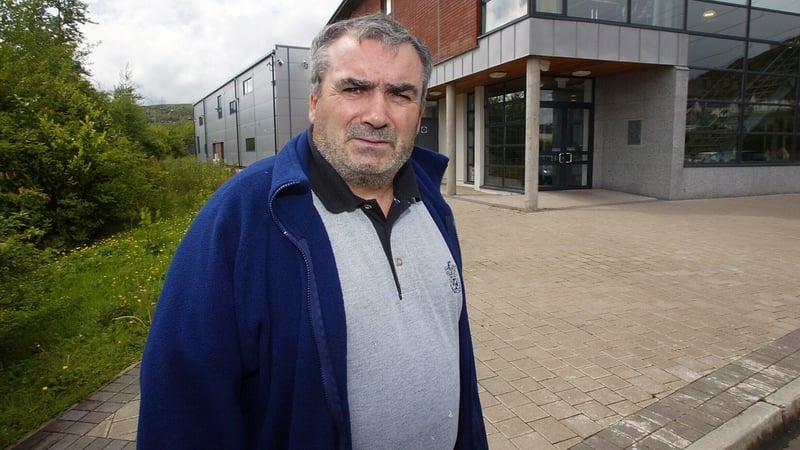

A top British spy at the heart of the IRA was flown out of Northern Ireland on holiday on a military aircraft by his army handlers when they knew he was wanted by police for conspiracy to murder, it has emerged.
The finding is one of a series in a final report published today into the activities of the agent code-named Stakeknife - a central figure in the IRA's internal security unit or 'Nutting Squad'.
The report was commissioned by the PSNI in 2016 following a direction of NI's Public Prosecution Service.
The report says he was a suspect in more than two dozen offences including murder, conspiracy to murder and false imprisonment.
The IRA unit's job was to root out and kill suspected informers in the ranks.
Stakeknife is widely believed to have been Belfast builder Freddie Scappaticci, who fled to England in 2003 following media reports naming him.
He died there in March 2023 aged 77 having changed his name and been provided with a new detached home and an income.
Scappaticci is described in the Operation Kenova Report as a "critical person of interest" at the heart of the investigation who had been arrested, interviewed under caution and who had been the subject of files sent to prosecutors.
He was never convicted of Troubles related offences and died before prosecutors reached a decision on charges linked to the Kenova investigation
The Operation Kenova Report does not confirm Scappaticci was Stakeknife.
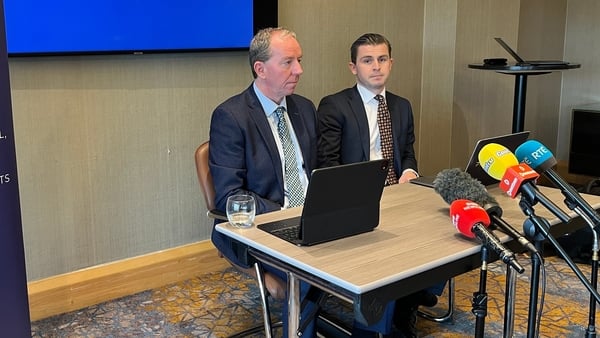
Lead investigator Iain Livingstone said he had been prevented from confirming Stakeknife's identity by the British government.
It continues to adhere to its policy of Neither Confirm Nor Deny (NCND) when it comes to agents, even though there have been previous exceptions.
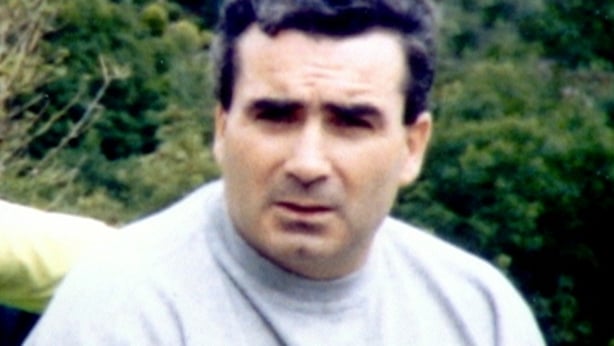
In his introduction to the report, Mr Livingstone said NCND was a well established principle and an important safeguard for agents, but there should be limits to its use.
"It cannot be used to protect agents who commit grotesque serious crime, leaving victims and families ignored and their demands for information and answers dismissed.
"We in Kenova believe there is a compelling ethical case for the UK government to derogate from the NCND policy regarding the agent Stakeknife's identity.
"It is in the public interest that Stakeknife is named."
Watch: Stakeknife protected by British handlers, report finds
The report found that Scappaticci had told his wife and another female associate that he was Stakeknife.
The refusal to confirm his identity in the report will anger families whose loved ones died as a result of Stakeknife's activities.
The kind of activity Stakeknife was involved in while working for the military as an agent in the IRA is set out in the report.
In just one of many cases detailed he told his handlers about a plan to abduct and interrogate a suspected informer.
His army handlers told RUC Special Branch of a plan to lure the victim to the Republic of Ireland for questioning. The police did not warn the intended victim.
Stakeknife then told his handlers that the man had confessed during interrogation and been sentenced to death, several days before he was killed.
The RUC Special Branch passed the intelligence to An Garda Síochána that the victim was being held at an address in the Republic.
But gardaí went to the wrong address and the IRA unit escaped with the victim who was shot dead the next day.
Stakeknife subsequently told his handlers who had been involved with the murder conspiracy, but this was not shared with detectives investigating the killing.
The news that Stakeknife had been flown out of the country at a time when he was a wanted man, came to light in additional material produced by MI5 to the Kenova inquiry team after the publication of its interim report in March last year.
It showed that MI5, which had been heavily involved in helping to run Stakeknife "from the outset", had been aware of the plan.
It saw the agent flown out of Northern Ireland on a military aircraft and given military identification. It happened on two occasions.
The MI5 information was only supplied after the death of Freddie Scappaticci, when decisions had been made recommending no prosecutions on a series of files relating to Kenova's investigations and when the British government's new legacy Act precluded any further investigation of the material.
The investigation team described this as "deeply regrettable" and a "lost opportunity" the impact of which would never be fully understood.
Watch: 'Significant failure' by MI5 in not disclosing information about Stakeknife
Stakenife had been described by senior figures in the British military as the "goose that laid the golden egg", the source of intelligence that had saved countless lives.
But that was discounted by the interim Kenova Report.
It said the lives saved were in the high single figures or low double figures and that more lives had probably been lost as a result of Stakeknife's activities than had been protected by his information.
He had been an active agent in the IRA for decades providing quality intelligence to his handlers.
The British Army began to cultivate and recruit him in the late 1970s and he worked for them and other security agencies for almost 20 years.
The report says his motivation appears to have been to escape a criminal conviction or for money.
Such was the quality of his information that a special unit was set up to run him, from secure accommodation nick-named the "Rat Hole".
His intelligence was passed to police special branch and MI5, but not always used to save lives and secure convictions.
Over the years his payments were something equivalent to an average wage, though he also was given lump sums of tens of thousands of pounds to buy property.
There was information that he had been offered five and six figure financial incentives as a pension or annual salary.
He produced "vast" amounts of intelligence, the report says. The Kenova team was able to recover 3,517 separate reports he'd contributed, much of it "valuable".
But the intelligence was not always used as it should have been to protect life and the motivation for that was protection of the agent himself.
"The entrenched position adopted by both the Army and the RUC Special Branch resulted in vital intelligence that could have been used to save lives and identify suspects being quietly filed away rather than being acted upon.
"Time and again, it would appear, that protecting the agent outweighed protecting the life of a victim or protecting the right of their families to see justice for the crimes committed against their loved ones," the report said.
His handlers also considered the possibility that their star agent might be liable in future civil claims for damages as a result of his activities at the heart of the IRA.
Consideration was given to how the ownership of his assets might be obscured in order to protect them.
Such was the misguided loyalty to Stakeknife within the military that there was communication about hosting a "farewell dinner" for him when he was eventually resettled outside Northern Ireland.