



Six in 10 young people are seeing extremist content online, according to a new study by the Ombudsman for Children's Office.
Discrimination and a revival of traditional gender roles are all being seen regularly by young people, while a quarter of children surveyed say their friends have views that would be considered extreme.
A total of 626 children aged 12-18 years from 28 secondary schools around Ireland took part in the survey, discussing how they felt about being exposed to extremist content online.
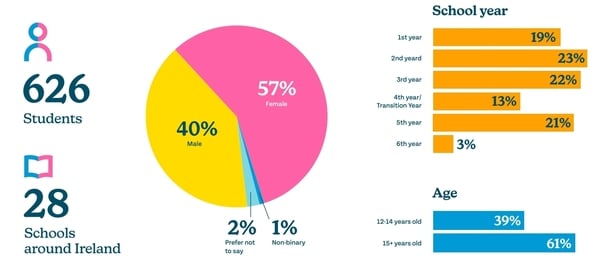
Once a school agreed to take part in the survey, it was up to the individual student whether they wanted to participate. Children's participation was anonymous and only the school was identifiable.
The survey titled 'Extremism, Discrimination and Gender Roles - an online survey of young people’s views on Emerging Social Issues in Modern Ireland' was carried out by the Ombudsman for Children’s Office in conjunction with Amárach Research from 5 - 23 May this year.
Speaking on RTÉ’s Today with David McCullagh, Children’s Ombudsman Niall Muldoon said that the findings of the study were concerning.
"We just wanted to know if children were being exposed to this and how they felt about it," he said.
"We've about 2,500 children come through our office every year and we heard those views coming up.
"We ran the survey across secondary schools across Ireland and we just asked them, we didn't describe what extreme views were, we asked them to find it themselves.
"69% agree that discrimination is an issue ... The big piece for me then that comes out of it, too, is that the online world is so important to them.
"63% have heard the views online, and only 6% have heard it in person. I think that, for me, is a real stark understanding of today's world."
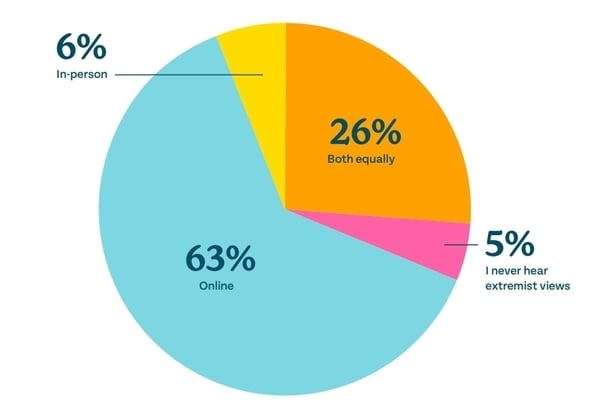
Mr Muldoon said that a lot of the children surveyed did not necessarily agree with the views they were being exposed to.
"Some of them would say that their friends have far-right views, some would say that they don't agree with their friends' views," he said.
"Particularly if it's online, they may not be in a position to push back on it.
"As people will, the children have said that they find it more difficult to push back on an authority figure or to challenge one of their friends in certain ways.
"That's something we need to start learning, teaching them how to do that and how to stand up for themselves and to recognise where it's false narrative and also, where it's misinformation."
Mr Muldoon said that there was a gender difference noted within the report.
Listen: How children are impacted by the rise in extremism
We need your consent to load this rte-player contentWe use rte-player to manage extra content that can set cookies on your device and collect data about your activity. Please review their details and accept them to load the content.Manage Preferences
"We asked them who was most likely to be seen as having extreme views and it was very clear. 64% of the respondents said boys and men and only 17% said girls and women," he said.
"We know that online services are targeting young men, young boys, in relation to these sort of areas to get clickbait to bring them into this sort of circle of information.
"One of the things we would have concerns about, and we've mentioned before, is the concept of the recommender algorithm.
"If a young boy is sent something by their friend which may be extreme, and they click on it, all of a sudden they're inundated. That doesn't have to be the case and we need to start working on that as well.
"Young girls don't get sent in the first place, so they don't click on it and therefore they're less likely to be exposed to it."
Mr Muldoon said that one positive from the report was that half of those surveyed said their most important influencer was their parent or guardian.
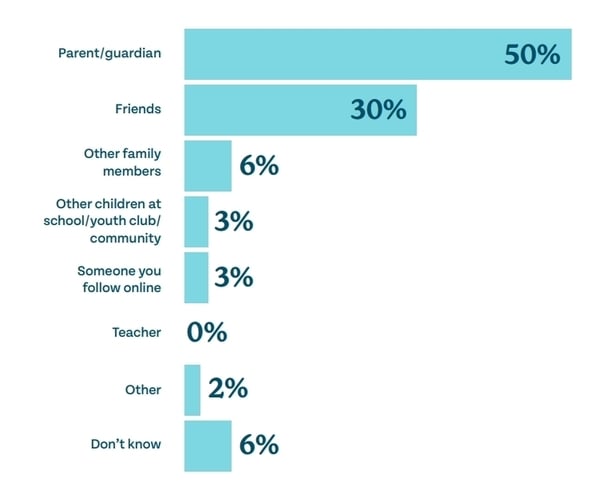
"The really positive stuff here is that 50% said their most important influencer is their parents or their guardian, and 30% said it is their friends," he said.
"That real-life world is still the most important influencer that they have."
Mr Muldoon said that he would be in favour of discussions on misinformation being on the school curriculum, but that a broader discussion was still needed.
"I think it has to be everywhere. There's no point in being on the school curriculum if they go home and the parents don't talk about it at all," he said.
"It needs to be across the board. Society needs to be talking about it, and needs to help children understand that the internet is a place where you will get falsehoods.
"You will get misinformation and you have to challenge it, and we need to teach them how to challenge that."
