
The Heritage Council is marking the 25th anniversary of an education programme aimed at connecting schoolchildren with the history of their local areas.
Since its inception, the initiative has grown to take in over 3,200 schools nationwide.
The 'Heritage in Schools' scheme involves a group of specialists who travel around the country and give insights about the natural, cultural and built heritage of the areas they visit.
The costs are split between participating schools and the council.
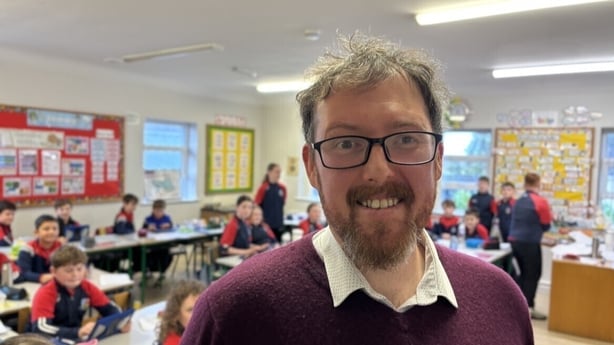
The organisation’s Education Officer said the programme has grown from simple beginnings to engage over 1.5 million children in the last quarter century.
"It aims to foster an awareness and appreciation of Ireland’s heritage, in all its forms," Eoin Ó Donnchadha said.
He said: "This makes subjects more relatable and helps encourage students to have a deeper appreciation of their environment.
"It might be their family history, their local place, things around them, which then help them engage on a wider basis."
The scheme was the brainchild of Leo Hallisey, a retired school teacher from Dublin, who had moved to Conamara in the 1990s.
He approached the Heritage Council in 2000 and from his initial contact, a pilot programme was rolled out in counties Galway and Clare.
It has expanded since then to encompass every county, with over 120 specialists available to impart knowledge and engage with primary schools all over the land.
Mr Ó Donnchadha said that "place and community across time is what heritage is, in a nutshell".
"Our hope is that this helps to spark an interest where children might undertake more research in their locality, or maybe conduct oral history interviews with their parents or grandparents, to record and safeguard information that might otherwise be lost," he said.
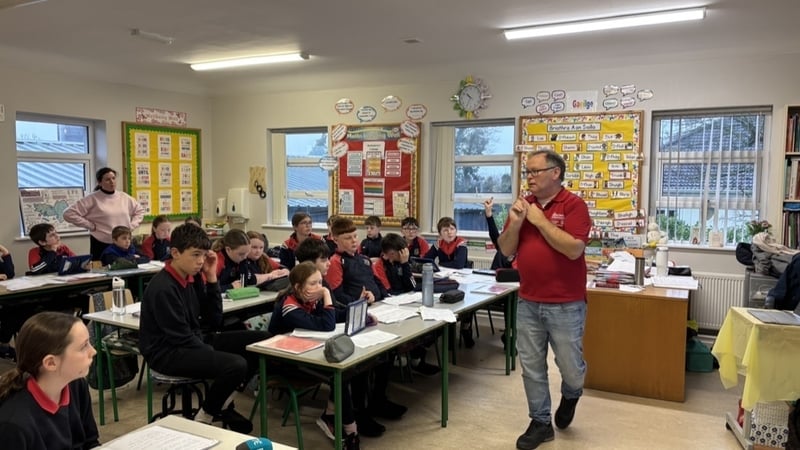
Among the schools that have benefited from the scheme is Ballaghlea National School, near Ballygar, in Co Galway.
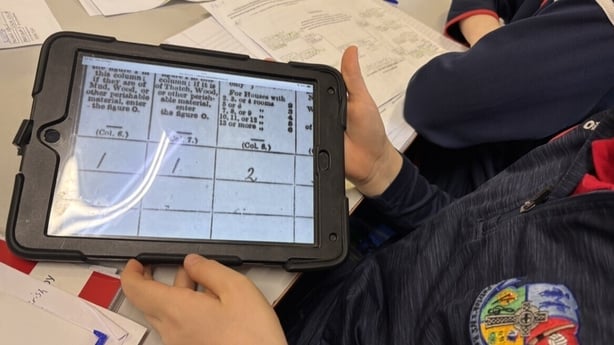
Its fifth and sixth class pupils have been chewing over online census records in recent weeks under the guidance of Martin Curley, who is one of the specialists involved in the initiative.
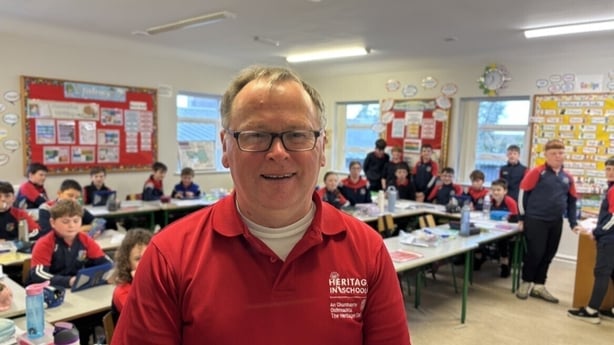
He said the wealth of stories and traditions in every part of the country makes his job easy.
"Heritage is everywhere, We don’t even have to look for it, we can just experience it in the sounds and the sights and the textures and the smells all around us," Mr Curley said.
"It’s what’s been given to us to protect and pass on to the next generation, we’re not the owners of it, we’re merely the custodians," he added.
Handing on that connection to 11 and 12 year olds in a relaxed but informative manner is what Mr Curley excels at.
The pupils fall into a hushed silence as they are captivated by explorations that are deeply rooted in their own place.
Their research has given them fresh insights into how their ancestors lived and worked in the area over more than a century.
Some have uncovered familial links to neighbours through shared great, or great grandparents.
All have come away from the experience with a yearning to find out more and pass the torch to future generations.
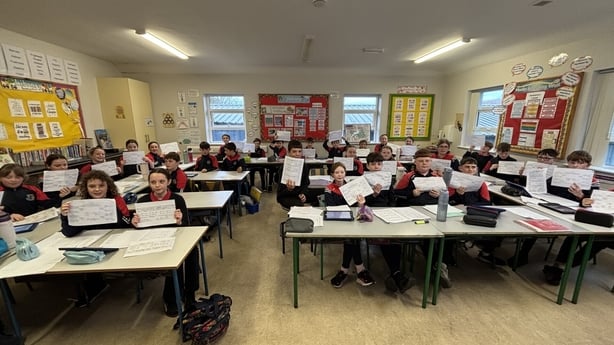
Their teacher said the manner in which the programme is delivered resonates deeply with the class.
Catriona Collins said Mr Curley "comes in for a few weeks every year" and always has a project in mind.
"It really connects them with history and they bring it back to their own families and see what more they can uncover and see what life was like in their own area, 100 or 150 years ago," she said.
Ms Collins said the pupils do their own research and bring home work to do with their parents and grandparents, adding that this "is really important".
"It means that history is not just a subject in school, it’s something relevant to their own lives," she added.
Mr Ó Donnchadha said plans are now in train to expand the scheme to secondary schools.
And having lit the spark, the hope is that thousands more children and young people will carry the flame forward.
"The visits are co-funded by the Heritage Council and if a principal or teacher wants to get involved, all they have to do is visit the heritageinschools.ie website, to get the ball rolling. It’s as simple as that," he said.
We need your consent to load this rte-player contentWe use rte-player to manage extra content that can set cookies on your device and collect data about your activity. Please review their details and accept them to load the content.Manage Preferences