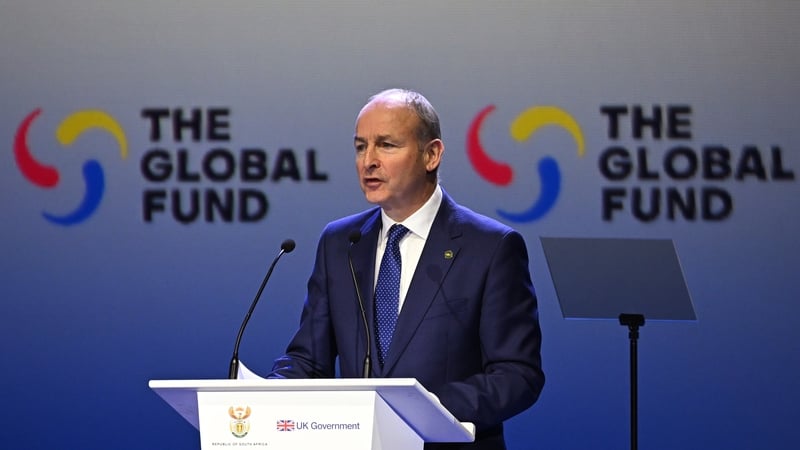

Taoiseach Micheál Martin has arrived in Angola to take part in the European Union-African Union summit.
Ahead of the summit, the Taoiseach will attend a meeting of the European Council to discuss Ukraine.
European leaders left the G20 summit in Johannesburg for Luanda, where they will spend the next two days meeting leaders from African nations.
On the agenda will be how Europe and Africa can cooperate better on a range of issues including security, trade, energy and migration.
But first there will be an informal meeting of the European Council to address the latest developments on Ukraine, following talks between US, Ukrainian and European officials in Geneva yesterday.
Earlier, Mr Martin said that Ireland together with the EU had been clear on the principle that international borders cannot be changed by force.
France's Emmanuel Macron, Germany's Friedrich Merz and Kenya's William Ruto are also expected in Luanda.
The seventh gathering of its kind, the Angola summit comes on the heels of the G20 meeting where a US boycott underscored geopolitical fractures.
It marks 25 years of EU-African Union relations - ties that analysts say need revamping if Europe wants to hold on to its role as the continent's top partner.
Africa has emerged as a renewed diplomatic battleground, with China, the United States and Russia competing for its minerals, energy potential and political support.
The EU is the leading supplier of foreign direct investment to the continent and its leading commercial counterpart. Trade in goods and services hit €467 billion in 2023, according to Brussels.
Minerals and credibility
The EU is expected to seek to secure critical minerals needed for its green transition and ease its dependency on China for rare earths, essential for tech and electronic goods.
The bloc will likely showcase new investments under the Global Gateway - a massive infrastructure plan that Brussels hopes can counter China's growing influence.
Summit-host Angola is home to one of the EU initiative's signature undertakings: the Lobito corridor, a railway project funded in partnership with the United States to connect mineral-rich areas of the Democratic Republic of Congo and Zambia to the Atlantic coast.
EU diplomats have been at pains to present such projects as win-wins but critics retort that the scheme has yet to deliver significant improvements for local communities.
"Investment must move from PowerPoint to the factory floor," said Ikemesit Effiong, of the Nigeria-based consultancy SBM Intelligence.
"Europe's credibility now depends on whether it can support the delivery of projects that create value in Africa, not just visibility for Brussels," he added.
Additional reporting by AFP