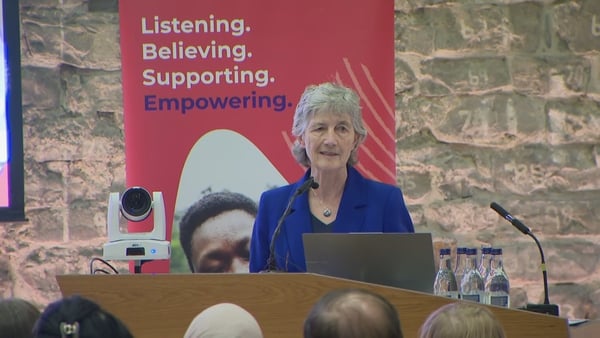
The prevalence and impact of sexual harassment on women when exercising and taking part in sport in Ireland has been highlighted in findings published this morning.
41% of women in Ireland aged between 18-34 years have experienced either sexual harassment, unsolicited sexual remarks, or felt a threat of gender-based intimidation or violence when taking part in sports or physical exercise, according to a RED C poll.
The online-only survey was conducted as part of the Game Changer project, which aims to raise awareness and see action through sport, to tackle domestic, sexual and gender-based violence (DSGBV).
RED C found that 45% of women who train regularly take a wide variety of precautions, such as not exercising at night (17%), keeping their phone to hand (15%), not exercising alone (9%), and covering up in regard to what they wear (5%).
A smaller number (4%) reported bringing something that could be used a weapon.
Of those surveyed, 85% believed that harassment and gender-based discrimination in sports has a negative impact on female athletes' performance.
An overwhelming majority (94%) agreed that sports clubs and facilities should be safe spaces for women and girls, free from sexual and gender-based intimidation and violence.
Of those surveyed, 89% agreed that sporting organisations have an important role in combatting gender-based inequality and violence in society.
In other settings, 77% of 18 to 34-year-old women in Ireland experienced being 'cat called' in the street; 70% had been looked at in a sexually suggestive way by a stranger; 31% had been stalked or followed; and 26% experienced sexual harassment in the workplace.
The findings also show that a small proportion of younger men, aged 18-34, view harassment as a private matter (30%), feel too awkward to intervene (29%), or are less likely to see intervening as an obligation (17%).
There was also a gap between men and women aged between 18-34 on their views of behaviours such as 'cat calling', being sent unsolicited sexual images, and being subject to unwanted sexual gestures or comments as rising to the level of sexual harassment.
Of those surveyed, 30% of 18-34-year-old men regard 'cat calling' as harmful compared with 59% of women in the same age group.
60% of men regarded being sent unsolicited sexual images as harmful compared with 81% of 18-34-year-old women.
And 68% regarded being subject to unwanted sexual gestures or comments as harmful compared with 85% of women in the same age group.
Further insights show that most Irish people have a low tolerance of sexual harassment, with 84% feeling confident enough to intervene if they witness sexual harassment and 76% claiming they would personally intervene.
Game Changer is a collaborative partnership between Ruhama, the GAA and White Ribbon Ireland supported by the LGFA and Camogie Associations.