


A total of 37 young people remain in 'special emergency arrangements', according to the child and family agency Tusla.
Its chief executive Kate Duggan has said those placements are not what the agency wants for children and young people.
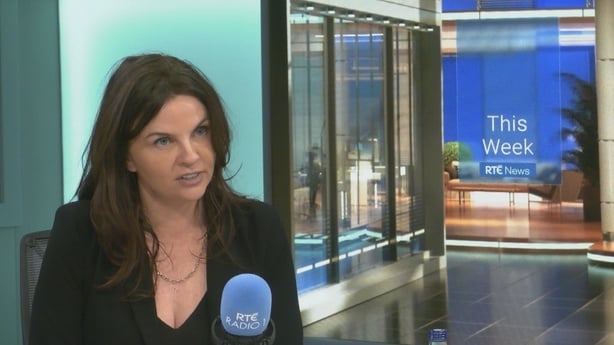
"We don't want young people in unregulated placements," she told RTÉ's This Week programme, adding that it had been one of her absolute priorities since taking up the role a year ago, to reduce the reliance on such arrangements.
However, she said: "Where a young person has had to be removed from home, or where there's been a breakdown in service, we've been left with no choice but to find an immediate place of safety."
She said a 50% reduction had been achieved over the last year: "We're making good progress but we want to reduce completely our reliance on those placements for the next 12 months."
About 40% of the children currently living under this arrangement are there due to a breakdown in their home environment but "53% of them are there because the current placement they had either in foster care or in residential care broke down".
She said these placements were also more costly as they were single occupancy, costing around €900,000 each year.
More than 5,500 children are currently in the care of the State with the majority in foster and residential settings. However, some children continue to be placed in unregulated accommodation run by private companies despite the concerns raised about the possible risks.
A number of District Court judges have also criticised the management of this type of placement.
Ms Duggan said she accepted that some children, especially those with complex needs, were not getting adequate and appropriate access to mental health services, where these were required.
She said there was also a lack of access to addiction services for young people within the State.
However, she added: "We have judges, in small numbers, but where directions have been given over the last number of months to leave these people in the emergency arrangement that they're in because in a single occupancy placement, they're actually making more progress."
She said EPIC, the advocacy service for children in care is now working with all young people in these arrangements in the Dublin region to see if they have any concerns.
We need your consent to load this rte-player contentWe use rte-player to manage extra content that can set cookies on your device and collect data about your activity. Please review their details and accept them to load the content.Manage Preferences
Special care
Ms Duggan said Special Care continued to be the most significant challenge for Tusla, due to resources.
"If we were at full capacity we would be funded and have the availability for 26 beds in Special Care," she said.
This is a situation where, under the order of the High Court, the liberty of a young person can be taken away, not because they had committed any offence but because they were at risk to themselves or others.
She said there were currently just 14 such beds in use.
A further 11 children have been approved for this care but are awaiting a bed.
Ms Duggan said all the wrap around supports possible were being given to these young people in their current residential settings.
She said there are currently 68 staff vacancies in these units, and the complexity of the needs of the children had led to "significant levels of violent harassment and aggression".
"What we are seeing in a market where workforce supply is challenging, that staff are choosing to work for the same terms and conditions, within a different type of unit, often deemed easier."
She said she was optimistic about looking at the future pay and conditions of staff within these units in the future, including by looking at the social care model provided in Oberstown, which runs a detention campus for children sentenced by the courts.
"There needs to be a change of terms and conditions in order to attract staff to work in a setting and in an environment that is certainly more challenging."
This is expected to be a budget ask for the agency in terms of both money and public pay policy.
Foster care
Commenting on concerns raised during the week, in which a potential foster carer complained that they had been questioned over their weight and raised BMI, Ms Duggan said that during the assessment "parenting qualities are of course more important than perfect health, and that there's obviously honesty and openness".
She said the complaint in relation to this potential foster carer had been upheld and there were learnings to be taken from this.
She said assessment guidelines were currently under review and this was taking longer than expected but it should be completed by February of next year.
She said she would like it to be a GP or medical practitioner who makes this assessment in terms of physical health in the future.
Ms Duggan said Ireland was a European leader in that 90% of children in care were in foster care. She said foster carers were now coming from a wide diversity of backgrounds "but in this one case in 2022, we are using guidelines that I think are outdated."
