


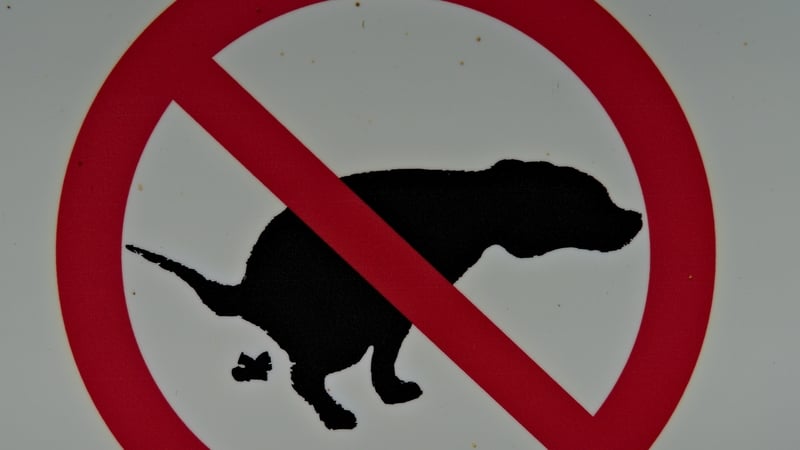
Just 46 dog fouling fines were issued by local authorities in 2023, according to new data.
This is a reduction of 36 fines from 2022.
A recent survey from charity Vision Ireland asked people who are blind, or vision impaired about their experiences of footpath obstacles, found that over a third of respondents were impacted by dog waste in public spaces.
The survey also found that 70% of respondents had been affected by cars parked on footpaths blocking their route, with local authorities revealing that 22,000 fines were issued to motorists for parking on walkways illegally.
Head of External Affairs at Vision Ireland Kevin Kelly said, as someone who is blind, he is not able to detect dog poo before walking into it.
Speaking on RTÉ's Morning Ireland, he said dog fouling is a particular issue for the vision impaired as they have to try to clean the offending poo from their cane before it can be put into its bag.
"When you're not able to see what you're doing, everyone's well aware that dog poo is not great from a disease perspective. It spreads disease. It means that someone who is blind or vision impaired can't store their cane in in their bag until it's cleaned. It also presents a challenge around slipping as well," he said.
He said that the low number of fines for dog fouling is "a significant problem".
"There's been a reduction of 36 fines issued. It is a significant problem. We are all very aware of that and we're calling on the general public and people who own dogs to pick up after their dogs and to act more responsibly.
"There are certain initiatives that certain local authorities have run around awareness and making bags available to dog owners. But much work needs to be done in this area as well as looking at increased policing, despite how difficult it might be to catch a dog owner not picking up after their dog."
He added that the fact that 18 local authorities issued no fines, with Kerry County Council topping the list with 13 fines.
It shows that there is a huge problem and it is presenting both a health and safety challenge to people who are blind and vision impaired or people with reduced mobility, Mr Kelly said, who may be using mobility aids.
In relation to cars blocking pavements, he said that this obstacle means people have to either decide to wait until a driver returns to the vehicle or risk walking out into the street.
"For someone who's blind or vision impaired when they encounter the car on the path, they're left with the decision of having to wait and stop their journey until the car owner returns," he said.
"God knows how long they'd be waiting, or more often than not, what they're forced to do is actually step off the footpath into the roadway into oncoming traffic, which makes them exceptionally vulnerable.
"Motorists may not be expecting them to act in that way because it's not a controlled crossing point."
