
The Garda Commissioner has said that 48 pieces of evidential footage were captured on body-worn cameras during the recent riots in Coolock in Dublin.
Drew Harris said that gardaí from Store Street station, who were deployed to the scene, were equipped with the devices, which were used in "managing and policing the serious disorder".
He said the evidence, which has been submitted to the investigation team, will be "essential in terms of identifying those who may have committed offences".
Commissioner Harris was speaking in Limerick at the launch of the second phase of a proof of concept, during which three body-cam models are being trialled.
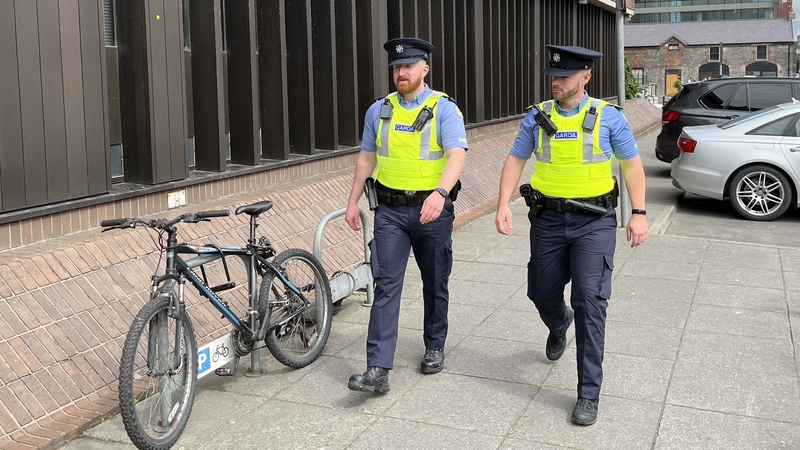
Since the end of May, hundreds of gardaí based at Store Street, Pearse Street and Kevin Street stations in Dublin have been using the devices to record video and audio of encounters with members of the public.
Body-cam pilot extended to Limerick city
From today, body-worn cameras are also being rolled out on the streets of Limerick city, ahead of schedule.
The 200 devices differ from those in use in Dublin as they have a screen on the front which shows what is being captured when the recording is activated.
The Sigma Reveal cameras also have a 120-degree field of vision.
So far, 100 gardaí at Henry Street station have been trained in their use, with more officers to be instructed.
Mr Harris, who was joined at the launch by Minister for Justice Helen McEntee, said there are over 400 cameras available for deployment in Dublin and Limerick, with almost 600 members trained in their use.
He said the Coolock unrest was a prominent example of the use of the devices, which he said are proving effective in gathering evidence and as "protective equipment" for frontline gardaí.
Asked if he expects more demonstrations at the site of the former Crown Paints factory site in Coolock, which has been earmarked for International Protection applicants, the commissioner said that An Garda Síochána "anticipate protests".
Any such action, he said, would be policed to ensure a breach of the peace or disorder is avoided.
Commissioner Harris said there is "a lawful purpose for that site" and gardai "support lawful activity".
"We're very conscious that people have a right to protest, but protest does not extend to violence and intimidation, and it doesn't extend to breaking the law, it doesn't extend to abuse and intimidation via social media.
"We are there obviously to keep the peace, to make sure, if there is protest, that that is managed and that people enjoy their right to protest but in a manner which doesn't break the law," he added.
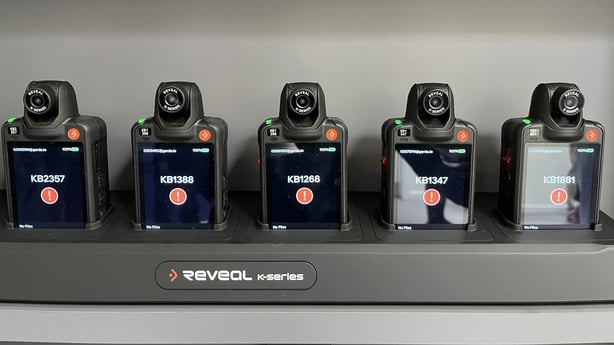
Commissioner Harris said the equipment, worn on the chest of a garda, has helped in "de-escalating" and "defusing" situations.
Over the last eight weeks in Dublin, the cameras have been activated on more than 1,200 occasions, with over 300 instances of footage being tagged as evidence in summary and indictable offences.
They have been used during arrests, drink driving incidents and searches of dwellings, Mr Harris said.
They have also been used by gardaí responding to domestic abuse and sexual assault incidents, when the first complaint of a victim is recorded, providing "very important evidence".
He said that members of the public, retailers and businesses have also been "very supportive" of the cameras being deployed.
The training of gardaí in the use of a third model of camera will begin next week in Waterford city, where the third phase of the proof of concept will be rolled out next month.
Every garda should have body-cam access - McEntee
Minister McEntee said that she wants every member of An Garda Síochána to have access to body-worn cameras and it is "absolutely vital" that gardaí have the devices to ensure they are kept safe.
It has "been very clear in the one and a half months since body-worn cameras have been rolled out in Dublin, we have received feedback that gardaí feel more protected, but we also have evidence that particular situations have been de-escalated and potentially dangerous situations have not arisen because of the use of body-worn cameras," she said.
"It's also really important that gardaí have body-worn cameras to access and to gather evidence so that we can have successful prosecutions."
Ms McEntee said the evidence gathered through the devices has been used in court cases.
The three cameras being trialled, she said, have "different types of technology to ascertain and importantly to get feedback from the members as to what works best".
She said she expects the comparison between the three models to happen early in the new year.
Sergeant Gavin McDonnell, from Henry Street Garda Station in Limerick, said the cameras "provide a level of security" for gardaí.
"There's the understanding going forward now that if somebody does commit some kind of an assault on a guard that they're going to be recorded and then the footage is going to be there for evidential purposes."
It also "provides a security blanket for members in that there is a greater degree of insulation from maybe bogus complaints and that kind of thing," Sgt McDonnell added.