


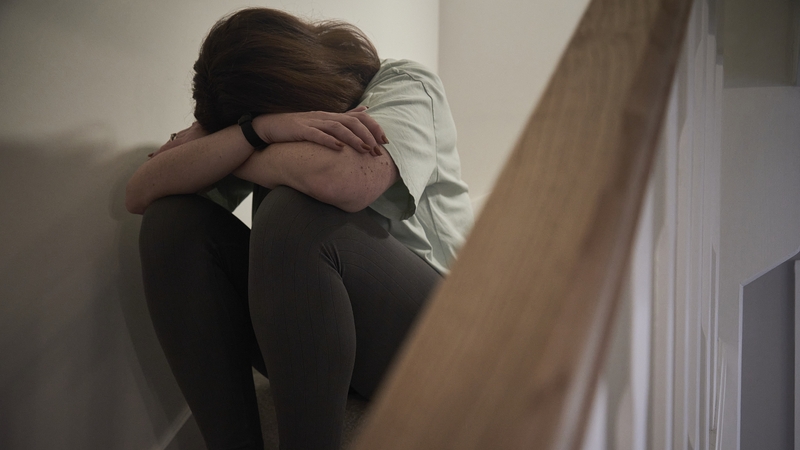
Women's Aid recorded its highest ever number of domestic abuse disclosures last year.
Its annual impact report for last year found that 40,048 disclosures of abuse against women and children were made last year during 28,638 contacts with frontline services.
This is an 18% increase compared to 2022, with the charity warning that this is just the "tip of the iceberg".
Emotional, physical, sexual and economic abuse were among the disclosures made, with many combining to form coercive control.
We need your consent to load this rte-player contentWe use rte-player to manage extra content that can set cookies on your device and collect data about your activity. Please review their details and accept them to load the content.Manage Preferences
The charity said there was an 87% rise in economic abuse and a 74% increase in physical violence reported to its service last year when compared to the previous year.
Among the reports made were that partners and ex-partners were subjecting women to assaults with weapons, constant surveillance and monitoring, controlling all family finances, taking and sharing of intimate images online, sexual assault, rape and being threatened with theirs or their children's lives.
The impacts on these women ranged from exhaustion, isolation, and hopelessness to serious injury, suffering miscarriages, poverty, feeling a loss of identity and suicide ideation, hypervigilance, and homelessness.
Women's Aid Chief Executive Sara Benson described the number and nature of the disclosures as "utterly appalling" and warned that the figures do not reveal the full extent of the problem.
Ms Benson said one-in-four women in Ireland are subjected to domestic abuse and children, families and communities are also impacted.
"One-in-four women in Ireland is subjected to domestic abuse and there are also so many children, families and whole communities also impacted.
"Fear, stigma, and self-blame due to the impact of the abuse - but also persisting social attitudes to domestic violence prevent victims from coming forward.
"So many victims-survivors lack the information or confidence to contact specialist services, and about one third will suffer in total isolation, telling nobody what is happening to them," she said.
Speaking on RTÉ's Morning Ireland, Ms Benson said research shows that a third of people will never tell anyone of the abuse.
"Appalling as those numbers are, it's really even more appalling to think that those are the tip of the iceberg. Our national helpline refers to local domestic and sexual violence services all around the country, these are just our figures for one year and we also know that the majority of those who suffer both domestic and sexual violence will not contact specialist services because they don't know about them."
It is unclear why there was an increase in the number of domestic abuses being reported to Women's Aid last year.
Ms Benson said she hopes it reflects increased confidence among survivors that they can reach out and get help.
This includes victims of stalking which became a standalone offence late last year.
Speaking at the launch of the report today, Eve McDowell, Co-founder of Stalking Ireland, said increased awareness is necessary.
"When I was being stalked and spoke to people about it, I got the response of 'he's harmless, he's not actually going to do anything...but people don't know how stalking can build up and what can happen as a result of these behaviours being allowed to continue."
Ms McDowell said determining stalking is about looking at a pattern of behaviours that are fixated, obsessive, unwanted and repeated.
She said support were available through the Women's Aid helpline.
Ms McDowell warned that online stalking can be just as serious as in person stalking because of its impact on the victim.
"Sending those messages can have a really big impact someone's mental well-being and it can lead to in person stalking because they are able to obtain information about you...they might be able to track your location as well."
She warned against minimising the seriousness of online stalking.
In the Dáil, Sinn Féin Leader Mary Lou McDonald said the consequences for women who are abused and controlled behind closed doors are catastrophic.
She said the State has failed to meet its refuge obligations meaning that women and children often end up returning to violent homes.
Taoiseach Simon Harris said combatting all forms of gender based violence is a priority.
He said the Government is looking at how it would provide more refuge spaces.
