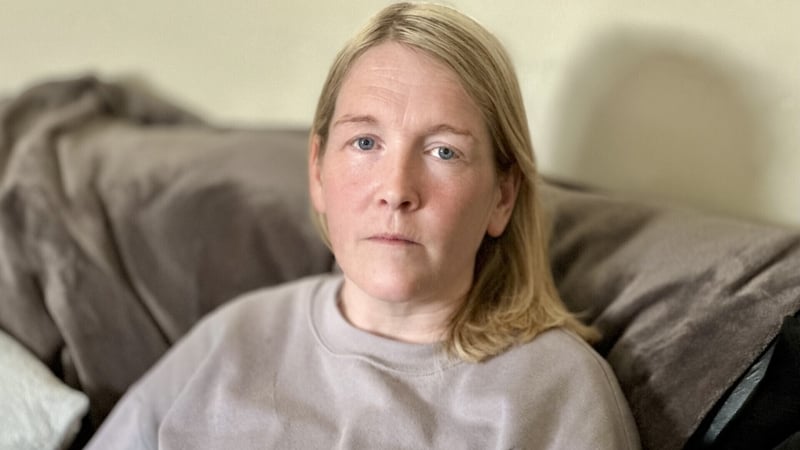

It's rare for Ann Marie Dunne to find herself at home alone, but it's never for long.
Once her four children get in from creche and school, and her husband arrives home from work, any space in their two-bedroom flat diminishes rapidly.
One of her children is autistic, they're waiting for confirmation of autism regarding another child, and a third child has sensory processing disorder.
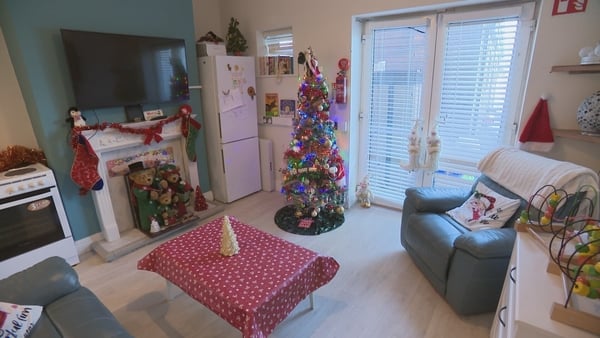
It's a lot for Ann Marie to handle in a flat that does not meet the needs of her family.
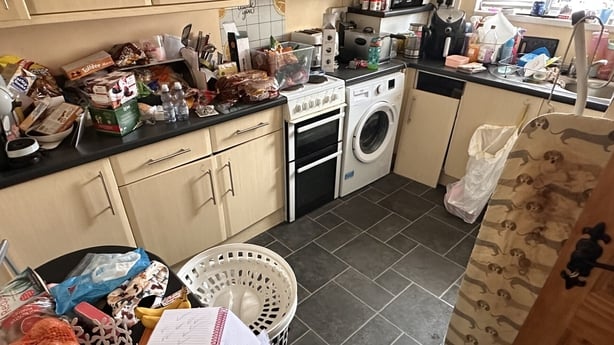
It's cramped, with no room for the children to play or store their toys.
We need your consent to load this rte-player contentWe use rte-player to manage extra content that can set cookies on your device and collect data about your activity. Please review their details and accept them to load the content.Manage Preferences
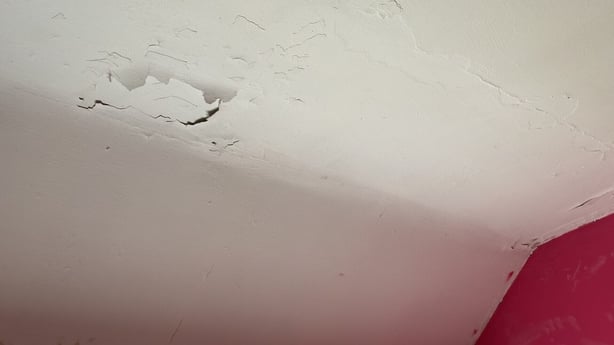
The mother of four spends her time cleaning mould from walls and from the single paned window frames but it always returns.
Four members of her family use inhalers.
Ms Dunne is a member of a residents committee, which was formed two years ago to highlight the living conditions in the Dublin City Council complex where she lives.
Mould and damp are rampant throughout the Davitt House Flats.
RTÉ News contacted Dublin City Council to establish what plans, if any, there are to improve the situation for the residents, but there was no response.
While some insulation has been added to the attic of the Davitt flats complex, the residents committee says it’s inadequate.
A doctor in St James's Hospital in Dublin even asked Ms Dunne if she had mould in her house due to the increased number of asthma attacks she was experiencing.
"I'm cleaning, every three months easily - in the kitchen even more than that - but some of it (mould) doesn't come off now. It's stuck there," she says.
When the heat is turned on, upstairs warms up while downstairs remains cold or visa versa.
It's not ideal when the children are in bed.
Ann Marie Dunne's situation is not unique according to Alex Criado, who is a recruitment officer with the Community Action Tenants Union (CATU).
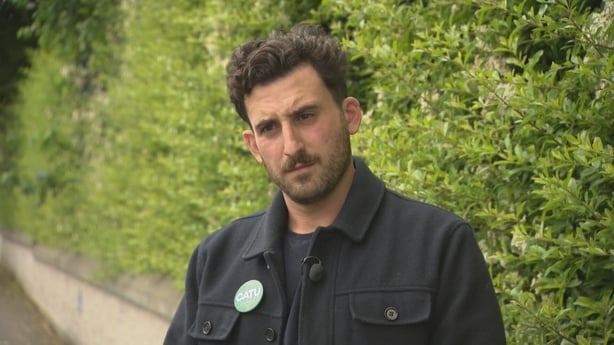
CATU helps residents set up their own committees across the country to persuade local authorities to maintain public housing.
"We're seeing that the quality of life is going down year by year with every year of lack of maintenance in these in our public housing stock.
"It's hugely detrimental to people's well-being. And we're seeing that people can't get out and if they do get out, you lose pillars of the community and then the community actually degrades even further."
The ESRI report notes that the stress and anxiety of inadequate housing and the impact of living in poorer urban communities has a greater impact on mothers.
Ann Marie Dunne agrees.
Her husband works, so she is at home with the children during the day and there are times she wishes she had a back garden for them to play in to let off some steam.
The family lives on the top floor of the complex.
"Mothers and children shouldn't be living like this. I just don't understand," she says.
There's also the issue of the children getting older, which means there is no privacy and Ann Marie's eldest child cannot take friends home for sleepovers or play dates.
"If she goes to her friend's house, that's grand, they have room. But I can't bring her friends over, so she doesn't have that interaction with her friends.
"I do feel bad as a mother. I try to keep it as normal as possible, I do try to keep it as normal as possible, but then I do feel bad that I'm not able to provide them with a house."
Three of the children, who are all girls, share one room while the youngest child, who is a boy, is in a small bed in his parents' bedroom.
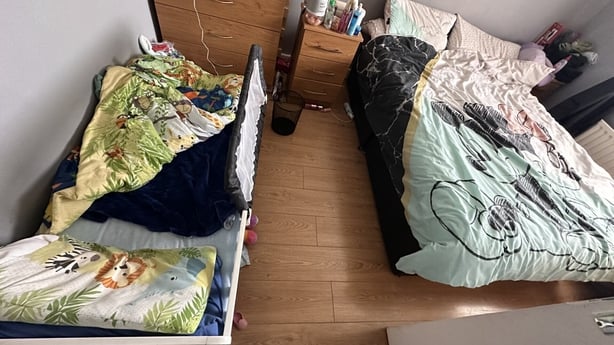
He can't stay there forever and is growing rapidly. This is another challenge the family will face in the coming months.
The most difficult part for Ann Marie is trying to comprehend how life didn't turn out as she had planned.
She met a man she loved, got married, had children. Her husband works hard, but as she points out, they simply don't earn enough to buy a house with a garden.
Despite being at the top of the housing list - due to the medical needs of the family - they have dropped back down that list again.
"I do keep a brave face and I can smile. But when you're alone, when it's like in the middle of the night when you're lying there, it's the realisation of, like, you can't do nothing to help.
"And I do try...I do keep it as normal as possible, but with the overcrowding it's not normal."
Dublin City Council (DCC) has said it engaged with tenants and councillors in 2023 to listen to their concerns and that a number of works/initiatives had been introduced.
It noted that external works such as landscaping and work on communal areas had been carried out including new anti-slip coverings on stairwells and drainage works.
Internally it said all attics at roof level were insulated this year apart from three where tenants did not want insulation installed.
It said mechanical ventilation had also been installed in 39 of the 64 units. It pointed out that the remaining 25 units, 20 refused the ventilation and the council could not gain access to five.
In a statement it said that all of the units that have single glazed windows have been added to a windows schedule for pricing and that it envisages that works will commence on replacing these windows by July and will be complete by November.
It said a sizeable proportion of DCC’s social housing stock was constructed between 1930 and 1977, accounting for 50% of the total and Davitt House falls into this category because it was built in 1957.
Construction prior to the 1960’s tended to be in solid wall.
During the 1960’s DCC changed to cavity wall construction in line with best practice at the time, according to a statement.
"A large number of dwellings have been improved to meet modern day living standards. The installation of double glazed windows, central heating systems, installing insulation.
"All of these measures have reduced the ventilation in the properties ie: the properties have become less draughty.
"A common occurrence is to find vents stuffed with newspapers or old clothes to stop the drafts. All of these measures will increase relative humidity in a property," it said.