


Irish stamps dating as far back as 1922 are on display in the National Print Museum as part of a new exhibition.
The exhibition, called "Miniature Masterpieces", celebrates a century of postage stamps in Ireland.
More than 760 original Irish stamps are on display along with original artwork, design proofs and printing plates from the An Post Museum and Archive, some of which will be on public display for the first time.
The exhibition explores the role of stamps in charting the changing Irish cultural identity over the last 100 years.
Stephen Ferguson, curator of the exhibition said "At first glance, a stamp is just an everyday object in the corner of a letter but on closer inspection, it's a work of art, a symbol of identity, and a unique prism through which we can view and reflect on the formation and development of the Irish State".
The exhibition includes the first stamps in Ireland, which were British stamps overprinted in Irish in December 1922, up to more contemporary designs.
Officially launching the exhibition, Minster Jack Chambers said "Irish stamps offer a fascinating perspective on our nation.
"This tiny window into our history, culture and society is an iconic representation of who we are and the events that have shaped us."
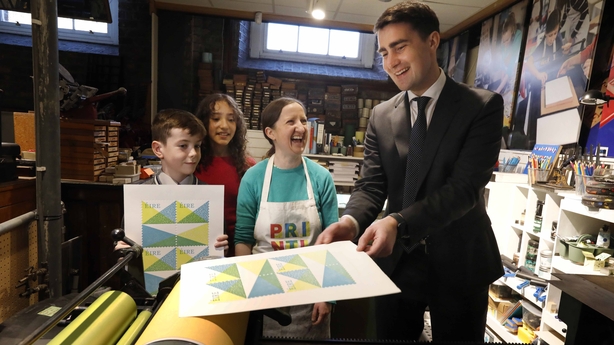
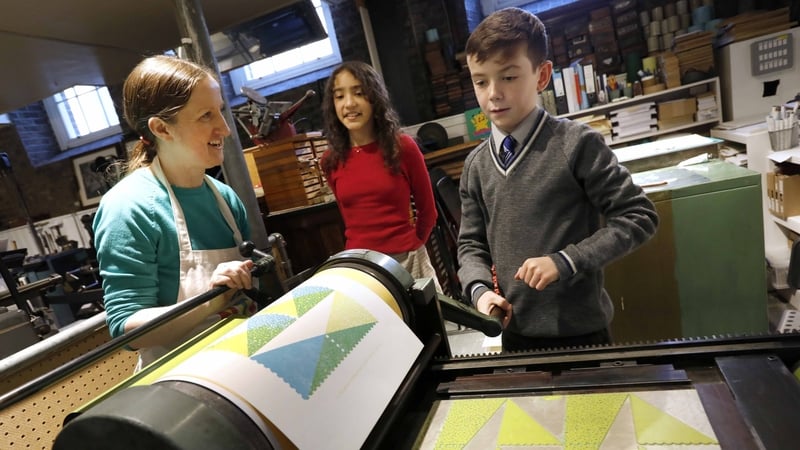
An original limited edition artwork to mark the exhibition was also on display today, a collaboration with graphic designer Niall McCormack and the letterpress printer Mary Plunkett.
Mr McCormack said he was inspired by designer Patrick Scott and the distinctive Irish landscape.
School children Ana Rubia Marques Da Hora and Andrew McNally, both 5th class students, were on hand to help print some of the limited editions.
CEO of the National Print Museum, Carla Marrinan Funder, said the Miniature Masterpieces exhibition "invites visitors to consider the continued value of the postage stamp as a miniature representative of Ireland across the world, and to envisage how it will continue to evolve in this digital age".
The joint exhibition between An Post and the National Print Museum will be open to the public for six months until next May.
